

Facebook Ads vs Google Ads: Which Is Better in 2025?
Last Updated

Navigating the Digital Advertising Landscape
Choosing the right advertising platform is crucial for success. This listicle simplifies the "Facebook Ads vs Google Ads" debate and explores other key players to help Aussie businesses boost sales and generate leads. Discover eight powerful tools, including Click Click Bang Bang, Facebook Ads, Google Ads, Microsoft Advertising, LinkedIn Ads, Twitter Ads, TikTok Ads and Amazon Advertising, to pinpoint the ideal solution for your needs. These tools solve the problem of wasted ad spend by providing targeted advertising solutions, empowering you to reach the right audience at the right time.
1. Click Click Bang Bang
Navigating the complexities of online advertising can be daunting, especially when deciding between platforms like Facebook Ads and Google Ads. Choosing the right strategy for your business often depends on your specific goals, target audience, and budget. Click Click Bang Bang emerges as a compelling solution for businesses seeking a comprehensive, managed approach to paid advertising, effectively bridging the gap between these two powerful platforms. This full-service PPC agency offers precision-driven campaigns across a spectrum of channels, including Google Search, Google Remarketing, Google Shopping, Meta (Facebook & Instagram), and LinkedIn Ads, catering to a diverse range of business needs. Whether your objective is to drive e-commerce sales, capture B2B leads, or boost brand visibility, Click Click Bang Bang offers tailored strategies designed to maximise your return on investment.
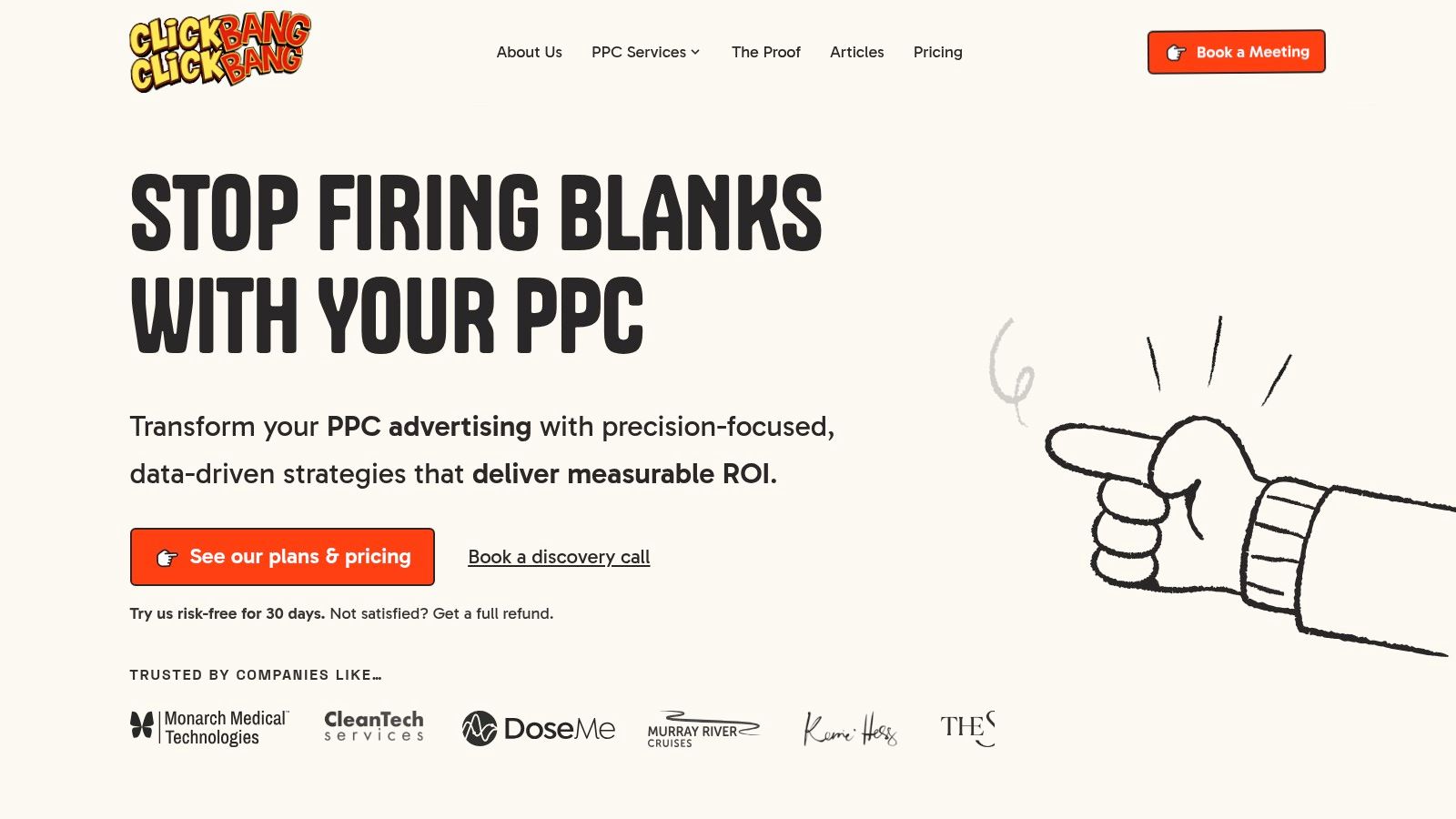
For e-commerce retailers in Australia grappling with the Facebook Ads vs Google Ads dilemma, Click Click Bang Bang presents a unique advantage. They can leverage both platforms strategically, using Google Shopping campaigns to capture high-intent users actively searching for products and complementing these with targeted Facebook and Instagram Ads to reach potential customers based on demographics, interests, and behaviours. Imagine a furniture store in Melbourne: Click Click Bang Bang could implement Google Shopping campaigns targeting users searching for "outdoor dining settings Melbourne", while simultaneously running Facebook Ads showcasing their latest summer collection to users interested in home decor and outdoor living within the Melbourne area. This integrated approach allows for comprehensive market coverage and maximises the chances of converting potential customers into paying ones.
Similarly, for B2B companies seeking to generate qualified leads, Click Click Bang Bang's expertise in LinkedIn Ads proves invaluable. They can craft highly targeted campaigns reaching decision-makers within specific industries and job functions, driving traffic to dedicated landing pages designed for lead capture. For example, a software company targeting IT managers in Sydney could leverage Click Click Bang Bang's LinkedIn Ads expertise to reach their ideal audience with precision, promoting webinars, whitepapers, or free trials. This focused approach allows for efficient lead generation and fosters connections with high-value prospects.
One of the standout features of Click Click Bang Bang is their commitment to transparency and data-driven decision-making. Clients receive live reporting and regular performance summaries, providing clear insights into campaign performance and ROI. This transparency allows businesses to understand precisely how their marketing budget is being utilised and how each platform contributes to their overall goals. The onboarding process includes a detailed questionnaire and strategist consultation to ensure campaigns align with business priorities, further enhancing the tailored approach.
Click Click Bang Bang’s pricing structure features tiered monthly plans starting at $997 + GST per month. While a setup fee equivalent to the first month's payment applies across all plans, this ensures comprehensive setup of analytics, conversion tracking, and business account integrations. The 30-day risk-free trial provides businesses with an opportunity to experience the agency's services and assess their effectiveness firsthand without a long-term commitment. While the initial cost may present a barrier for very small budgets, the comprehensive service and focus on ROI makes it a valuable investment for businesses looking for scalable digital marketing solutions. Ad spend limits per plan should be considered by businesses planning very large-scale campaigns.
To summarise, the key advantages of choosing Click Click Bang Bang include: comprehensive service across multiple digital platforms; tailored, data-driven strategies with live reporting; flexible monthly plans with a 30-day risk-free trial; fast campaign launch within seven days; and inclusive setup of analytics and conversion tracking. However, potential clients should be mindful of the setup fee and ad spend limits per plan. For businesses seeking a trusted and transparent PPC partner in Australia, Click Click Bang Bang offers a compelling solution that can effectively address the Facebook Ads vs Google Ads decision, providing tailored strategies designed to achieve measurable results. You can explore their offerings further at https://clickclickbangbang.com.au.
2. Facebook Ads
Facebook Ads, Meta's comprehensive advertising platform, empowers businesses to create highly targeted campaigns across a vast network encompassing Facebook, Instagram, Messenger, and the Audience Network. With a staggering reach of over 3 billion monthly active users across Meta's family of apps, it presents a powerful avenue for connecting with potential customers. Unlike Google Ads, which captures users actively searching for products or services, Facebook Ads excels at fostering brand awareness, driving engagement, and reaching individuals who may not be actively searching but align with your target audience based on their social media activity. This makes it an invaluable tool for businesses in Australia looking to tap into a massive audience and build brand loyalty. For e-commerce retailers, B2B companies, SMEs, marketing managers, and startups alike, Facebook Ads offers a scalable and flexible solution.
One of the key strengths of Facebook Ads lies in its sophisticated targeting capabilities. You can pinpoint your ideal audience with laser precision using detailed demographics such as age, location, gender, education, and income. Beyond demographics, Facebook Ads allows you to target users based on their interests, behaviours, and even connections to specific pages or groups. This granular control ensures your ads are shown to the most relevant users, maximising your return on investment. Moreover, the platform's "Lookalike Audiences" feature enables you to find new customers who share similar characteristics with your existing customer base, further expanding your reach. Robust retargeting capabilities, powered by Facebook Pixel integration, allow you to re-engage users who have previously interacted with your website or ads, nurturing them further down the sales funnel.
When comparing Facebook Ads vs Google Ads, a key differentiator is user intent. While Google Ads excels at capturing high-intent users actively searching for specific products or services, Facebook Ads allows you to introduce your brand to a wider audience who may not yet be aware of your offerings. This makes Facebook Ads particularly effective for brand awareness campaigns and driving engagement. For example, an e-commerce retailer in Australia could use Facebook Ads to showcase new product lines to a broad audience segmented by interests related to their products. A B2B company could leverage Facebook Ads to target decision-makers in specific industries based on their job titles and company affiliations.
Facebook Ads offers a variety of ad formats to suit diverse marketing objectives. From engaging video ads and dynamic carousel ads showcasing multiple products to immersive collection ads and story ads designed for mobile consumption, you can choose the format that best resonates with your target audience and campaign goals. This flexibility allows for creative storytelling and compelling visual experiences that capture attention and drive conversions.
Learn more about Facebook Ads to gain further insights into how Meta Ads management can benefit your business.
In terms of pricing, Facebook Ads operates on an auction system, where advertisers bid on ad placements. The cost of your ads depends on factors such as your target audience, competition, and ad quality. While increasing competition has driven up costs over time, Facebook Ads remains a cost-effective solution, particularly for brand awareness and engagement campaigns. However, it's important to monitor your campaigns closely and optimise your bidding strategies to ensure you're getting the most out of your budget.
While Facebook Ads presents a plethora of advantages, it's essential to be aware of its limitations. As users are not actively searching for products when browsing their social media feeds, the conversion intent is generally lower compared to Google Ads. Ad fatigue can also occur more quickly due to social media browsing behaviour, necessitating regular creative refreshes. Additionally, recent privacy changes, such as the introduction of iOS 14.5, have impacted tracking capabilities, making accurate measurement more challenging.
Despite these challenges, Facebook Ads remains a powerful tool for businesses in Australia seeking to reach a massive audience, build brand awareness, and drive engagement. By understanding its strengths and limitations, and by implementing effective targeting and creative strategies, you can leverage Facebook Ads to achieve your marketing objectives and boost your bottom line. This platform deserves its place on this list due to its sheer reach, detailed targeting options, cost-effectiveness for certain campaigns, and strong visual advertising capabilities. It's crucial to remember that, especially in the Australian market, Facebook Ads provides a powerful platform to connect with your target audience in a meaningful and engaging way.
3. Google Ads
Google Ads is Google's flagship advertising platform, offering businesses the opportunity to display ads across its extensive network. This network encompasses search results, YouTube, Gmail, and millions of partner websites, reaching billions of users daily. Google Ads excels at capturing potential customers at the moment of intent – when they're actively searching for products or services related to your business. This makes it a powerful tool for driving highly qualified traffic to your website. The platform provides diverse campaign types, including Search, Display, Shopping, Video, and App campaigns, catering to a wide range of marketing objectives, from boosting brand awareness to driving online sales.
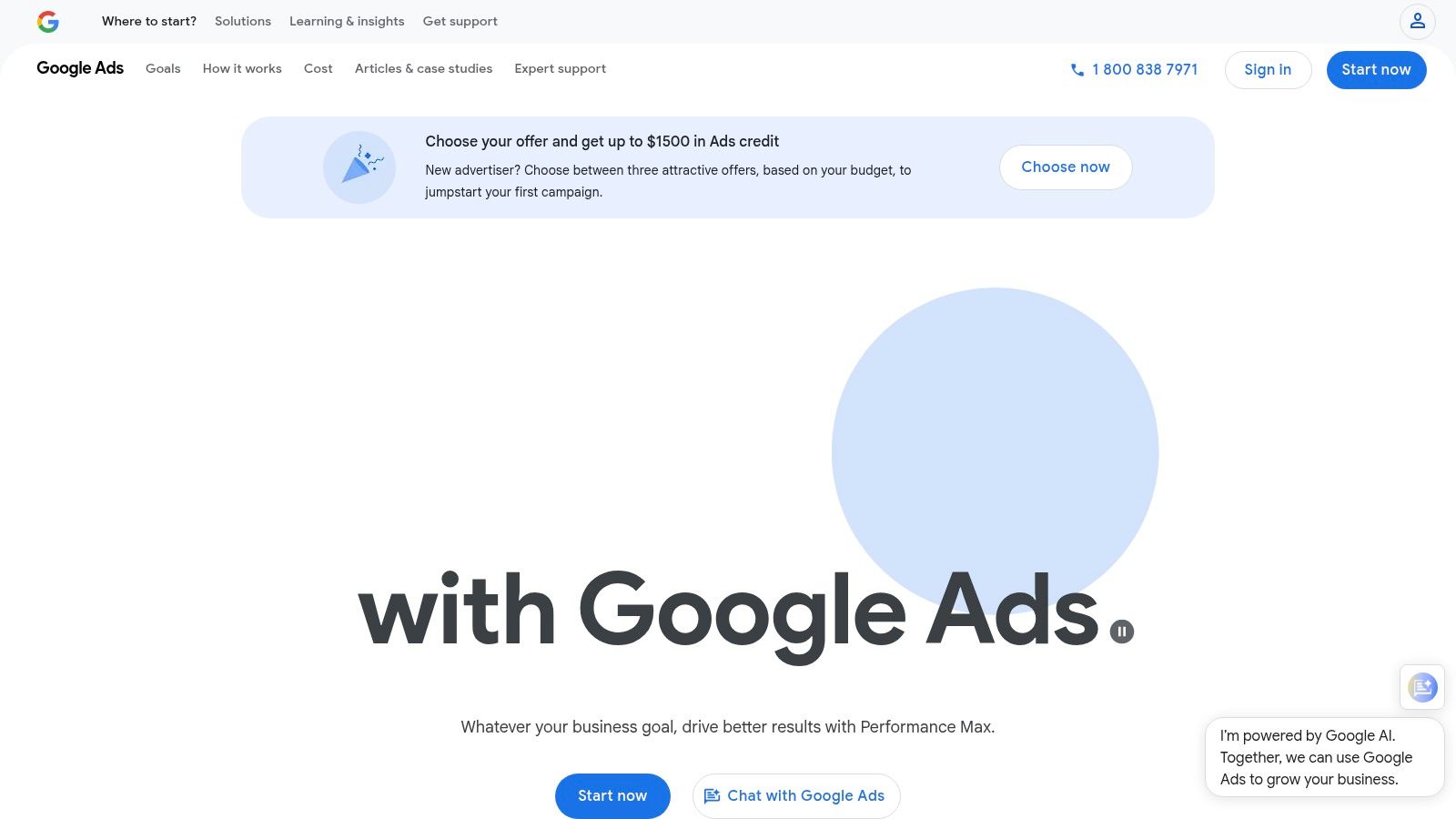
For Australian e-commerce retailers, Google Shopping campaigns are particularly beneficial, allowing products to be showcased directly within search results with images and prices. This feature is crucial for driving online sales, putting your products front and centre for potential customers actively looking to buy. Imagine a customer searching for 'leather boots Sydney'. With a well-optimised Google Shopping campaign, your boots, along with their price and a compelling image, can appear at the top of the search results, increasing the likelihood of a click and a purchase. Similarly, B2B companies can leverage Google Ads to target specific industries and job titles using highly relevant keywords, ultimately generating qualified leads. This precise targeting helps ensure your ads are shown to the right people at the right time.
Google Ads operates on an auction-based system, where businesses bid on keywords relevant to their products or services. Effective keyword research and optimisation are essential for success, ensuring that your ads appear for the most relevant search queries. Tools within the platform assist with keyword research, providing insights into search volume, competition, and suggested bids. Learning how to effectively manage keywords, including the use of negative keywords to filter out irrelevant searches, can significantly impact your campaign performance. Learn more about Google Ads to improve your targeting and reduce wasted ad spend.
One of the key advantages of Google Ads is the ability to measure ROI accurately. The platform offers comprehensive conversion tracking, allowing businesses to see exactly which keywords and ads are driving sales, leads, or other desired actions. This data-driven approach enables informed decision-making and optimisation for maximum return on investment. Flexible budgeting with the pay-per-click (PPC) model further enhances control, allowing businesses of all sizes, from startups to established enterprises, to manage their advertising spend effectively. You only pay when someone clicks on your ad, providing transparent and measurable results.
While Google Ads offers immense potential, it also presents certain challenges. The cost per click (CPC) can be high, especially for competitive keywords, and ongoing keyword research and optimisation require time and effort. Compared to social media platforms, audience targeting can be somewhat limited, focusing more on keywords and search intent rather than detailed demographics and interests. Furthermore, the platform's complexity can be daunting for beginners, requiring a learning curve to set up and manage campaigns effectively.
For Australian businesses engaging in the "facebook ads vs google ads" debate, understanding the strengths of each platform is crucial. Google Ads excels in capturing high-intent traffic, providing immediate visibility in search results and offering measurable ROI. However, it can be more expensive and complex than Facebook Ads. The choice between the two, or a combination of both, depends on your specific business objectives, target audience, and budget. For example, a marketing manager seeking transparent, data-driven reporting might favour Google Ads, while a startup interested in flexible, risk-free advertising plans may initially explore Facebook Ads before venturing into the complexities of Google Ads. Regardless of your choice, understanding the nuances of each platform is key to a successful digital marketing strategy in Australia.
4. Microsoft Advertising (Bing Ads)
When comparing Facebook Ads vs Google Ads, a third contender often gets overlooked: Microsoft Advertising (formerly Bing Ads). While it might not boast the sheer scale of its larger rivals, Microsoft Advertising offers a unique opportunity for savvy marketers, especially in the Australian market. It carves out a niche by providing access to the Bing, Yahoo, and AOL search networks, reaching over a billion monthly users globally. This translates to a significant audience, particularly within an older, more affluent demographic, often missed by campaigns solely focused on Google or Facebook. For Australian businesses looking to diversify their paid advertising strategy, Microsoft Advertising offers a valuable channel to explore.
Microsoft Advertising's strength lies in its ability to deliver targeted search advertising to a less competitive landscape. With a smaller market share (around 6%), businesses often experience lower cost-per-click (CPC) compared to Google Ads, making it a budget-friendly option, particularly for small and medium-sized enterprises (SMEs) in Australia. This lower competition translates to potentially higher return on investment (ROI) for your ad spend. Imagine reaching your desired audience at a fraction of the cost you'd incur on Google, effectively stretching your marketing budget further.
One of the platform's most compelling features is its seamless integration with Google Ads. Campaigns can be imported directly, simplifying the process of extending your existing strategies to the Microsoft network. This feature is a huge time-saver for busy marketing managers, allowing them to manage both platforms with relative ease. For Australian e-commerce retailers already running Google Ads campaigns, expanding to Microsoft Advertising is a low-risk way to tap into a new customer base. Similarly, B2B companies can leverage the unique LinkedIn profile targeting feature to reach specific professionals and decision-makers, making it a powerful tool for lead generation within Australia's diverse business landscape.
The platform’s interface mirrors the familiarity of Google Ads, simplifying campaign management and reducing the learning curve. Marketers comfortable with Google Ads will find the transition to Microsoft Advertising straightforward. Features like keyword research, ad creation, and performance tracking are all similar, allowing for a consistent workflow across both platforms. This ease of use is particularly beneficial for startups and SMEs with limited resources, enabling them to manage their advertising campaigns efficiently without needing extensive training.
While Microsoft Advertising presents a compelling alternative, it's crucial to acknowledge its limitations. The significantly smaller reach compared to Google is a key consideration. While valuable, the Bing network's audience pales in comparison to Google's dominance, potentially limiting scalability for large campaigns. Furthermore, mobile traffic on the Bing network is lower compared to other platforms, a crucial factor to consider in Australia’s mobile-first market. While Microsoft Advertising has been steadily improving its mobile capabilities, it still lags behind Google in this area.
Pricing for Microsoft Advertising follows a similar bidding model to Google Ads, based on cost-per-click (CPC) and cost-per-thousand-impressions (CPM). However, due to lower competition, average CPCs are often lower. There are no specific technical requirements beyond a Microsoft Advertising account and a website to direct traffic to. Getting started is relatively simple: create an account, import your Google Ads campaigns (if applicable), set your budget and targeting parameters, and launch your ads.
For Australian businesses seeking to complement their existing Facebook Ads and Google Ads strategies, Microsoft Advertising provides a valuable opportunity. Its lower competition, targeted demographic reach, and seamless integration with Google Ads make it an attractive option for increasing brand visibility, generating leads, and driving sales. While the smaller reach might not suit every business, particularly those with aggressive growth targets, the potential for lower CPCs and access to a unique audience segment warrants serious consideration, especially for those operating in niche markets or targeting a specific demographic within Australia. You can explore Microsoft Advertising and its offerings further at https://ads.microsoft.com.
5. LinkedIn Ads
When comparing Facebook Ads vs Google Ads, another powerful platform often overlooked, particularly by B2B businesses, is LinkedIn Ads. This professional networking platform's advertising solution is specifically designed for B2B marketing and professional audience targeting. While Facebook excels at reaching broad consumer audiences and Google Ads dominates search engine marketing, LinkedIn offers a unique niche: connecting with professionals in a targeted and meaningful way. It deserves its place on this list because it fills a gap that neither Facebook nor Google can adequately address: highly specific B2B advertising.

With over 900 million professionals on the platform, LinkedIn provides unparalleled targeting options based on job titles, company size, industry, seniority, and even professional interests. This granular control allows businesses to laser-focus their campaigns, ensuring their message reaches the most relevant decision-makers and influencers. For example, an Australian software company selling CRM solutions can target CEOs, sales managers, and marketing directors within medium-sized businesses in the tech industry. This level of precision is simply not achievable on platforms like Facebook or Google Ads, making LinkedIn Ads an essential tool for B2B marketing. Learn more about LinkedIn Ads to delve deeper into its strategic application.
LinkedIn Ads offers multiple ad formats to suit various marketing objectives. Sponsored Content appears directly in users' LinkedIn feeds, mimicking organic posts and promoting engagement. Message Ads (formerly InMail) deliver personalised messages directly to users' inboxes, fostering direct communication. Dynamic Ads allow for personalised advertising by automatically customising the ad creative based on the viewer's profile data. Furthermore, lead generation forms that auto-populate with LinkedIn profile data streamline the lead capture process, significantly increasing conversion rates. For enterprise-level targeting, LinkedIn also provides account-based marketing capabilities, allowing businesses to focus their efforts on specific key accounts.
One of the most compelling features of LinkedIn Ads is its ability to facilitate lead generation. The platform's professional audience and precise targeting options make it ideal for capturing high-quality leads. The pre-filled lead forms further enhance this process, reducing friction and encouraging conversions. Imagine being able to target marketing managers in Sydney with an ad for a new social media management tool, and having their contact information automatically populate in a lead form – that’s the power of LinkedIn Ads.
However, this power comes at a price. LinkedIn Ads boasts the highest cost-per-click (CPC) among major advertising platforms. This higher cost is often justified by the quality of leads generated and the platform's unique targeting capabilities, but it requires a larger budget to see significant results. While smaller businesses can leverage LinkedIn Ads effectively, they need to be strategic with their targeting and budget allocation.
Furthermore, while LinkedIn’s targeting is incredibly granular, the overall audience size can be limiting for very niche targeting. If your ideal customer profile is incredibly specific, you might find your reach restricted. It’s also worth noting that LinkedIn Ads are less effective for B2C campaigns due to the platform's professional focus. Facebook Ads or Google Ads might be more suitable for businesses targeting consumers directly.
In summary, when comparing Facebook Ads vs Google Ads, including LinkedIn Ads in your evaluation is crucial, especially for Australian B2B businesses. While the CPC is higher, the unmatched B2B targeting, high-quality professional audience, and excellent lead generation capabilities make it a worthwhile investment. By carefully considering your target audience, budget, and campaign objectives, you can leverage LinkedIn Ads to connect with key decision-makers and drive significant business growth. Remember to define clear KPIs, experiment with different ad formats, and continuously optimise your campaigns based on performance data.
6. Twitter Ads
While the "Facebook Ads vs Google Ads" debate often dominates digital marketing discussions, overlooking Twitter Ads would be a mistake, especially for businesses in Australia looking to leverage real-time engagement and trending topics. Twitter offers a unique advertising platform that can complement your Facebook and Google strategies, particularly if your target audience is active on the platform. With its focus on current events and conversations, Twitter Ads allows you to tap into what's happening right now, offering opportunities for timely, relevant campaigns that resonate with engaged users. This makes Twitter Ads a valuable tool for building brand awareness, sparking conversations, and even driving traffic to your website.
For e-commerce retailers, B2B companies, SMEs, marketing managers and startups alike, Twitter's real-time nature offers a powerful avenue for connecting with potential customers. Imagine your business sells sporting goods. A major sporting event is happening in Australia. With Twitter Ads, you can target users discussing the event, promoting relevant products and capitalising on the heightened interest. Similarly, B2B companies can use Twitter Ads to target industry keywords and conversations, positioning themselves as thought leaders and reaching key decision-makers.
Twitter Ads provides a range of ad formats to suit various objectives. Promoted Tweets seamlessly integrate into users' timelines, appearing just like organic tweets but with increased reach. Promoted Accounts suggest your profile to users who are likely to be interested in your content, helping you grow your follower base and expand your organic reach. For maximum visibility, Promoted Trends place your hashtag at the top of Twitter's trending topics list, driving significant engagement and brand awareness. You can also target users based on specific keywords, hashtags, and even events, ensuring your ads reach the most relevant audience.
Let's consider the practical applications. Imagine you are launching a new product in the AU market. Using Twitter Ads, you could create a Promoted Trend around your product launch hashtag, generating buzz and encouraging user-generated content. Simultaneously, you could run Promoted Tweets featuring engaging video content showcasing the product's features and benefits. This multi-faceted approach can create a significant impact, driving both awareness and interest.
Pricing for Twitter Ads operates on an auction system, where you bid on keywords, interests, and other targeting criteria. The cost of your campaigns will depend on factors such as the competitiveness of your targeting and the quality of your ads. While Twitter's audience size is smaller than Facebook or Google, its highly engaged user base and real-time nature can make it a cost-effective option for specific campaign objectives, particularly those focused on brand awareness and engagement.
Setting up Twitter Ads is relatively straightforward. You'll create a Twitter Ads account, set your campaign objectives (e.g., website clicks, followers, engagement), define your target audience, choose your ad formats, and set your budget. Twitter provides detailed analytics and reporting, allowing you to track your campaign performance and make data-driven adjustments.
Pros:
- Excellent for real-time marketing and trend-jacking: Capitalise on current events and conversations.
- High engagement rates for relevant, timely content: Connect with an active and engaged audience.
- Effective for brand awareness and thought leadership: Position your brand as a key voice in your industry.
- Cost-effective for engagement campaigns: Reach a targeted audience without breaking the bank.
Cons:
- Smaller audience compared to Facebook and Google: May not be suitable for reaching broad audiences.
- Can be challenging to achieve direct conversions: Requires a strategic approach and compelling calls to action.
- Requires active community management and engagement: Respond to mentions and participate in conversations.
- Less detailed targeting options compared to Facebook: May not be ideal for highly granular targeting.
Website: https://ads.twitter.com
In the context of the "Facebook Ads vs Google Ads" discussion, Twitter Ads offers a valuable alternative for businesses seeking to engage with a highly active and vocal audience. While not a direct replacement for either platform, it provides a unique set of features and benefits that can complement your overall digital marketing strategy, particularly in the dynamic Australian market. Its focus on real-time engagement, trending topics, and conversations makes it a powerful tool for building brand awareness, driving engagement, and connecting with potential customers in a meaningful way.
7. TikTok Ads
While this article focuses on the Facebook Ads vs Google Ads debate, a comprehensive digital marketing strategy in Australia often needs to look beyond these two giants. TikTok Ads deserves a place in this discussion due to its explosive growth and unique ability to reach a highly engaged audience, particularly Gen Z and Millennials. This makes it a powerful tool, especially for e-commerce retailers, B2B companies targeting a younger demographic, and startups seeking rapid brand awareness.
Unlike the text based or image focused ads common on Facebook and Google, TikTok is built around short, engaging video content. This presents a unique opportunity for businesses to connect with their audience in a more dynamic and authentic way. Think of it as a less polished, more organic alternative to YouTube advertising, capturing the raw energy and creativity of user-generated content. While Facebook and Google offer video ad options, TikTok's entire platform revolves around this format, making it a natural space for video marketing.
TikTok Ads provides a suite of advertising formats designed to integrate seamlessly with the platform’s user experience. In-Feed Ads appear directly within users' 'For You' feeds, blending in with organic content. Branded Hashtag Challenges encourage user-generated content around a specific hashtag, creating viral marketing opportunities. TopView ads offer maximum visibility by appearing as the first video a user sees when opening the app. For e-commerce retailers, showcasing products through dynamic, engaging videos can drive traffic and sales in a way that static images often can’t. Imagine a fashion retailer demonstrating how to style a new outfit, or a tech company showcasing the features of their latest gadget through a quick, engaging skit.
For B2B companies, the perception of TikTok being solely for entertainment is outdated. With over one billion monthly active users, businesses can reach decision-makers and employees across various industries. While LinkedIn remains a valuable platform for professional networking, TikTok offers a chance to showcase your company culture, highlight employee stories, and build brand affinity in a less formal setting. This can be particularly effective for attracting younger talent and reaching new customer demographics.
TikTok's advanced targeting capabilities, including age, gender, interests, and even user behaviour, allow businesses to refine their campaigns and reach the right audience. For startups with limited budgets, this granular targeting is essential for maximizing return on investment and achieving rapid growth. While Facebook and Google also offer sophisticated targeting options, TikTok’s focus on a younger demographic can be a key advantage for businesses targeting this specific market segment.
Pricing for TikTok Ads works on a bidding system similar to other platforms, with options for cost-per-click (CPC), cost-per-thousand impressions (CPM), and cost-per-view (CPV). The actual cost will vary based on factors like targeting, ad format, and competition. Although no specific minimum budget is publicly stated, a recommended starting budget of around $50 per day for campaign testing is often suggested by marketing experts. For small and medium-sized businesses, this relatively accessible entry point makes TikTok a viable option for experimenting with video advertising.
From a technical perspective, TikTok Ads requires video content creation capabilities. While TikTok provides in-app editing tools and templates, creating high-quality, engaging videos often requires some level of video production expertise. However, the platform’s intuitive interface makes it relatively straightforward to get started, even for beginners. For those seeking more professional results, collaborating with video production agencies or freelance videographers is a worthwhile consideration.
Pros:
- Massive reach amongst Gen Z and Millennial audiences
- High engagement rates and viral potential
- Relatively new platform with growing advertising opportunities
- Creative, video-first approach to advertising
Cons:
- Limited audience diversity (heavily skewed toward younger users)
- Requires video content creation capabilities
- Newer platform with less established advertising best practices
- Potential regulatory uncertainties in some markets
TikTok Ads (https://ads.tiktok.com) represents a compelling addition to any digital marketing strategy, particularly for those targeting younger demographics in the Australian market. While Facebook Ads and Google Ads remain essential tools for reaching a broader audience, the unique video-focused environment and highly engaged user base of TikTok offers opportunities for businesses to connect with consumers in a fresh, dynamic way. As the platform continues to evolve and mature, it will be increasingly crucial for businesses in Australia and beyond to leverage its potential for growth and brand building.
8. Amazon Advertising
When comparing Facebook Ads vs Google Ads, it's easy to overlook other powerful advertising platforms. One such platform, particularly relevant for e-commerce businesses in Australia, is Amazon Advertising. While Facebook and Google offer broad reach, Amazon Advertising provides a unique advantage: access to a highly engaged audience actively searching for products to buy right now. This makes it a compelling addition to any e-commerce marketing strategy, especially for businesses already selling or planning to sell products on the Amazon Australia marketplace.
Amazon Advertising gives sellers and brands the tools to promote their products directly within the Amazon ecosystem, reaching customers at various stages of their shopping journey. Think of it as a highly targeted shopping centre advertising campaign, where your ads appear directly alongside relevant product searches. With over 300 million active customer accounts globally and a growing presence in Australia, Amazon offers a massive potential customer base for businesses looking to increase sales.
Amazon Advertising offers several ad types to suit various marketing goals:
- Sponsored Products: These ads appear within search results and on product detail pages, allowing you to target specific keywords and product categories. This is ideal for driving direct sales of individual products.
- Sponsored Brands: These ads appear at the top of search results, showcasing your brand logo, a custom headline, and multiple products. This format helps increase brand visibility and drive traffic to your Amazon store or a custom landing page.
- Sponsored Display: These ads appear both on and off Amazon, targeting customers based on their shopping behaviour and product interests. This can be a powerful tool for retargeting customers who have viewed your products or similar items.
The platform's tight integration with Amazon's vast customer data and Prime membership base allows for highly granular targeting options. You can target shoppers based on demographics, purchase history, search terms, and even specific product interests. This precision targeting ensures your ads are seen by the most relevant audience, maximising your return on investment.
Pros of Amazon Advertising:
- Extremely High Purchase Intent: Unlike Facebook or Google, where users might be browsing casually, Amazon users are actively searching for products to buy. This significantly increases the likelihood of conversions.
- Direct Integration with Product Listings: Ads link directly to your product pages, streamlining the purchase process for customers.
- Access to Amazon's Massive Customer Base: Tap into a vast pool of potential customers already engaged in online shopping.
- Detailed Performance Tracking and Attribution: Monitor your ad performance closely and optimise your campaigns based on real-time data.
Cons of Amazon Advertising:
- Limited to E-commerce and Product-Based Businesses: This platform is primarily suited for businesses selling physical products online.
- Increasing Competition Driving Up Advertising Costs: As more businesses adopt Amazon Advertising, competition for keywords and placements is increasing, potentially impacting ad costs.
- Requires Selling Products on Amazon for Most Ad Types: To utilise Sponsored Products and Sponsored Brands, you need to be a registered seller on Amazon.
- Limited Reach Outside of Amazon's Ecosystem: While Sponsored Display ads offer some off-Amazon reach, the platform's primary focus is within the Amazon marketplace.
Pricing and Technical Requirements:
Amazon Advertising operates on a pay-per-click (PPC) model, similar to Facebook and Google Ads. You bid on keywords or placements, and you only pay when someone clicks on your ad. The cost per click varies depending on factors like competition, keyword popularity, and ad relevance. Setting up an Amazon Advertising campaign requires an active seller account on Amazon and a product catalogue uploaded to the platform.
Implementation Tips:
- Conduct thorough keyword research: Identify relevant keywords that customers use to search for products like yours.
- Optimise your product listings: Ensure your product titles, descriptions, and images are compelling and accurate.
- Experiment with different ad types: Test Sponsored Products, Sponsored Brands, and Sponsored Display to determine which formats perform best for your business.
- Monitor and adjust your bids: Regularly review your campaign performance and adjust your bids to optimise your ROI.
For Australian businesses looking to tap into the growing e-commerce market, Amazon Advertising offers a valuable opportunity to reach a highly engaged audience. While it's important to consider the limitations and potential costs, the platform's unique strengths make it a powerful tool for driving sales and growing your brand within the Amazon ecosystem. You can explore more about Amazon Advertising on their website. When evaluating Facebook Ads vs Google Ads, don't forget to consider the potential of Amazon Advertising as part of your comprehensive digital marketing strategy.
Advertising Platform Comparison Matrix
| Platform | Core Features / Unique Selling Points ✨ | User Experience / Quality ★★★★☆ | Value Proposition 💰 | Target Audience 👥 | Price Point & Plans 💰 |
|---|---|---|---|---|---|
| 🏆 Click Click Bang Bang | Full-service PPC across Google, Meta, LinkedIn; tailored strategy | Data-driven, live reporting, monthly summaries | Flexible plans, no long-term contracts | Startups, e-commerce, B2B | $997+ GST/month, 30-day risk-free trial |
| Facebook Ads | Advanced audience targeting; cross-platform ads | Massive reach; rich media formats | Cost-effective for awareness & engagement | Broad B2C, brand awareness | Variable CPC, budget flexible |
| Google Ads | Search & display ads; extensive keyword tools | High-intent, measurable ROI | Immediate visibility, flexible budgeting | Active searchers, e-commerce | Pay-per-click, varies by keyword |
| Microsoft Advertising (Bing) | Search ads on Bing, Yahoo; LinkedIn targeting | Lower CPC, smaller but affluent audience | Good B2B value, campaign import from Google | Affluent, B2B audiences | Generally lower CPC than Google |
| LinkedIn Ads | Professional targeting; lead gen forms | High-quality professional audience | Best for B2B lead gen & branding | Professionals, B2B | Higher CPC, larger budgets recommended |
| Twitter Ads | Real-time, trending topic ads; conversation targeting | High engagement for timely content | Cost-effective for engagement campaigns | Brands focused on trends | Variable CPC, good for engagement |
| TikTok Ads | Video-first native ads; creative tools | High engagement, viral potential | Strong for younger demographics | Gen Z, Millennials | Variable CPC, video content required |
| Amazon Advertising | Product-focused ads on Amazon marketplace | High purchase intent, detailed shopping targeting | Excellent for e-commerce sellers | E-commerce sellers | CPC varies, requires Amazon seller account |
Making Your Choice: Facebook Ads or Google Ads?
Choosing between Facebook Ads and Google Ads, or even exploring other platforms like Microsoft Advertising, LinkedIn Ads, Twitter Ads, TikTok Ads, and Amazon Advertising, can feel overwhelming. This article has explored the nuances of several key players in the digital advertising landscape, comparing their strengths and weaknesses to help you navigate this decision. The core takeaway is this: the "best" platform depends entirely on your unique objectives. Are you an e-commerce retailer trying to boost online sales? A B2B company looking for qualified leads? Or perhaps a startup seeking a flexible, risk-free advertising plan? Each platform caters to different needs and audience demographics.
For example, if brand awareness and engaging a specific demographic are your primary goals, Facebook Ads might be the better choice. However, if you’re aiming to capture users actively searching for products or services like yours, Google Ads often provides a more direct path. Marketing managers looking for transparent, data-driven reporting will find robust analytics dashboards in both platforms, though the type of data and its application differ. Small and medium-sized businesses seeking scalable digital marketing solutions should carefully consider their budget and the potential return on investment offered by each platform.
Ultimately, understanding the strengths and weaknesses of Facebook Ads vs Google Ads is crucial for success. Factors like your target audience, budget, campaign objectives, and desired level of control will influence your decision.
Ready to take your digital advertising to the next level? Click Click Bang Bang specialises in helping businesses like yours navigate the complexities of Facebook Ads vs Google Ads and other platforms. We develop tailored strategies to optimise your campaigns and maximise your ROI. Visit Click Click Bang Bang today to discover how we can help you achieve your digital marketing goals.
Read NeXt
Or Read Our Latest
- Reporting Portal Login: Access Your Client Dashboard Fast
- How to Calculate Sample Size for A/B Tests and Campaigns
- How to Fix Google Merchant Center Errors Step by Step
- What Is Pagination and Why It Matters for AU Sites
- What Is Value Proposition? PPC & SEO Guide
- How to Choose a Google Ads Agency Australia
Click. CLick. Subscribe.
Get our best PPC insights, industry updates, and power moves delivered straight to your inbox. No fluff, just high-caliber strategies that actually work.
Don’t Leave Just Yet
Try Us For 30-Days,
Risk Free!!
We guarantee that you’ll love our work within the first 30 days, if not you’ll get your money back.
What have you got to lose?