

Influencer Collaboration Playbook for E-Commerce & B2B
Last Updated

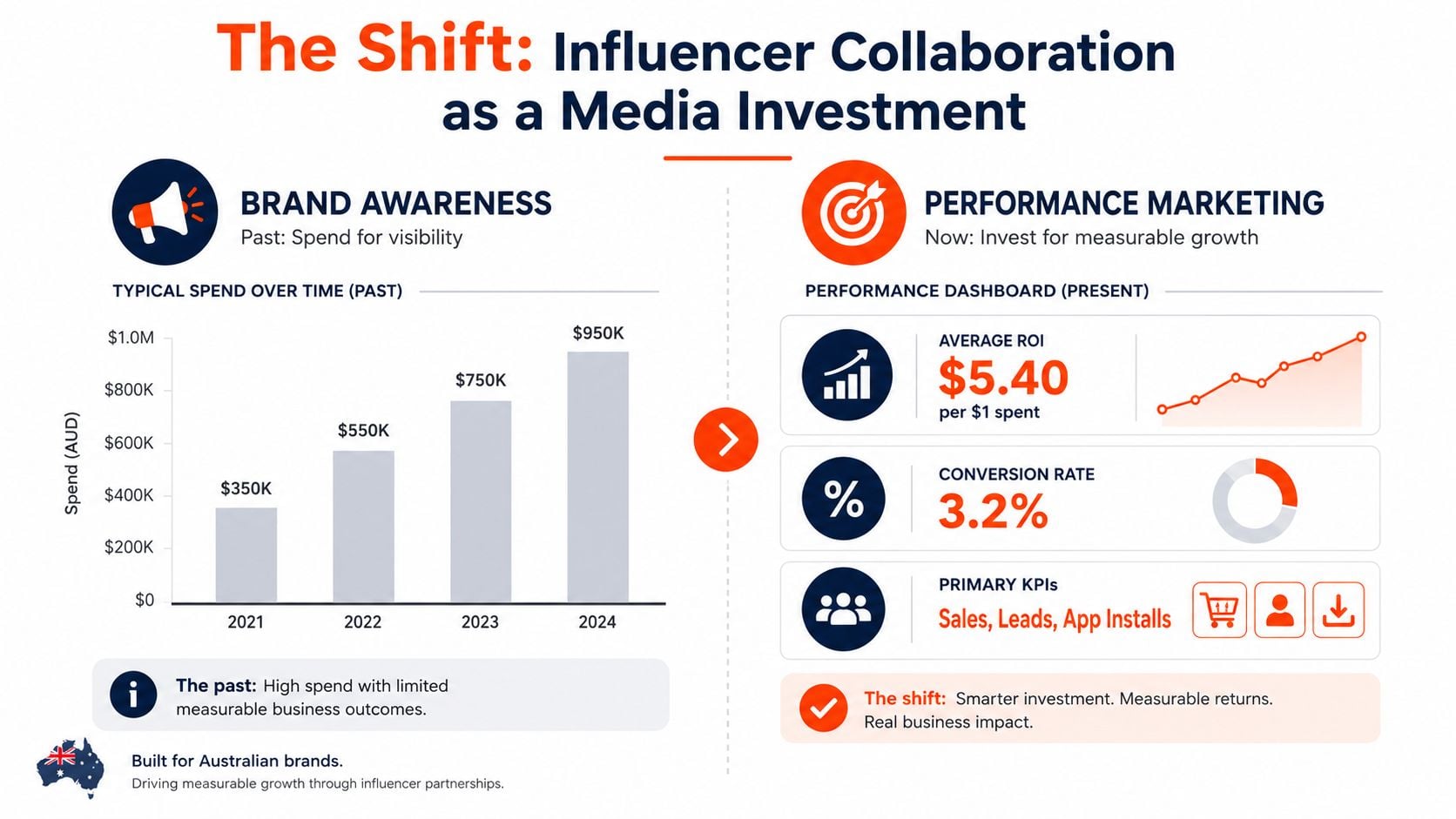
Australian influencer collaboration is no longer a side bet. AIMCO pegs the local industry at AU$520 million in 2024, up from AU$495 million in 2023, and that growth has happened while brands have turned creator work into structured media planning, not casual gifting AIMCO industry data summary. That shift matters because once a channel is large enough to demand contracts, usage rights, whitelisting, and performance measurement, it has to be judged like any other paid acquisition channel.
A common mistake is treating influencer collaboration as a brand layer that sits outside Google, Meta, and marketplace ads. In a crowded AU media mix, creator content often competes for the same conversion window, so the core question isn't whether influencers “work”, it's how to tell when they add incremental value and when they're just claiming credit for demand that was already in motion.
Why Influencer Collaboration Demands a Performance Marketing Mindset
More than 80% of Australian influencer campaigns in 2024 included some form of paid collaboration industry reporting on Australian campaigns. That tells you the market has moved well past organic product seeding. Brands now pay for creator time, content rights, and distribution options because the channel has matured into a measurable media buy.
What changed in the Australian market
The commercial logic is simple. Once a campaign is paid, it needs scope, timing, deliverables, approval, and measurement. The brand is no longer buying “exposure”, it's buying access to a creator's audience under defined terms, and that means the brief has to be closer to a PPC plan than a PR note.
The best teams think in terms of media outcomes. Which creators reach the right audience, which content format supports the buying journey, which assets can be reused, and which metrics prove the spend was worth it? That mindset also makes influencer work easier to compare against Google Ads, Meta campaigns, and SEO-led demand capture.
Practical rule: if you can't explain what action the content should drive, you don't have a campaign, you have sponsored noise.
The market scale matters too. AIMCO's AU$520 million estimate shows the channel is big enough to support both niche micro-creator activations and broader awareness plays AIMCO industry data summary. But scale alone doesn't protect you from poor measurement. A creator post can look strong in the feed and still add little to revenue if your attribution model is sloppy.
How to think about the channel
Treat influencer collaboration as one more instrument in the paid media orchestra. Some creators are better for demand creation, some for conversion assist, and some for content production that your media team can repurpose. That's why the channel belongs in the same planning cycle as budget allocation, creative testing, and landing page optimisation, not as a separate vanity exercise.
If your team is already improving return on ad spend elsewhere, this internal guide on how to improve ROI in digital marketing is a useful companion because the same discipline applies here. The channel only becomes predictable when the reporting gets as serious as the creative.
Sourcing Creators That Drive Conversions
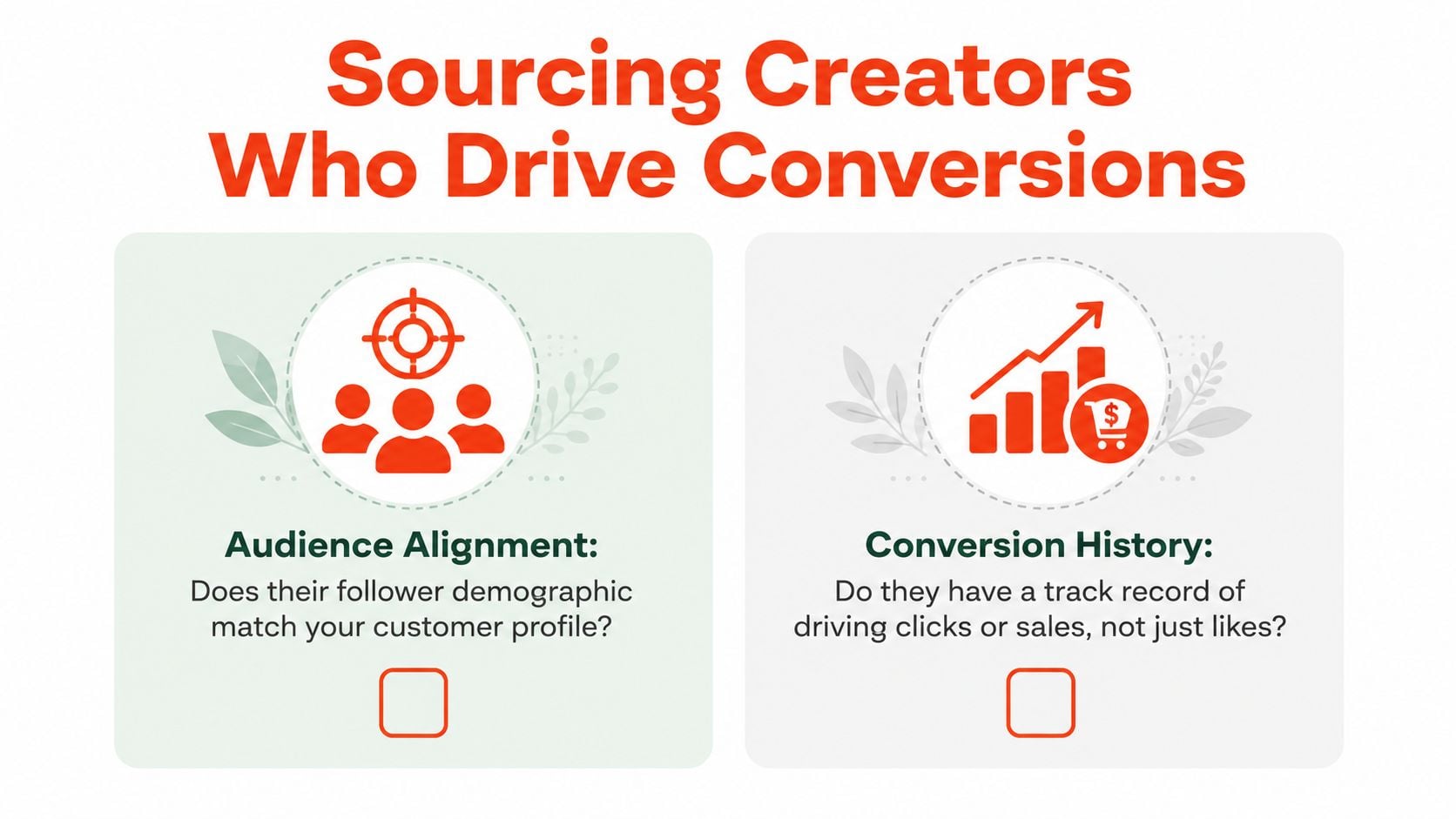
Follower count is a weak starting point. A creator with a large audience can still miss the mark if that audience does not overlap with your buyers, your geography, or your price point. The faster path is to start with the customer profile, then work backwards to the creator.
Start with audience fit, not fame
Use your own customer data first. If you sell into regional Australia, do not default to Sydney or Melbourne personalities just because they are visible. The brief should spell out the audience you need, the problem you solve, and the proof that will move that audience. If the creator's comments section is full of irrelevant chatter or bot-like engagement, that is a warning sign, not a growth signal.
A solid sourcing process usually checks three things:
- Audience alignment. Their followers should resemble your target customer in location, buying intent, or profession.
- Content format fit. Product demonstrations suit e-commerce, while opinion-led analysis suits B2B and LinkedIn.
- Conversion history. Look for evidence that their content gets clicks, saves, enquiries, or purchases, not just likes.
If you are refining your customer definition before outreach, the target customer framework is a useful reference point, because creator selection gets much easier when your ICP is specific.
Regional and niche relevance matter more than reach
Australian campaigns often over-index on metro visibility and underweight community trust. That creates weak fit for brands selling outside the eastern capitals or into culturally specific segments. Regional creators can be more valuable than larger national accounts when the audience trusts local recommendations and the logistics make sense for their buyers.
For teams working with repurposable creator assets, a practical resource on repurpose UGC with Klap can help you think beyond one-off posts. The key is not only sourcing the creator, but deciding whether the content can keep earning after the first placement.
Decide the creator tier by job to be done
Macro creators suit broad awareness, micro creators often suit tighter audience fit, and nano creators can work when trust and locality matter more than scale. In B2B, a niche subject-matter voice on LinkedIn can outperform a generalist personality if the target is qualified pipeline rather than raw reach. The question is always the same. What role should this creator play in the funnel?
Practical rule: if you cannot describe the creator's job in one sentence, you probably do not know why you are paying them.
Outreach Templates and Negotiation Tactics That Work
Initial interest is not delivery. In an Australian collaboration study, influencer outreach produced a 20.69% response rate and a 14.66% fulfilment rate study on Australian influencer outreach. That gap is the reason you need a pipeline, not a single email.
A usable outreach message
Keep the first note short, specific, and easy to answer. Mention why the creator fits, what the campaign is trying to achieve, and what you're asking them to do. Avoid sending a giant brief before they've expressed interest, because that usually lowers reply rates and makes the relationship feel transactional too early.
A strong first message looks like this in practice:
- Personal opening. Reference one post, one audience trait, or one content angle that shows you've watched their work.
- Clear ask. State whether you want a one-off post, a content series, or a longer partnership.
- Simple next step. Ask for a yes, no, or rate card rather than forcing a long back-and-forth.
Follow-up should be polite and sparse. If there's no response after a reasonable nudge, move on. Campaign calendars die when teams chase every creator instead of building a wider prospect list.
Brief hard enough to protect the campaign, flexible enough to keep it real
The brief needs the product truth, the audience problem, the mandatory claims, and the deliverables. It should not script every sentence. Creators know their audience cadence better than most brand teams, and over-directing them usually produces content that feels like an ad reading from a teleprompter.
Use milestone-based agreements so both sides stay aligned. A sensible structure is deposit, draft review, final approval, and live date, with payment tied to the agreed delivery stages. That protects you from the attrition problem shown in the Australian study and gives the creator clarity on what happens next.
Negotiate the rights that actually matter
Usage rights and whitelisting need explicit terms. If you plan to run the creator asset in paid media, say so early. If you need the content on your own channels, define duration and platform scope, because “usage rights” means very different things to different creators.
For inspiration on how brands formalise collaboration requests, the public collaboration form used by The Osthoff Resort shows the kind of practical detail brands often need, from social handles to proposed deliverables The Osthoff Resort collaboration form. The lesson isn't to copy the form, it's to ask enough operational questions that the partnership can ship.
Integrating Influencer Campaigns with PPC and SEO Tracking
The tracking problem shows up fast once influencer content enters a crowded AU media mix. A creator post, a Google ad, a Meta retargeting sequence, and marketplace placements can all touch the same buyer, and the credit often lands in the wrong place. If you want a real read on influencer collaboration ROI, the campaign has to live inside the same measurement system as paid search and paid social.
Build the tracking spine before launch
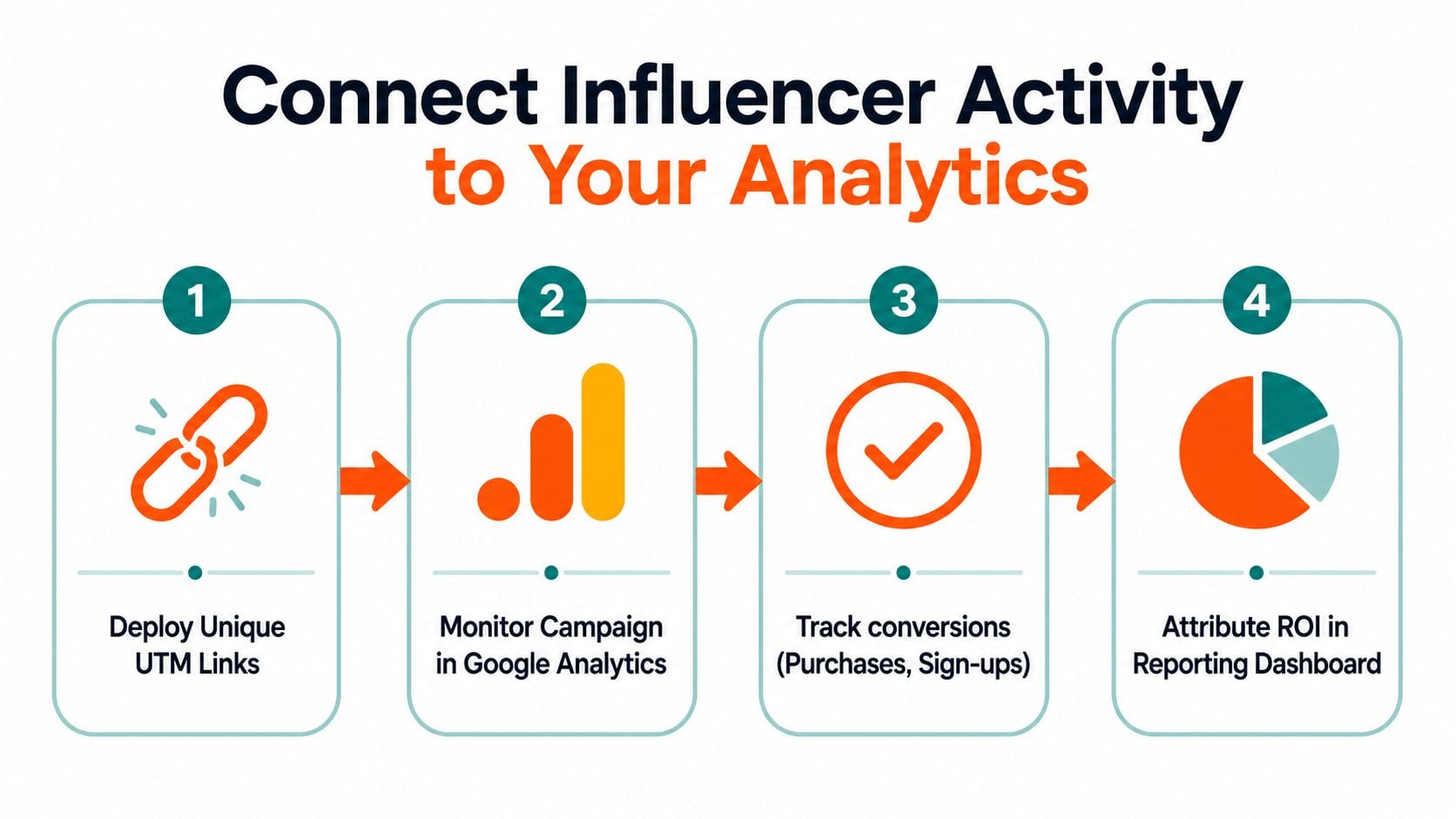
Every creator should get a unique UTM link. That lets you separate traffic by creator, platform, creative angle, and campaign period. From there, build a dedicated landing page or at least a dedicated offer path so you can see how the audience behaves once it lands.
For B2B campaigns, feed that traffic into your CRM so lead source, stage progression, and deal quality do not disappear after form fill. For e-commerce, pair the link with codes or affiliate identifiers so you can reconcile direct response with on-site behaviour. If your funnel crosses domains, this cross-domain tracking guide is the kind of infrastructure note that saves reporting later.
Measure the whole journey, not just the click
Google Analytics should show where the visit came from, Meta Ads Manager should show whether the audience was already in a paid social loop, and the CRM should show whether the lead was worth anything. That is also where brand mention tracking becomes useful, because not every useful creator effect arrives as a last-click conversion. A practical reference on brand mention tracking guide by Surva.ai helps teams think more broadly about citation and visibility signals.
The question is whether creator content created a new path or accelerated an existing one. If the same user saw a Google ad yesterday, a remarketing ad this morning, and a creator post at lunch, your attribution model will over-credit somebody unless you have designed the measurement carefully.
Practical rule: if you already run search and social at scale, do not trust a single last-click report to decide whether the creator spend worked.
Use content beyond the campaign window
Creator assets can support SEO indirectly through content amplification, on-site proof, and earned mentions. In B2B, a strong creator interview can become a landing page, a sales enablement asset, and a backlink opportunity if it is handled properly. In e-commerce, the same footage can be repurposed into product pages, email, and paid social tests. That makes the collaboration easier to defend internally, because the asset keeps working after the paid push ends.
The trick is to treat the creator as part of the broader media and search system, not as a one-off post. Once that is in place, the campaign gives you cleaner attribution, better incrementality reads, and a more realistic view of how influencer collaboration supports the rest of your PPC and SEO spend.
KPI Frameworks and When to Run Incrementality Tests
Follower-based engagement rates can flatter the wrong creator. A reach-based engagement rate, calculated as (Total Engagements ÷ Total Reach) × 100, gives you a better sense of actual audience exposure measurement guidance. That matters because creator content can look healthy at the surface while barely moving real users.
Use the right KPI for the objective
If the campaign is about awareness, measure reach quality and saved content. If it's about traffic, watch click-throughs and landing page behaviour. If it's about revenue, use sales, CAC, and repeat purchase where possible. The metric has to match the job, otherwise the report becomes decorative.
| Metric | Average | Strong | Measurement Window |
|---|---|---|---|
| Engagement rate | 2 to 3% | 8 to 15% | Launch through 7 to 14 days after collaboration |
| Engagement rate basis | Reach-based | Better exposure signal | Launch through 7 to 14 days after collaboration |
| Campaign tracking | Ongoing | Clear contribution signal | Launch through 7 to 14 days after collaboration |
The table above uses the benchmarks commonly applied in creator measurement guidance measurement guidance. The point isn't to chase a universal benchmark, because every niche behaves differently. The point is to separate normal variation from meaningful movement.
When incrementality tests are worth it
If influencer collaboration is running alongside Google, Meta, and marketplace ads, holdout testing becomes more valuable. That's especially true when the audience is seeing the same offer across several channels inside one buying window. In that situation, a simple attributed sale does not tell you whether creator spend created incremental demand or just captured demand that was already going to convert.
Incrementality testing is worth the effort when the budget is material, the channel mix is crowded, or the finance team needs a stronger answer than platform-reported ROAS. Use a holdout group, compare exposed and unexposed behaviour, and track the difference over a defined campaign window. Then report the result in plain business language, not marketing jargon.
The media environment makes this even more relevant. Australia's digital ad market remains concentrated in search and social, with digital advertising revenue reaching A$4.3 billion in Q4 2025 and search and social staying the biggest channels IAB Australia/PwC Internet Advertising Revenue Report context. In a mix that dense, influencer collaboration should earn its place on incrementality, not instinct.
Legal Compliance and Contract Essentials for Australian Campaigns
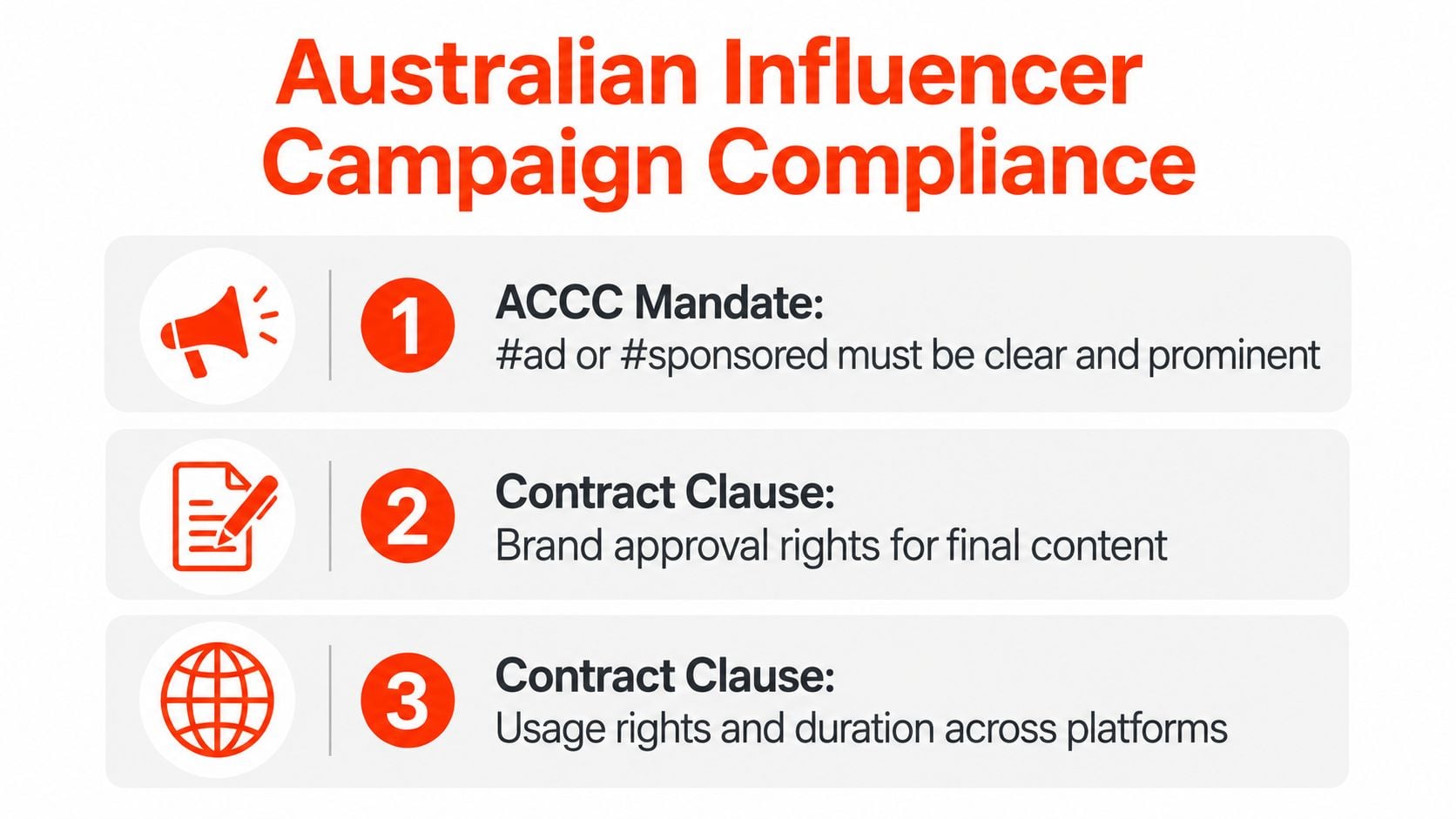
Australian creator campaigns need disclosure discipline. The ACCC and AANA both emphasise clear identification of sponsored relationships, and the AANA Code of Ethics requires advertising relationships to be obvious to the audience AANA Code of Ethics. If a post is commercial, the audience should not have to guess.
The clauses that prevent most problems
A solid agreement should include deliverables, timing, review rights, payment milestones, cancellation terms, and ownership or usage rights. If you plan to amplify the content, add whitelisting language. If the creator is restricted from working with competitors, define the exclusion clearly and keep it realistic.
Ambiguity is what causes most friction. Vague deliverables lead to disputes over what was promised. Missing approval terms create delays. Unclear intellectual property language makes later repurposing awkward, especially when paid media teams want to use the asset outside the original post.
Compliance checklist for Australian campaigns
- Disclosure language. Make sure sponsored content is clearly labelled, not hidden in a caption footer.
- Approval process. Define who signs off, what gets reviewed, and how many revision rounds are included.
- Usage scope. State where the content can run, for how long, and whether paid amplification is allowed.
The cleanest contracts protect both sides. Creators need fair payment and clarity. Brands need brand safety, disclosure compliance, and the right to use approved assets without legal ambiguity. If a clause feels optional, it probably belongs in writing.
Building a Scalable Influencer Collaboration Programme
One-off campaigns are fine for testing. Scalable programmes are better for compounding what works. The brands that win here build a roster of creators, standardise the brief, and keep measurement consistent enough that performance can be compared across campaigns.
The first move is operational, not creative. Create a shortlist of creators for different jobs, awareness, conversion, and content production, then track who delivered, who replied quickly, and who needed too much management. That historical record matters more than a fresh follower spike.
A workable 90-day approach is straightforward. Start with a narrow pilot, keep the deliverables simple, measure against one clear objective, then use the strongest creator relationships as the base for a larger always-on programme. If your team can't manage that internally yet, bring in external support until the process is repeatable.
For many SMEs, the right resourcing decision is to keep strategy and tracking close to the business while outsourcing execution or specialist media buying. That keeps the channel accountable without turning it into a full-time admin burden. The goal isn't more creator activity, it's cleaner contribution to revenue, lead quality, and content supply.
Click Click Bang Bang helps brands bring that same performance discipline to influencer collaboration, PPC, and AI-first SEO, so creator campaigns sit inside a measurement system your finance team can trust. If you want a partner that can connect attribution, reporting, and paid media execution without the fluff, visit Click Click Bang Bang and see how their approach fits your next campaign.
Read NeXt
Or Read Our Latest
Click. CLick. Subscribe.
Get our best PPC insights, industry updates, and power moves delivered straight to your inbox. No fluff, just high-caliber strategies that actually work.
Don’t Leave Just Yet
Try Us For 30-Days,
Risk Free!!
We guarantee that you’ll love our work within the first 30 days, if not you’ll get your money back.
What have you got to lose?