

PPC Campaign Management Mastery for Australian Businesses
Last Updated

Understanding What Australian Businesses Really Need
Australian businesses recognize that PPC campaign management is essential for success in the competitive digital market. It's more than just a tactic; it's a core strategy. Conversations with business owners and marketing directors reveal a shift away from broad targeting and generic messaging. Instead, thriving businesses focus on connecting with Australian consumers on a deeper level, tailoring their approach to resonate with local nuances.
Addressing Unique Challenges
Australian companies face specific hurdles, such as the influence of seasonal changes on consumer behavior and the difficulties of geographic targeting across vast distances. Overcoming these challenges requires a customized approach. For instance, a swimwear company needs to amplify its campaigns during the summer months, focusing its messaging on beachgoers. This targeted focus on seasonality and location is critical for effective PPC campaigns. Recognizing Australia's diverse cultural landscape allows for more precise and impactful campaigns, moving beyond generic advertising to engage authentically with the target audience.
The Shift in PPC Strategy
Australia's digital advertising market has seen significant growth. Digital ad spend is predicted to surpass $13 billion by 2025. Within this expanding market, Pay-Per-Click (PPC) advertising has become a cornerstone for businesses pursuing measurable growth. PPC has evolved from a supplementary channel to a vital component of most digital marketing strategies. Australian businesses are using its precision targeting to compete in a saturated market. Recent years have shown double-digit growth in PPC ad spend. In 2024, the average monthly cost for PPC management services through external agencies ranged from $1,001 to $3,000 for 21.2% of surveyed businesses. This represents a significant investment in professional PPC management. For more in-depth statistics, see: https://www.rebootonline.com/ppc-statistics/. This shift underscores the importance of strategic optimization for maximizing ROI.
Learning From Success Stories
Analyzing successful Australian campaigns reveals key differentiators. Companies that prioritize data-driven decision-making, rigorous testing, and ongoing optimization see the best results. They recognize that PPC campaign management requires continuous effort, not a set-and-forget approach. These businesses also understand the value of collaborating with experienced PPC professionals familiar with the Australian market. Such partnerships provide access to advanced tools, effective strategies, and valuable insights, all of which can significantly enhance campaign performance. By studying these success stories, businesses can learn best practices and adapt them to their own situations.
The Building Blocks That Actually Drive Results
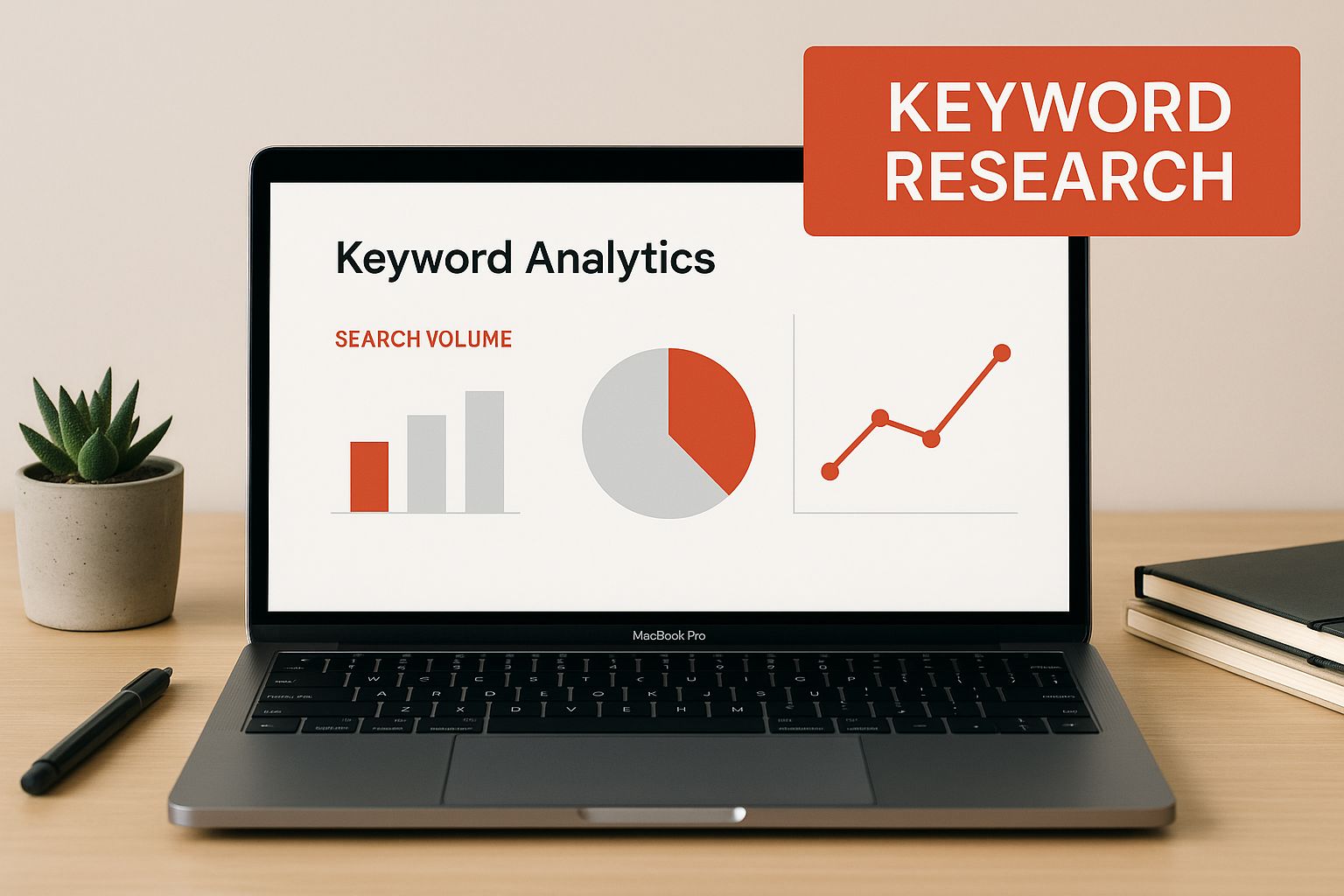
The infographic above illustrates a digital workspace centered around keyword research, a cornerstone of successful PPC campaigns. Visualizing keyword data helps marketers pinpoint valuable search terms and understand search volume trends, crucial for connecting with your target audience.
Keyword Selection and Research
Effective PPC campaign management begins with choosing the right keywords. This means identifying the terms your potential customers in Australia use when searching for products or services like yours.
For example, instead of targeting "shoes," a retailer might use "leather boots Melbourne" or "kids' running shoes Sydney." This focused approach connects with a more qualified audience. Targeting specific locations like Melbourne or Sydney further refines your reach. For more insights into best practices, check out this resource: How to master Google Ads best practices.
Ad Copy That Resonates
After selecting keywords, crafting compelling ad copy is crucial. Your ad copy should capture attention, highlight value, and encourage clicks.
Effective ad copy seamlessly integrates relevant keywords, maintains a consistent brand voice, and includes a clear call to action. Think "Shop Now" or "Learn More." Compelling ad copy directly influences your click-through rate and campaign performance.
Landing Page Optimization
A well-optimized landing page is essential for turning clicks into customers. Ensure your landing page content aligns with your ad copy and keywords. A user-friendly design with clear navigation, strong visuals, and a prominent call to action is key.
For example, if an ad promotes "discount office furniture Brisbane," the landing page should prominently display discounted office furniture available in Brisbane. This consistency creates a positive user experience and boosts conversion rates.
Advanced Campaign Structure
Campaign structure significantly impacts your results. A well-structured campaign improves quality scores, simplifies management, and reduces costs.
This involves grouping related keywords into tightly themed ad groups. Create separate campaigns for different product lines or service offerings. Effective campaign structuring requires careful planning and understanding your target audience’s search behavior.
To illustrate the impact of various PPC campaign components, take a look at the table below:
A comparison table demonstrating the essential elements of a Pay Per Click campaign, their primary functions, how much they impact performance, and how often they require management is provided below.
| Component | Primary Function | Performance Impact | Management Frequency |
|---|---|---|---|
| Keyword Selection & Research | Identifying relevant search terms | High | Ongoing |
| Ad Copy | Engaging users and driving clicks | High | Ongoing |
| Landing Page Optimization | Converting clicks into customers | High | Ongoing |
| Campaign Structure | Organizing campaigns for efficiency and relevance | Medium | Weekly/Monthly |
| Ad Extensions | Enhancing ad visibility and providing information | Medium | Weekly/Monthly |
This table summarizes the key elements that contribute to a successful PPC campaign. As you can see, keyword research, ad copy, and landing page optimization have the most significant impact on performance and require continuous attention. While campaign structure and ad extensions are also important, they typically require less frequent adjustments.
Ad Extensions for Enhanced Visibility
Ad extensions provide supplementary information and calls to action within your ads, boosting visibility and click-through rates.
These extensions can include location details, phone numbers, site links, and special offers. They provide more reasons for potential customers to engage and improve ad prominence on search results pages. This increased visibility can significantly enhance your campaign's overall performance.
These are just some of the elements we prioritize at Click Click Bang Bang to develop high-performing PPC campaigns for Australian businesses. These components work together to drive conversions and achieve your marketing goals.
Finding Keywords That Actually Convert
Choosing the right keywords is paramount for successful PPC campaign management. While basic keyword tools provide a starting point, a true competitive advantage comes from uncovering hidden opportunities. This means looking beyond the obvious and identifying the keywords your competitors might be overlooking. This section explores how successful Australian businesses achieve this.
Advanced Keyword Research Techniques
Effective keyword research involves more than simply entering terms into a tool like Semrush. It requires a deep understanding of your target audience and their search behavior. Consider the specific language they use, the questions they ask, and the problems they are trying to solve. This will help you uncover high-intent, low-competition keywords that can drive valuable traffic to your site.
For example, instead of targeting "dog food," you could target "best organic puppy food for sensitive stomachs." This is far more specific and will likely attract customers actively looking to purchase. This approach, similar to a niche marketing strategy, allows you to connect with a highly engaged audience.
Understanding Australian Search Behaviour
Australian search behavior has its own unique characteristics. It's influenced by local slang, cultural nuances, and seasonal trends. Understanding these factors can significantly impact your keyword strategy.
For example, during the footy season, searches related to team merchandise and tickets will increase. This presents a timely opportunity for businesses selling related products or services to target these keywords. Similarly, consider regional variations in language. "Runners" might be called "sneakers" in some areas, influencing the effectiveness of your keyword choices.
Negative Keyword Management
Just as important as targeting the right keywords is excluding the wrong ones. This is where negative keywords come in. They prevent your ads from showing for irrelevant searches, saving you money and improving your ad relevance.
For example, if you sell high-end jewellery, you might add negative keywords like "cheap," "discount," or "costume" to avoid attracting customers looking for budget options. This focused approach ensures your budget is used efficiently, reaching the most qualified audience. A systematic approach to keyword selection leads to more effective outcomes. Research shows academics with structured note-taking spend 40% less time on literature reviews and cite 35% more relevant sources. Learn more about literature review efficiency.
Expanding Your Keyword List
Keyword research is an ongoing process. As search trends change, so should your keyword list. Continuously explore new keywords, test their performance, and adjust your strategy based on the results.
One effective method is to analyze your competitors' keywords and identify any gaps or opportunities. This can help you discover relevant keywords with the potential to drive valuable traffic. Another approach is to use keyword research tools like Ahrefs to identify related keywords and long-tail variations. This involves exploring variations of your core keywords to capture more specific searches, reaching a wider audience.
Building Campaigns That Scale With Your Business

Smart campaign architecture is essential for effective PPC campaign management. It's the difference between thriving and just surviving in the competitive digital advertising landscape. This involves structuring your campaigns for easy management, seamless optimization, and strong results. Let's explore practical ways to build campaigns that can grow with your business.
Structuring Campaigns for Success
The first step is aligning your campaigns with your business goals. Whether it's lead generation, e-commerce sales, or brand awareness, your campaign structure should reflect that focus.
For e-commerce, separate campaigns for different product categories can be highly effective. For lead generation, campaigns organized around specific services might be more suitable. This targeted approach streamlines analysis and optimization.
Setting Up Effective Tracking
Robust tracking offers crucial insights into how your campaigns are performing. Implement conversion tracking through tools like Google Analytics to measure user actions after clicking your ads. This could include purchases, form submissions, or phone calls.
Track key metrics like click-through rates (CTR), conversion rates, and cost per conversion. This data reveals areas for improvement and measures the effectiveness of your PPC management strategies.
Budget Allocation and ROI
A well-defined budget allocation strategy is crucial for maximizing your return on investment (ROI). Distribute your budget across campaigns based on their potential and past performance.
High-performing campaigns may justify a larger budget share. Regularly monitor performance and adjust your budget allocation to optimize results. This dynamic approach allows you to capitalize on successful campaigns and address any underperforming ones.
Naming Conventions That Scale
As your campaigns multiply, clear and consistent naming conventions become essential. Develop a system that easily identifies campaigns, ad groups, and keywords.
For instance, use abbreviations for locations (e.g., "SYD" for Sydney) and product categories (e.g., "SHOES" for shoes). This keeps your PPC campaign management organized and manageable, even with a large volume of campaigns. This organized system promotes efficiency and simplifies navigation.
Geographic Targeting and Device Optimization
Target the Australian market effectively by utilizing geographic targeting. Focus your campaigns on specific regions or cities to connect with the right audience.
Furthermore, optimize your campaigns for different devices. Mobile users often have different needs and behaviors compared to desktop users. Tailor your bids and ad copy to enhance performance on both mobile and desktop. Consider factors like screen size and user behavior for device-specific optimization.
By implementing these strategies, you can create robust and scalable PPC campaigns that effectively reach your Australian target audience. Building a strong foundation is crucial for success in the dynamic realm of PPC campaign management.
Embracing Automation Without Losing Control
The world of PPC campaign management is rapidly changing, largely due to the continued advancements in AI and automation. Many Australian businesses are finding it challenging to navigate these new tools effectively. This section explores how to harness the power of automation while maintaining essential human oversight.
Smart Bidding Strategies for Efficiency
Automated bidding offers a powerful way to save time and potentially improve your campaign results. Platforms like Google Ads offer a range of smart bidding strategies, including Target CPA and Maximize Conversions. These strategies leverage machine learning to optimize your bids in real time, aiming to help you reach your desired outcomes.
However, it's crucial to remember that smart bidding isn't a "set it and forget it" solution. Careful monitoring and adjustments are still necessary. Understanding how each strategy works and selecting the one that aligns with your specific goals is paramount. Regular performance reviews and tweaks are essential for optimal results.
Automated Ad Creation and Brand Consistency
AI-powered tools are now capable of creating ad copy and even visuals. While this offers significant time savings, maintaining control over your brand's messaging is crucial.
Ensure any automated ad creation aligns perfectly with your established brand voice and style guide. Review and edit AI-generated content to ensure it truly resonates with your target audience. This thoughtful blend of automation and human oversight ensures consistent quality and accurate brand representation.
The Impact of AI on PPC in Australia
PPC campaign management in Australia is undergoing a transformation thanks to AI and automation. By 2025, we expect tasks like bid adjustments and ad creation to be increasingly handled by AI platforms. This shift creates greater efficiency, allowing marketers to dedicate more time to strategic thinking.
Interestingly, a comparison reveals that agencies with average monthly PPC spends tend to have more staff (15.2 vs. 6.2) compared to in-house teams. Yet, agencies often achieve lower costs ($131,705 vs. $323,699 annually). This highlights the scalability and potential cost-effectiveness of agency models.
AI-generated ads are also becoming more prevalent, with platforms like Meta offering AI-generated imagery for Australian businesses. These advancements are reshaping the PPC landscape, making it increasingly data-driven. For more detailed statistics, check out this insightful article: The Biggest PPC Trends for 2025.
Advanced Audience Targeting With AI
AI is revolutionizing audience targeting. Platforms are developing sophisticated tools to help you identify and connect with your ideal customers more effectively.
By analyzing vast amounts of data, these tools can uncover hidden patterns and valuable insights about your target audience. This allows for refined targeting parameters, enabling you to reach the most receptive prospects. This precision leads to improved campaign performance and a stronger ROI.
The Evolving Role of the PPC Manager
The role of the PPC manager is transforming alongside the rise of automation. The focus is shifting away from manual tasks and towards strategy, analysis, and optimization.
Today's PPC managers are becoming orchestrators of automated tools, ensuring they work together seamlessly. This involves:
- Defining clear campaign goals and objectives: Understanding the desired outcomes is paramount.
- Selecting and configuring automated features: Choosing the right tools for the job is key.
- Monitoring performance and making adjustments: Regularly evaluating and adapting strategies is essential.
- Analyzing data and extracting insights: Uncovering valuable information from campaign data is crucial.
- Staying up-to-date with industry trends: Keeping pace with the latest advancements is vital.
By focusing on these key areas, PPC managers can continue to add significant value to their campaigns, even in an increasingly automated world. This means harnessing the power of automation while retaining that essential human oversight.
Tracking What Matters and Optimising for Growth
Effective Pay-Per-Click (PPC) campaign management involves more than just watching clicks and conversions. It requires a deep understanding of the metrics that truly reflect business success and building reporting systems to inform strategic decisions. Let's explore these key metrics and how to leverage them for continuous improvement.
Key Performance Indicators (KPIs) Beyond the Basics
Clicks and conversions are essential, but other Key Performance Indicators (KPIs) provide a more complete picture. Cost Per Acquisition (CPA), for instance, tells you how much you're spending to acquire each new customer. Lower CPAs are generally better, indicating efficient ad spend. Return on Ad Spend (ROAS) shows the revenue generated for every dollar spent on advertising. A higher ROAS signifies a more profitable campaign.
Impression share and quality score also offer valuable insights. Impression share reveals how often your ads are shown compared to competitors. A low impression share could mean missed opportunities. Quality score, reflecting the relevance and quality of your ads and landing pages, can lower costs and improve ad positioning.
Monitoring these metrics gives you a comprehensive understanding of campaign performance, highlighting areas for improvement. This data-driven approach is crucial for successful PPC campaign management.
Optimising For Continuous Improvement
PPC campaigns require constant attention. Regular data analysis helps identify trends and resolve issues. For example, a high CPA might necessitate adjustments to your bidding strategy or targeting. A low conversion rate may call for optimising landing pages or ad copy.
Testing is key. A/B testing different ad and landing page versions helps determine what resonates with your audience. Experiment with bidding strategies and targeting parameters to find the most effective approach. Tools like Google Ads Conversion Tracking offer detailed insights into user behavior. Our guide on How to master Google Ads conversion tracking can help you get started.
Attribution Modelling For A Complete Picture
Attribution modelling reveals the customer journey and how each touchpoint contributes to conversions. It goes beyond simply attributing the last click. Different models assign value to various touchpoints, providing a more nuanced understanding of campaign effectiveness.
A first-click attribution model credits the first interaction, while a linear attribution model distributes credit evenly across all touchpoints. Choosing the right model aligns with your business goals and customer journey characteristics.
Optimising Across The Sales Funnel
Effective PPC management considers all stages of the sales funnel. Tailor your messaging and targeting to reach prospects at each stage, from awareness to consideration to conversion.
Focus on building brand awareness at the top of the funnel. Provide more detailed information in the middle. Encourage conversions with targeted offers and clear calls to action at the bottom of the funnel. This strategic approach nurtures prospects and maximises conversion potential.
Reporting That Drives Smart Decisions
Implement reporting systems that deliver clear, actionable insights. Regular reporting helps monitor progress, spot trends, and make data-backed decisions. Use dashboards and visualisations to track key metrics and identify areas for improvement.
Sharing reports with stakeholders keeps them informed and demonstrates the value of your PPC efforts. This transparent approach fosters collaboration and ensures everyone is aligned on campaign goals. Regular reporting can, for instance, showcase the impact of PPC on overall revenue, highlighting the importance of strategic PPC campaign management.
To illustrate the connection between metrics, optimisation actions, and expected timeframes, let's look at the following table:
Key PPC Metrics and Optimisation Actions: Essential performance indicators with corresponding optimisation strategies and expected timeframes for results
| Metric | Target Range Example | Primary Optimisation Action | Expected Result Timeline |
|---|---|---|---|
| Click-through Rate (CTR) | 2% – 5% | Improve ad copy, test different calls to action, refine targeting | 1-2 weeks |
| Conversion Rate | 2% – 10% | Optimise landing page, A/B test different offers, improve ad relevance | 2-4 weeks |
| Cost per Acquisition (CPA) | Depends on industry/product | Refine bidding strategy, adjust targeting, improve quality score | 1-3 weeks |
This table provides target range examples, which can vary based on industry and business goals. Consistent tracking and adaptation based on these metrics are vital for long-term success in PPC campaign management.
Making the Right Choice for Your Business
One of the biggest decisions Australian businesses face is how to manage their Pay-Per-Click (PPC) campaigns. Should you handle it in-house, or partner with experts? This section explores the costs and benefits of both approaches, drawing on real-world experiences from business owners.
In-House PPC Management: Costs and Considerations
Managing PPC internally might seem budget-friendly at first glance. However, hidden costs can quickly surface. Here's what to consider:
-
Staffing: Building a dedicated PPC team involves substantial investment. Salaries, benefits, and ongoing training for skilled professionals add up. A single PPC manager might not be enough for complex campaigns, leading to additional recruitment and training expenses.
-
Software and Tools: Effective PPC management relies on specialized tools for keyword research, competitor analysis, and reporting. These often come with hefty subscription fees.
-
Time Investment: PPC requires constant attention. Even with automation, tasks like analysis, optimization, and reporting consume significant staff time, potentially diverting resources from other core business activities.
-
Keeping Up With Changes: The PPC world is constantly evolving. In-house teams must dedicate time to stay current with platform updates, new features, and best practices. This continuous learning demands commitment.
Agency Partnerships: Benefits and Expectations
Partnering with a specialized PPC agency like Click Click Bang Bang offers several advantages:
-
Expertise: Agencies possess extensive knowledge and experience across diverse industries and platforms. They're well-versed in the latest trends and best practices, enabling more strategic and effective campaigns.
-
Scalability: Agencies can adapt to your evolving needs. Whether you're expanding into new markets or increasing your budget, they offer the flexibility to scale campaigns efficiently alongside your business growth.
-
Access to Advanced Tools: Agencies often utilize premium tools and technologies that might be too expensive for individual businesses. These advanced tools provide deeper insights and enhanced campaign management.
-
Objective Perspective: An external agency brings an unbiased perspective, identifying areas for improvement that internal teams might overlook. This fresh viewpoint can introduce innovative ideas and strategies.
Hybrid Approaches: Combining Internal and External Expertise
Some businesses choose a hybrid approach, blending internal control with external expertise. This can involve collaborating with an agency on specific campaign aspects, like strategy development or ongoing optimization, while retaining in-house management of other tasks.
This model allows businesses to leverage specialized agency skills while maintaining a degree of internal control. It also facilitates knowledge sharing and collaboration, fostering professional development and strengthening in-house capabilities.
Evaluating Potential PPC Partners
Selecting the right PPC partner is essential. Look for agencies that demonstrate:
-
Proven Track Record: Review case studies and testimonials to assess their success stories. Focus on tangible results and proven expertise.
-
Transparent Reporting: Clear, regular reporting is vital. Ensure the agency provides detailed performance data and explains their strategies clearly.
-
Clear Communication: Open communication is crucial. Choose a responsive agency that keeps you updated on progress and any necessary adjustments.
-
Flexible Agreements: Avoid long-term contracts. Opt for flexible agreements that allow you to adapt services as needed.
Structuring Agreements for Maximum Value
When partnering with an agency, clearly define objectives and Key Performance Indicators (KPIs). Establish the scope of work, reporting frequency, and payment terms upfront to prevent misunderstandings and ensure alignment.
Regularly review performance with your agency, discussing any concerns or opportunities. Make adjustments as needed to keep campaigns aligned with your business objectives and maximize your investment.
Making the Best Decision for Your Growth
By carefully weighing these factors, you can determine the best approach for your business: in-house management, agency partnership, or a hybrid model. The right choice will empower you to achieve your objectives and maximize your Return on Investment (ROI) in the competitive Australian market.
Ready to elevate your PPC campaigns? Contact Click Click Bang Bang today for a free consultation and discover how we can help your business thrive.
Read NeXt
Or Read Our Latest
- Manual vs Automated Bidding for PPC Success
- Conversion Tracking Setup: A Complete AU Guide
- Instagram Advertising Australia: Complete 2026 Guide
- Pay Per Click: A Beginner’s Guide for Australian Marketers
- Display Advertising on Google: The Complete Australian Guide
- Stakeholder Communication Plan How to Build One That Works
Click. CLick. Subscribe.
Get our best PPC insights, industry updates, and power moves delivered straight to your inbox. No fluff, just high-caliber strategies that actually work.
Don’t Leave Just Yet
Try Us For 30-Days,
Risk Free!!
We guarantee that you’ll love our work within the first 30 days, if not you’ll get your money back.
What have you got to lose?