

Unforgettable Real Estate Branding Strategies for 2026
Last Updated
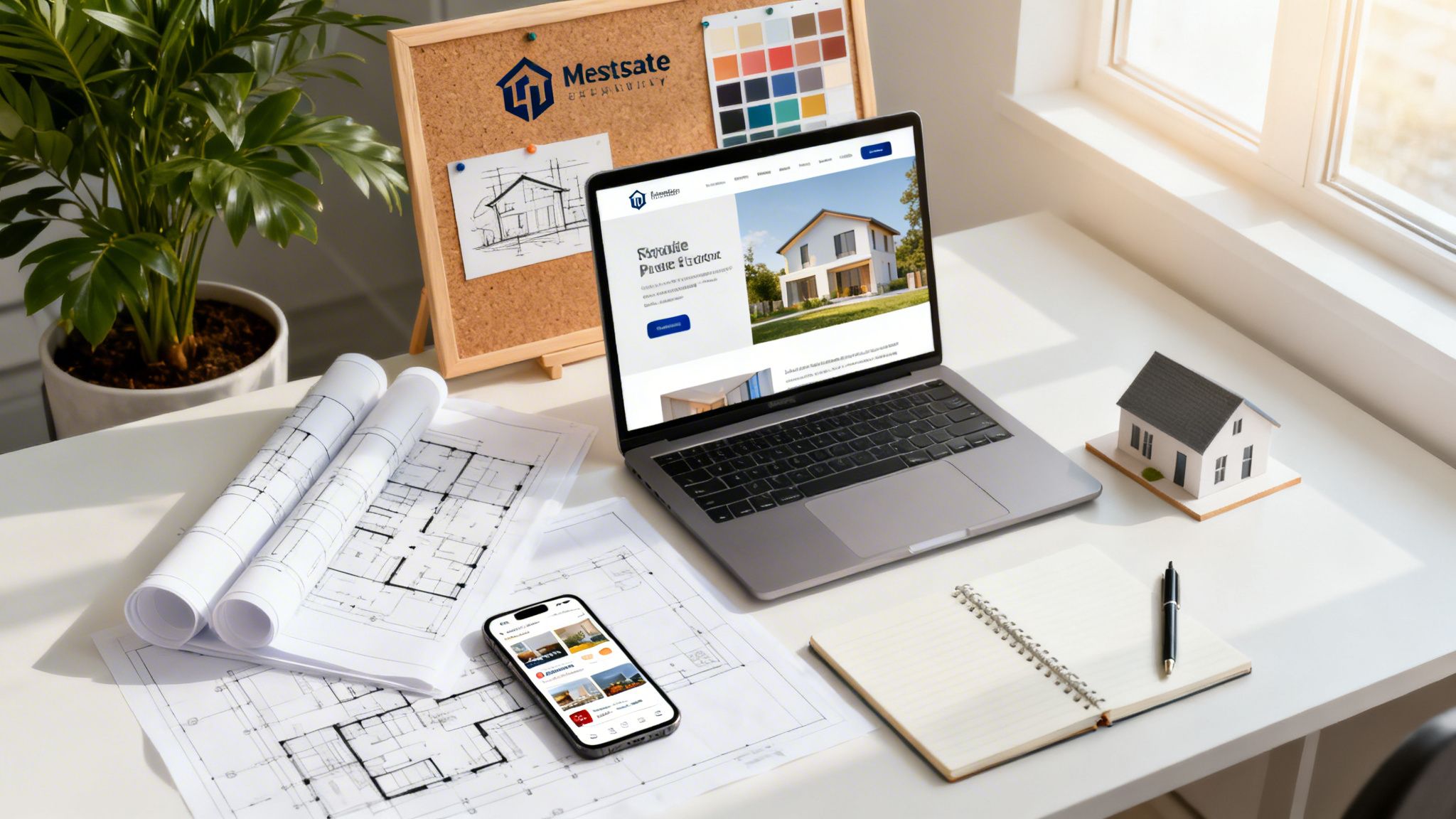
When you hear the term “real estate branding,” it’s easy to think of logos, slogans, or maybe a fancy “For Sale” sign. But that’s just scratching the surface. Your brand is the entire experience you promise and deliver to your clients. It’s the blueprint for how you do business, shaping how people see you in a crowded market and building the kind of trust that separates you from thousands of other agents.
A powerful brand isn’t just a nice-to-have; it’s a long-term asset that appreciates over time, just like the properties you help people buy and sell.
What Is Real Estate Branding and Why It Matters
Think of your brand as your professional identity. It’s not about your marketing materials, but what those materials represent: your reputation, the specific client journey you’ve designed, and the unique value you bring to the table. In a sea of agents, a strong brand is what makes you memorable and trustworthy—the first person your ideal client thinks of when they need help.
Without a clear brand, you’re just another agent competing on price or who’s available this weekend. You become a commodity. But with a well-defined brand, you build a foundation for real, sustainable growth. A compelling brand story creates an emotional connection, turning a one-time transaction into a lifelong relationship that fuels referral business. And as any seasoned agent knows, referrals are the lifeblood of a successful career.
The Business Value of a Strong Brand
Putting effort into your brand isn’t an expense—it’s one of the smartest investments you can make in your business, with returns you can actually measure. It shifts your business from being just a service provider to a recognised authority in your corner of the market. The benefits go far beyond looking good and hit your bottom line directly.
Here’s what a great brand really does for you:
- Builds Unwavering Trust: A professional and consistent brand screams reliability. From your website to your open house flyers, a polished identity tells clients you’re an expert who takes their business seriously. They’re far more likely to trust someone who presents a coherent, professional image at every turn.
- Attracts High-Value Clients: Your brand gives you the power to position yourself as the expert for a specific niche—whether that's luxury waterfront estates, first-time homebuyers, or investment properties. This specialisation acts like a magnet for clients who are actively looking for your unique skills and are often willing to pay a premium for them.
- Creates a Loyal Client Base: Branding is about connection. When clients feel aligned with your values and mission, they don’t just use you once. They come back for their next move and, more importantly, they become your biggest advocates, telling their friends and family about you. That’s how you build a powerful referral engine.
In essence, real estate branding is the art of shaping perception. It’s about intentionally managing how potential clients think and feel about your business before they even pick up the phone.
Ultimately, your brand becomes a tangible business asset. Just as a well-maintained property gains value, a strong brand grows in equity over time. It provides a competitive advantage that’s incredibly difficult for others to copy, ensuring your business doesn't just survive but thrives for years. That’s why branding is so critical for individual agents and boutique agencies, not just the big-name franchises.
Defining Your Core Brand Elements
Now that we’ve covered why branding is such a game-changer, it’s time to get our hands dirty and build the actual foundation of your brand. This is where we shift from big-picture ideas to the tangible assets that shape how clients see you. These core elements are your business’s DNA, ensuring every single touchpoint—from an Instagram post to a "For Sale" sign—feels consistently and authentically you.
Think of it like building a house. You wouldn't just start throwing up walls without a solid blueprint. Your brand’s positioning, visual identity, and voice are that blueprint. Getting them right from the start saves you from confusing and costly rebranding efforts down the track. It’s the strategic work that makes every dollar you spend on marketing work harder.
Carve Your Niche with Brand Positioning
Brand positioning is all about owning a specific piece of real estate in your ideal client's mind. It answers the most important question in business: "Why should I choose you over every other agent out there?"
Just saying you "offer great service" won't cut it. That's not a differentiator; it's the bare minimum. Effective positioning demands you get specific. Are you the go-to expert for first-time homebuyers trying to crack the complex Perth market? Or are you the premier agent for luxury waterfront properties in Sydney?
Your position is your promise. It tells a specific group of people that you are uniquely qualified to solve their specific problem. This clarity attracts the right clients and repels the ones who aren't a good fit, saving everyone time and energy.
To nail your positioning, take a hard look at your strengths, your passions, and the unmet needs in your local market. Don't be afraid to get niche. A deep focus on a particular area, property type, or client demographic almost always builds more authority and profit than trying to be everything to everyone. For a deeper dive, our guide on how to define your target customer walks you through it step-by-step.
Before we move on, let's break down these pillars into a simple framework. Think of this table as your brand's cheat sheet.
Core Elements of Your Real Estate Brand
| Brand Element | What It Means | Key Question to Ask Yourself |
|---|---|---|
| Brand Positioning | The unique space you occupy in your market and in your client's mind. It's your speciality. | "Who do I help, and what specific problem do I solve better than anyone else?" |
| Visual Identity | The look and feel of your brand, from your logo and colours to your photo style. | "Does my visual presentation instantly communicate the quality and personality of my service?" |
| Brand Voice & Messaging | The personality and tone of your communication, plus the core messages you repeat. | "If my brand were a person, how would they talk, and what would they say?" |
Use these questions as a starting point. Getting clear answers here is the first major step toward building a brand that truly works for you.
Craft a Memorable Visual Identity
Once you know who you are and who you serve, you need to look the part. Your visual identity is the aesthetic language of your brand. It’s so much more than a logo; it's the whole coordinated system of design elements that makes your brand recognisable at a glance. A professional and consistent look builds trust almost instantly.
The key components here include:
- Logo: A simple, memorable mark that looks great whether it’s a tiny website icon or a massive billboard.
- Colour Palette: A set of primary and secondary colours that evoke the right feeling. Think navy and gold for luxury, or bright green and white for an eco-conscious vibe.
- Typography: The fonts you use for headings and body text. They must be professional, easy to read, and in line with your brand’s personality.
- Imagery Style: The specific look of your photography and graphics. Is it bright and airy property shots or sophisticated, moody lifestyle images?
Consistency is non-negotiable. These elements must be applied in the exact same way across your website, social media, email signature, listing presentations, and physical signs.
This process isn't just about looking good; it's about building a tangible business asset.

As you can see, a well-defined brand builds trust, which in turn fuels referrals and grows the overall value of your business.
Develop an Authentic Brand Voice
Finally, your brand needs a personality. Your brand voice is how you sound in writing—whether it's a blog post, an Instagram caption, or an email to a client. It should be a direct reflection of your positioning and your authentic self.
Are you friendly and reassuring, like a trusted guide for nervous first-home buyers? Or are you authoritative and data-driven, appealing to savvy investors who just want the facts? There's no right or wrong answer here, only what is genuine for you and what resonates with your audience.
A great tip is to document your voice with a few key adjectives (e.g., "Clear, Confident, Caring"). This simple guidepost helps ensure that you, and anyone on your team, communicate with a single, consistent personality.
Building Your Powerful Digital Presence

Once you’ve nailed down the core of your brand, it’s time to build its digital home. A powerful online presence is what turns your brand promise into a real, tangible experience for potential clients, making your brand work for you 24/7. This isn’t just about having a website. It’s about creating a connected ecosystem where every touchpoint, from a Google search to an Instagram post, reinforces who you are and what you stand for.
The shift to online discovery is undeniable. In the Australian real estate market, a strong digital footprint is no longer a nice-to-have; it's essential. In fact, 71% of home buyers now say they prefer agents with a solid social media presence. This trend is completely changing how agents connect with clients, making your digital presence more critical than ever.
Your website is the heart of this entire ecosystem.
Create a Brand-Centric Website
Your website needs to be more than a simple catalogue of listings. It has to be a resource hub that showcases your expertise and builds trust long before a client is ready to sign on the dotted line. A truly brand-centric website doesn't just get visitors; it turns them into leads by proving your unique value.
Of course, a powerful online presence starts with a strong domain name. If you're looking for pointers, resources like Choosing Real Estate Domain Names That Win Clients can offer some great advice.
A site that genuinely works for you will include:
- An About Page with Personality: This is where you connect with people. Share your story, your mission, and what makes you different from every other agent out there.
- Niche-Specific Content: Write blog posts, guides, and videos that solve the specific problems of your target audience. If you specialise in first-home buyers, create a jargon-free guide to getting a mortgage.
- Deep-Dive Community Pages: Become the local authority. Develop detailed guides for the suburbs you serve, highlighting schools, parks, cafes, and market trends.
- A Showcase for Testimonials: Don't be shy about your wins. Feature glowing reviews and success stories prominently. Social proof is one of your most powerful marketing tools.
Think of your website as your best salesperson—always on, perfectly on-brand, and consistently delivering value.
Master Local Search with SEO
For most agents, business is local. That makes local search engine optimisation (SEO) a non-negotiable part of your digital game plan. When a potential client types "real estate agent in [your suburb]" into Google, you absolutely need to be at the top of that list.
The goal of local SEO is to make your brand the most visible, credible, and obvious choice for anyone searching for real estate services in your specific geographic area.
Your Google Business Profile (GBP) is the cornerstone of this entire effort. A fully fleshed-out profile acts like a mini-website right there on the search results page. To make it sing, you need to:
- Claim and Verify Your Profile: This is the first and most critical step. Don’t skip it.
- Complete Every Single Section: Fill out your business hours, service areas, and a keyword-rich description that echoes your brand positioning.
- Upload High-Quality Photos: Add your professional headshot, team photos, and pictures of your office to give your profile a human touch.
- Actively Chase Reviews: Don't wait for them to come to you. Consistently ask happy clients for reviews—it's a massive ranking factor.
- Use Google Posts: Regularly share updates on new listings, open houses, or fresh blog content. This keeps your profile active and engaging.
Beyond your GBP, creating location-specific content on your website is key. Blog posts like "The 5 Best Suburbs in [Your City] for Young Families" or "A Guide to Downsizing in [Your Region]" will help you dominate local search results and attract highly qualified leads. You can learn more about dialling this in with our guide on local business SEO.
Develop High-Converting Templates
Finally, to create a seamless brand experience, your visual identity has to be consistent everywhere. This means developing templates for your listings and social media graphics that are instantly recognisable as yours.
These templates should weave your brand’s colours, fonts, and logo into a clean, professional layout. Whether a client sees your listing on a property portal, a Facebook ad, or your own website, the visual language must be identical. This consistency not only reinforces your professionalism but makes every piece of your marketing far more effective.
Amplifying Your Brand With Digital Advertising
A strong brand foundation and a polished digital presence are essential, but to truly kick your growth into high gear, you need to get your brand in front of the right people. This is where paid digital advertising stops being a "nice-to-have" and becomes a core part of your real estate branding strategy. It’s the engine that takes your carefully crafted message and broadcasts it at scale, making sure you’re seen by potential clients at the exact moment they need you.
Think of it this way: your website and social profiles are your home base, but paid ads are the invitations you send out to bring people over. Without them, you’re just hoping people stumble across your front door. With a smart advertising approach, you can target specific suburbs, demographics, and even behaviours, putting your brand on the fast track to recognition and, most importantly, lead generation. This isn't just about "boosting" a post; it's a strategic investment in brand visibility.
Using Google Ads to Capture Active Searchers
When someone needs an agent, their first stop is almost always Google. They’re typing in phrases like "real estate agent in Richmond" or "best agent for selling a unit in St Kilda." Google Ads lets you place your brand right at the top of those search results, capturing high-intent leads who are actively looking for exactly what you offer.
The key to success here is relevance. Your ad copy has to speak directly to the searcher's needs and reflect your brand's unique voice and positioning. If you specialise in helping first-home buyers, your ad should feel reassuring and welcoming. If you’re a gun in the luxury property market, it should communicate exclusivity and expertise. This ensures the clicks you pay for come from qualified prospects who are already a great fit for your brand.
Beyond those initial searches, Google Remarketing is an incredibly powerful tool for staying top-of-mind. This tech allows you to show display ads to people who have already visited your website as they browse other sites across the internet. It’s a subtle but highly effective reminder of your brand, keeping you in their consideration set as they move through their decision-making process.
Building Community and Visual Appeal with Meta Ads
While Google is brilliant for capturing intent, platforms like Facebook and Instagram are where you build community and create an emotional connection. Meta Ads are perfect for showcasing the visual and personal side of your real estate branding.
The real power of Meta Ads lies in their ability to tell a story. You can use stunning property videos, client success stories, and local neighbourhood guides to build a brand identity that people actually connect with on a personal level.
Here are a few effective strategies to get you started:
- Property Showcase Ads: Use high-quality video walkthroughs or slick Carousel ads to show off a new listing's best features. This is less about a hard sell and more about building desire and associating your brand with beautiful properties.
- Brand Awareness Campaigns: Target specific postcodes with ads that introduce you and your unique value proposition. This is an ideal way to establish yourself as the go-to local expert.
- Lead Generation Forms: Offer something valuable, like a "Suburb Market Report" or a "Home Seller's Checklist," in exchange for their contact details. This builds your database while proving your expertise.
For a deeper dive into how these platforms work and the strategies professionals use, it's worth exploring professional social media marketing services.
Connecting with Professionals on LinkedIn
For real estate businesses that play in the B2B space—think commercial agencies, property developers, or firms targeting investors—LinkedIn Ads are invaluable. This platform allows you to target users based on their job title, industry, and company size with surgical precision. You can run campaigns to connect directly with developers, fund managers, or corporate decision-makers.
The content here needs to be professional and data-driven, highlighting ROI, market analysis, and commercial opportunities. By tailoring your approach to each platform, you transform your ad spend from an expense into a strategic investment, driving a strong return on ad spend (ROAS) and building a memorable brand that truly stands out from the crowd.
Real Estate Branding In Action

Theory is great, but seeing a brand come to life is where the real magic happens. A killer brand isn't just about looking sharp; it’s about forging a real connection with a specific audience to drive tangible results. The following examples show how different players in the real estate game are winning by being clear, consistent, and laser-focused.
Each story breaks down the strategy and the channels they used, giving you a practical blueprint you can adapt for your own agency. Whether you’re a boutique firm, a solo agent, or a developer, these examples prove that a well-executed brand is your most powerful asset.
The Niche Boutique Agency
Picture a small agency tucked away in a historic part of town, squaring off against big-name franchises with deep pockets. Instead of trying to play their game, they went all-in on one thing: heritage homes. Their entire brand was built around a deep expertise and genuine passion for history.
Here’s how they pulled it off:
- Targeted Content: They launched a blog and video series all about the quirks and charms of owning a historic property, covering everything from preservation tips to interviews with local historians.
- Specialised Visuals: Their marketing materials embraced classic fonts and a muted colour palette. Property photography wasn't just about rooms; it was about highlighting unique architectural details.
- Community Partnerships: They sponsored local heritage walks and teamed up with restoration specialists, cementing their position as the heart of the heritage home community.
By narrowing their focus, they became the go-to experts in their niche. High-value clients started seeking them out directly, more than willing to pay a premium for their specialised knowledge.
The Community-Focused Individual Agent
In a crowded suburban market, one agent knew she couldn't outspend the competition. Her strength wasn't a massive ad budget; it was her deep, authentic connection to the local community. So, she built a powerful personal brand as the ultimate "neighbourhood expert."
Her brand promise was simple yet incredibly powerful: "I don't just sell homes here; I live here. I know the schools, the cafes, and the people." This relatable approach built immense trust and made her the first call for families moving into the area.
She used simple, effective digital channels to bring this brand to life:
- Community-Focused Video: She posted weekly videos on Instagram and Facebook, not about listings, but about local life—interviewing the owner of a new cafe or showcasing a beloved park.
- Hyper-Local SEO: Her website featured in-depth guides to each local school district, helping her rank at the top of Google for searches from relocating families.
- Physical Presence: Her branding didn't stop online. She used effective promotional products that build brand loyalty, like branded tote bags handed out at the local farmers' market, to stay top-of-mind.
This strategy transformed her from "just another agent" into a trusted local figure, fuelling a constant stream of referral business.
The Sustainable Developer
Finally, let's look at a property developer with a sharp focus on eco-friendly projects. Their brand was built on a foundation of sustainability and innovation, perfectly tailored to attract environmentally conscious buyers and forward-thinking investors. Their branding had to communicate both financial smarts and ethical integrity.
This is a particularly potent strategy in Australia, where buyer demand for energy-efficient homes is surging. This trend is set to accelerate with the February 2025 expansion of the Nationwide House Energy Rating Scheme to existing properties, making an eco-conscious brand a massive differentiator. A prime example is Fingerprint Property's planned $65 million Plaza Place project in Carseldine, which will feature 70 sustainable apartments.
Their marketing mix was professional and precise, using LinkedIn and targeted PR to reach a B2B audience. By sharing white papers on green building materials and the ROI of sustainable design, they established themselves as thought leaders and attracted investors who shared their core values.
Measuring The Success And ROI Of Your Brand
Pouring time and money into your real estate brand is a smart, strategic move. But how do you actually know if it's paying off? Measuring your brand's return on investment (ROI) is absolutely crucial. It's how you prove the value of your efforts and make data-driven decisions to fine-tune your strategy, ensuring every dollar you spend lands squarely on your bottom line.
Think of your brand as a powerful magnet. You don't measure its strength by how shiny it looks, but by the quality of what it attracts. The real goal is to get past the ego-boosting "vanity metrics" like social media likes and zero in on the numbers that truly matter: the quality of your leads, your conversion rates, and the long-term value of each client relationship. This is where you connect your brand-building activities to tangible business outcomes.
Tracking The Metrics That Matter
To get a crystal-clear picture of your brand's performance, you need to blend quantitative data with qualitative feedback. This two-pronged approach gives you a complete view, showing you not only what is happening but why it's happening. Start by digging into your analytics and customer data to spot those valuable patterns.
Key performance indicators (KPIs) to keep a close eye on include:
- Lead Source Analysis: Jump into your CRM and Google Analytics to see exactly where your best clients are coming from. A strong brand should steadily increase direct traffic to your website and generate more leads from organic search over time.
- Lead Quality: Are you attracting more vendors and buyers who fit your ideal client profile? A well-defined brand acts as a filter, warding off mismatched prospects so the leads you do get are far more likely to convert.
- Conversion Rate: Track the percentage of leads that become active, signed clients. As your brand recognition and trust grow, your conversion rate should climb because prospects are already "warmed up" and convinced of your value before they even reach out.
This data-led approach is becoming vital as the market shifts. Personalised digital branding is reshaping Australian real estate, with savvy agencies focusing on owning the entire customer journey from the first click. In fact, data shows that over one-third of agencies now list properties on their own websites before they hit the major portals.
This move aligns perfectly with the 71% of buyers who say they favour agents with a strong social media presence. It’s a direct-to-consumer strategy that's supercharging visibility as the market gears up for significant growth. You can discover more insights on how agencies are decoding 2026 property trends.
Gauging Brand Perception and Loyalty
Hard numbers only tell half the story. To truly understand the health of your brand, you need to get a feel for how you're perceived in the marketplace. These qualitative measures reveal the strength of your reputation and the connections you’re building.
A brand's true ROI is often found in the opportunities it creates passively—the referral you didn't ask for, the client who chose you without an interview, and the premium your reputation commands.
Keep tabs on these qualitative indicators to measure your brand equity:
- Brand Mentions: Set up alerts to track mentions of your name or agency online. Are people talking about you positively on social media or in local community forums? What's the sentiment?
- Referral Rate: Pay very close attention to the number of clients who come to you via word-of-mouth. A rising referral rate is one of the most powerful signals that your brand is building genuine trust and inspiring fierce loyalty.
- Client Lifetime Value (CLV): Are past clients coming back for their next transaction? Are they referring family and friends? A powerful brand cultivates relationships that last far beyond a single sale, dramatically increasing the long-term value of every client you bring on board.
Answering Your Top Real estate Branding Questions
Getting started with real estate branding often brings up a few common questions. Let's tackle some of the most frequent queries from agents and agencies, giving you clear, straightforward answers to help you move forward with confidence.
How Long Does It Take to Build a Real Estate Brand?
Building a reputable brand is a marathon, not a sprint. While you can get your core elements—like a visual identity and key messages—sorted out in a few weeks, building genuine recognition and trust takes time. Realistically, you're looking at 6 to 12 months of consistent, focused effort.
The key word here is consistency. Every single marketing touchpoint, from your website to your social posts, has to tell the same story.
That doesn't mean you'll be waiting a year to see any traction. You should start seeing early signs of success within the first 3 to 6 months. Keep an eye out for an uptick in direct website traffic, higher-quality leads, and clients mentioning your professional online presence.
Can I Do Real Estate Branding on a Small Budget?
Absolutely. Effective branding is much more about strategy and clarity than it is about a massive budget. A powerful brand can be built on a surprisingly lean foundation if you focus your energy where it counts.
Start with the essentials that only cost you time and thought: nail down your unique value proposition and get crystal clear on who your ideal client is. From there, you can use some incredibly powerful (and free) tools:
- Google Business Profile: Fully optimise this to start dominating local search results.
- Smart Content: Focus on creating genuinely valuable content for a specific niche. Pick one or two social platforms where your ideal clients actually hang out and go deep there.
- Unforgettable Service: Nothing beats the brand-building power of an amazing client experience that sparks natural word-of-mouth referrals.
Once you have that solid organic base, even a small, targeted budget for local ads on Facebook or Google can give you a massive boost. It’s the perfect way to amplify your efforts.
Branding is your 'why,' and marketing is your 'how.' Branding is the strategic foundation—it's who you are, what you stand for, and the promise you make to clients. Marketing includes the specific tactics you use to communicate that brand and attract clients.
Think of it this way: your marketing activities, whether it's a Google Ad or a monthly newsletter, should always be a direct reflection of your brand. Each piece of marketing is just a vehicle for delivering on your brand's promise, making sure every single interaction reinforces who you are.
Ready to amplify your brand and connect with more of the right clients? At Click Click Bang Bang, we specialise in precision-driven SEO and PPC campaigns that deliver measurable results. Book a call with one of our strategists today!
Read NeXt
Or Read Our Latest
- Manual vs Automated Bidding for PPC Success
- Conversion Tracking Setup: A Complete AU Guide
- Instagram Advertising Australia: Complete 2026 Guide
- Pay Per Click: A Beginner’s Guide for Australian Marketers
- Display Advertising on Google: The Complete Australian Guide
- Stakeholder Communication Plan How to Build One That Works
Click. CLick. Subscribe.
Get our best PPC insights, industry updates, and power moves delivered straight to your inbox. No fluff, just high-caliber strategies that actually work.
Don’t Leave Just Yet
Try Us For 30-Days,
Risk Free!!
We guarantee that you’ll love our work within the first 30 days, if not you’ll get your money back.
What have you got to lose?