

Master Instagram Reels Advertising in 2026
Last Updated
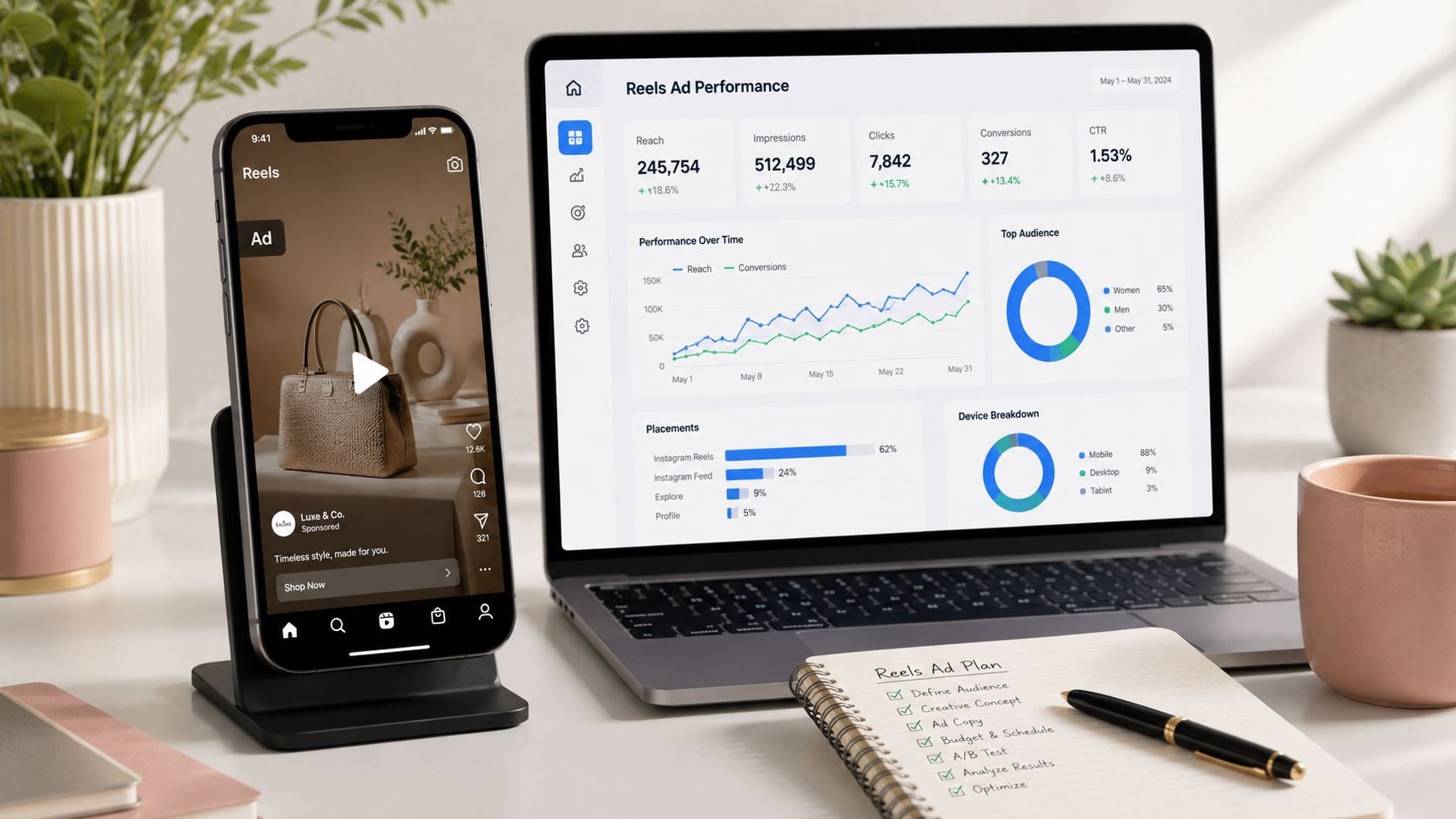
Instagram Reels advertising isn't a side placement anymore. Reels can reach 798.3 million users worldwide, equal to 58.6% of Instagram's total addressable ad audience, and half of all ads seen on Instagram in 2025 ran on Reels, up from 35% the year before according to this Reels advertising roundup.
That changes the conversation for Australian brands. The question isn't whether Reels is getting attention. The useful question is whether that attention turns into profitable sales, qualified leads, and lower acquisition costs than other placements.
In practice, Instagram Reels advertising works when you treat it like a performance channel, not a content experiment. That means tighter tracking, stronger offer-to-audience fit, and a campaign structure that gives Meta enough signal to optimise toward business outcomes instead of cheap engagement.
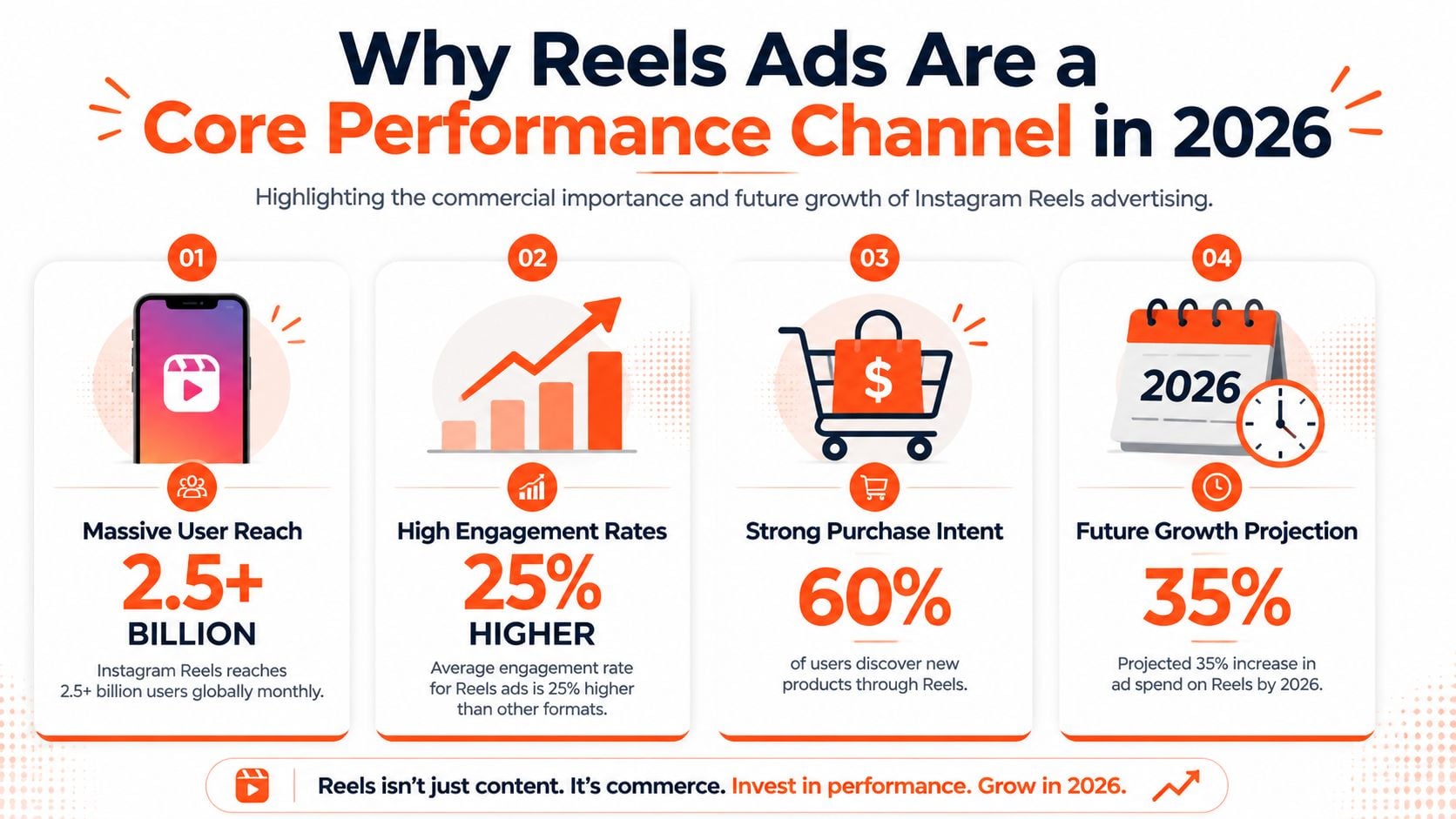
Why Reels Ads Are a Core Performance Channel in 2026
The fastest way to misunderstand Reels is to think of it as a branding-only format. That view is outdated.
When a placement can absorb a large share of Meta inventory, it stops being optional for paid media teams. It becomes part of standard account planning. That's what's happened with Reels. The scale is there, the inventory is there, and Meta keeps pushing short-form vertical video further into mainstream buying behaviour.
Why Australian advertisers can't ignore it
Australian accounts usually feel global Meta shifts quickly. When Meta allocates more delivery into a format, local advertisers end up competing inside that environment whether they planned for it or not.
That's why Reels now sits inside serious media plans for e-commerce, lead generation, education, property, health, and service businesses. If you're running Meta ads in Australia and your account has no Reels-specific creative, you're usually forcing feed-style ads into a placement with different user behaviour. That costs performance.
A lot of businesses still ask whether Reels is efficient or just attention-grabbing. That's the right question. Reach alone doesn't pay the bills. But scale matters because it gives Meta more room to find converting users, test hooks, and distribute spend across a placement people already consume at high volume.
Reels works best when the creative is built for the placement and the account is measured on profit metrics, not views.
What a performance-first mindset looks like
A results-focused Reels strategy starts with a simple shift. Stop judging the placement by whether a video “did well” socially. Judge it by whether it helped move revenue, lead quality, or cost efficiency in the right direction.
That means looking at Reels as one line item inside a broader paid social system. For some brands, it will drive first-touch discovery. For others, it will be a retargeting workhorse. For many Australian advertisers, it belongs alongside feed and Stories inside a proper social media ad services framework where each placement has a job and is judged by business impact.
Building Your Campaign Foundation for Success
Most weak Reels campaigns fail before the ad ever goes live. The problem usually isn't the edit. It's the setup.
The technical baseline is clear. Reels ads should be built in 9:16 vertical format and kept to a maximum runtime of 60 seconds according to Instagram Reels ad specifications and setup guidance. The same guidance also highlights the biggest failure point: advertisers skip proper conversion tracking and rely on engagement metrics that hide poor revenue performance.
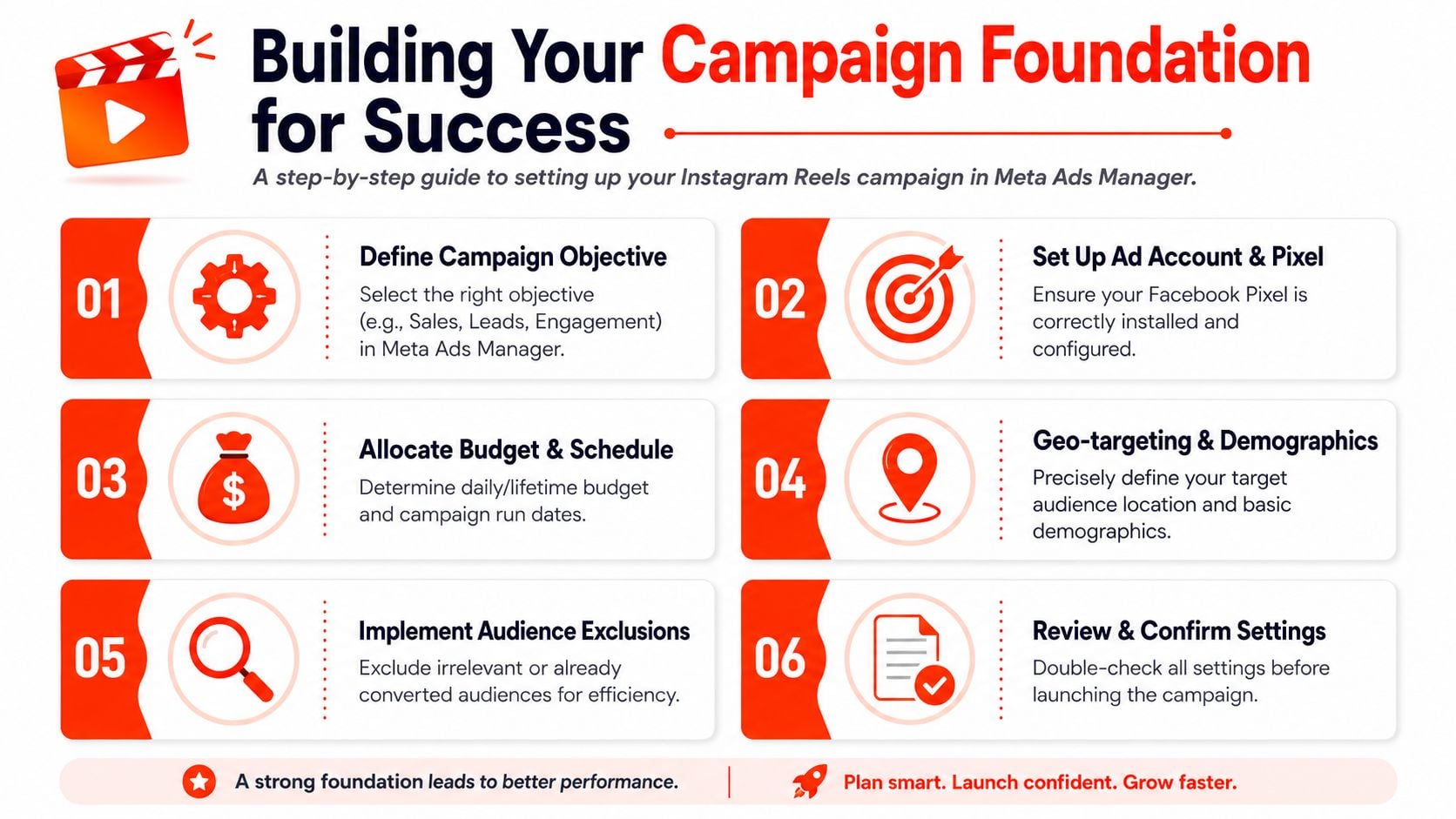
Start with the objective, not the content
If the business goal is sales or leads, build the campaign around that goal from the start. Don't choose engagement because it feels safer. Meta optimises toward the event you ask for. If you tell the platform to find people likely to watch or react, that's what it will do.
For direct-response campaigns, the workflow should look like this:
- Pick the conversion outcome first. Purchase for e-commerce. Qualified lead event for B2B. Application, booking, or enquiry where relevant.
- Launch a Reels-specific test placement so you can see whether the format itself is contributing.
- Track pixel events, URL parameters, and app events so downstream attribution is visible.
- Review weekly and isolate one variable at a time, such as hook, CTA, or audience.
That structure sounds basic, but plenty of accounts skip it and then wonder why reporting looks busy while the pipeline stays quiet.
Run the pre-flight checks that protect budget
Before launch, verify the pieces that affect decision-making:
- Pixel and event integrity. Make sure the right events fire on the right pages and that duplicates aren't muddying reporting.
- UTM discipline. Reels traffic should be identifiable in analytics, CRM reports, and any lead routing tools.
- Audience logic. Exclude recent converters where appropriate so prospecting spend doesn't chase people who already took action.
- Creative-to-landing-page match. If the Reel promises a product angle, demo, or offer, the landing page needs to continue that message.
If your team needs a clean process for event setup and attribution, this guide to website conversion tracking is a useful starting point.
Practical rule: If you can't tell which event defines success, you're not ready to launch.
For outreach-heavy campaigns, especially where Instagram sits near the top of the funnel, it also helps to understand how teams identify Instagram audiences for outreach before they build custom audiences and retargeting layers in Ads Manager.
Creating Reels Ad Creative That Actually Converts
Good Reels creative isn't random. It follows a structure. The strongest ads usually do three things fast: they stop the scroll, frame a problem or desire, and make the next step obvious.
What doesn't work is repurposing a square feed ad, adding music, and hoping vertical placement does the rest. Reels users decide quickly whether to keep watching. Your ad needs to earn those first seconds.
Use a simple conversion structure
A reliable format for Instagram Reels advertising is Hook, Story, Offer.
Hook comes first. Lead with a visual or statement that speaks to the buying trigger. For e-commerce, that might be the product in use, a sharp before-and-after contrast, or a direct pain point. For B2B, it could be a costly operational problem, a process bottleneck, or a clear business misconception.
Story is the explanation. Show the product solving something. Demonstrate the workflow. Address the objection. Put text overlays on screen so the message survives sound-off viewing.
Offer is the CTA. Don't make people guess. Tell them whether to shop now, book a consult, download a guide, or start an application.
Match the ad style to the business model
E-commerce and B2B usually need different creative treatment.
For e-commerce brands
The best Reels ads often feel like proof, not polish. Strong options include:
- Problem and solution demos. Show the frustration first, then the product fixing it.
- UGC-style testimonials. Native phone-shot footage often carries more trust than overproduced edits.
- Offer-led product showcases. If price, bundle value, or urgency matters, state it clearly.
- Objection handling. Address sizing, ease of use, shipping concerns, or product fit inside the ad itself.
For B2B and lead generation
B2B buyers still respond to short-form video, but they need clarity more than entertainment.
- Teach one useful thing. A practical insight can qualify the right viewer fast.
- Show process credibility. Screen recordings, behind-the-scenes execution, or a consultant explaining a common issue can work well.
- Use authority without sounding corporate. Plain English beats jargon-heavy scripts every time.
- Set the next step carefully. “Book a strategy call” or “see how it works” is usually stronger than a hard-sell pitch.
If the viewer can't tell what you sell and why it matters within the first part of the ad, performance usually suffers.
Keep the specs tight
Below is the baseline setup I'd use before testing angles, offers, and edits.
| Specification | Recommendation |
|---|---|
| Format | 9:16 vertical |
| Runtime | No more than 60 seconds |
| Opening | Lead with the core message immediately |
| On-screen text | Use concise overlays to support sound-off viewing |
| CTA | State one clear action |
| Creative testing | Change one variable at a time, such as hook, CTA, or angle |
| Review cadence | Review weekly and pause weak ads before spend drifts |
If you're refining runtime decisions, this breakdown on how long should your IG Reel be is useful for thinking through pacing and message density.
What strong copy does inside a Reel
The copy should sharpen the message, not repeat the video word for word. Keep it specific. Name the problem. Name the result. Name the action.
A lot of teams spend heavily on editing and then write vague ad copy around it. That's backwards. Strong hooks, subtitles, and concise primary text matter as much as the footage. If you need a framework for tightening message clarity, these ad copy best practices are relevant to Reels just as much as other paid placements.
Advanced Targeting and Audience Strategies
Targeting decides whether Reels spend turns into revenue or just buys views. In 2026, the strongest Meta accounts are usually not the ones with the most audience ideas. They are the ones feeding the platform better conversion signals, using cleaner exclusions, and matching message strength to buying intent.
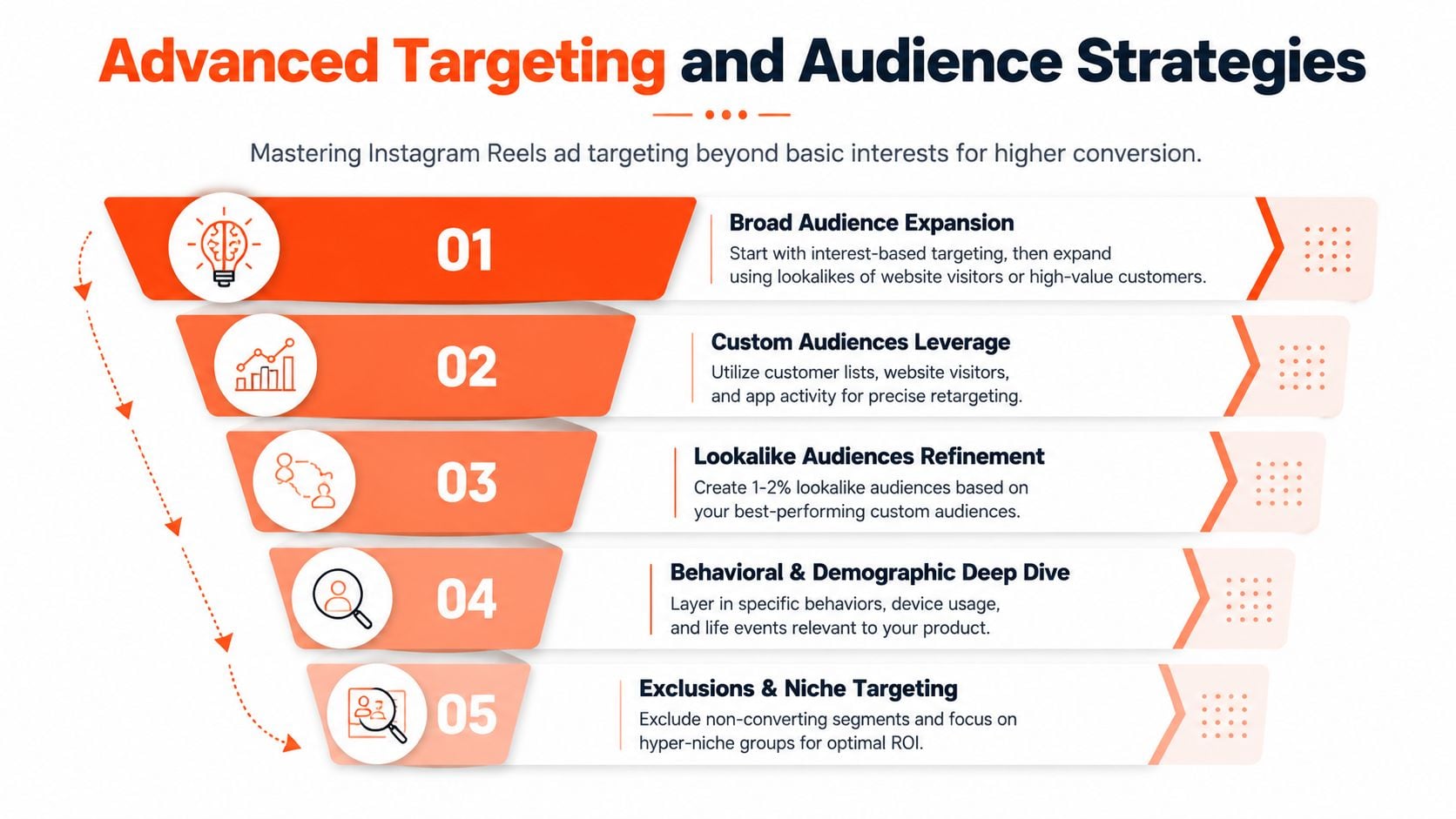
Start with first-party data
If the account has real customer data, use it first.
For e-commerce, that usually means past purchasers, high-value customers, repeat buyers, add-to-cart users, and email lists segmented by order value or product category. For B2B, the bar should be higher. Use qualified opportunities, sales-accepted leads, booked demos, or closed-won data where possible. Uploading every lead from a weak form fill campaign often trains Meta toward volume, not pipeline.
Useful source audiences include:
- Past purchasers for e-commerce
- Qualified leads rather than all leads for B2B
- High-intent website visitors
- Customer lists segmented by value or lifecycle stage
- App users who completed meaningful actions
The trade-off is scale. Narrow, high-quality seed audiences often improve conversion quality but can limit reach. Broad audiences can spend more easily, but they need stronger creative and cleaner account data to stay efficient.
Structure audiences by intent, not by guesswork
A practical setup is to group audiences by how close they are to action, then match the Reel to that level of awareness. That keeps prospecting, consideration, and conversion messages from competing against each other.
Cold audiences
Use broad targeting, selected interests, or lookalikes built from strong source data when the goal is net-new customer acquisition. For newer accounts, broad and interest-led testing can still be useful because it helps identify which problem statement, offer, or product angle gets traction before enough conversion data exists.
Cold Reels need to do one job well. Explain the problem, show the product or service clearly, and give the viewer a reason to keep watching.
For Australian e-commerce brands, this is often where product demos, before-and-after results, bundles, and offer-led hooks do their best work. For B2B, cold targeting usually needs more filtering. Industry pain points, buyer role cues, and proof of commercial outcomes matter more than broad awareness language.
Warm audiences
Warm pools deserve their own message. Someone who visited product pages, engaged with your Instagram profile, started a form, or watched a meaningful portion of a video has already shown intent. Treating them like a cold prospect usually wastes that signal.
For warm traffic, use:
- Social proof
- Product comparison
- Objection handling
- Offer or booking prompts
Video engagement audiences can help here, but use them carefully. A 3-second viewer is weak intent. A deeper video viewer, a pricing page visitor, or a user who spent time on key pages is usually more valuable. For B2B especially, I would prioritise CRM and site-intent audiences over vanity engagement pools.
Hot audiences
Hot audiences include cart visitors, checkout starters, repeat site visitors, pricing page visitors, and form starters. Keep this layer tight. The ad should answer the final objection, reinforce trust, and make the next step easy.
Discounts can work for e-commerce, but they are not always the best answer. Sometimes delivery speed, returns policy, reviews, or product guarantees lift conversion more profitably than a heavier offer. In B2B, the equivalent is reducing perceived risk. Case studies, implementation clarity, and a strong reason to book now usually beat generic brand messaging.
Account maturity should shape your targeting plan
A new account should not copy the audience structure of an established one.
If the pixel has limited purchase or qualified lead history, start simpler. Test broad audiences, a small set of relevant interests, and any first-party data you already trust. Once the account is generating enough quality events, shift more weight toward customer-based audiences, stronger lookalikes, and tighter retargeting windows.
Many businesses lose efficiency by optimising to the easiest event available because it gives fast feedback, then wonder why revenue or pipeline quality lags. If your goal is profitable sales, the conversion event and audience inputs need to reflect that. A B2B campaign optimised to low-quality leads can look healthy in Ads Manager and still fail in the sales team's pipeline review.
Use exclusions to protect spend
Good targeting is not only about who gets included. It is also about who should stop seeing the ad.
Exclude recent purchasers from prospecting unless you are upselling. Exclude closed-won leads from lead generation campaigns. Exclude low-intent engagers from higher-pressure remarketing if they have not shown meaningful site behaviour. These exclusions reduce wasted impressions and make reporting cleaner, especially when you are trying to assess incremental lift by audience stage.
One more point matters here. Targeting does not fix a weak funnel. If Reels creative attracts curiosity clicks but the landing page does not match the promise, costs rise and Meta gets poorer feedback. Efficient targeting comes from the full system working together: audience quality, conversion event quality, creative-message fit, and a landing page built to finish the job.
Launching and Optimising for Maximum ROI
Most Reels campaigns don't fail because the first launch was wrong. They fail because the account structure makes learning harder than it needs to be.
A common mistake is splitting every angle, hook, audience, and creative into separate ad sets. That used to feel methodical. In many accounts now, it just spreads signal too thin.

Why consolidation matters more now
Recent practitioner commentary suggests the old “more ad sets = better learning” playbook is becoming less effective, and consolidating creatives into fewer campaigns can improve signal quality and performance according to current commentary on Meta's changing delivery behaviour.
That doesn't mean never segment. It means segment with a reason.
If you split campaigns too aggressively, you create several problems at once:
- Budget fragmentation reduces the data each ad set receives.
- Learning gets slower because fewer conversion signals reach each pocket of spend.
- Creative comparisons become messy because audience overlap and inconsistent delivery distort results.
A cleaner operating model
For most Australian brands, a more practical setup is:
- Use fewer campaigns with clearer objectives.
- Keep audience structure simple unless there's a strategic reason to split.
- Load multiple creative variations inside a tighter framework.
- Judge performance by business outcome, not ad-level vanity wins.
For e-commerce, the critical checks are usually purchase efficiency, margin fit, and whether Reels is assisting or closing sales relative to other placements. For B2B, look beyond raw lead count. Lead quality, sales acceptance, and pipeline contribution matter more than cheap form fills.
What to review every week
A weekly optimisation rhythm keeps Reels disciplined.
- Check conversion quality first. Sales value, qualified leads, or booked calls come before views.
- Pause clear underperformers. If a creative keeps spending without advancing your main event, stop subsidising it.
- Isolate one test variable. Change the hook, CTA, or audience. Don't change everything at once.
- Review placement fit. Some ads are strong in Reels and weak elsewhere. Let the data inform whether they should stay isolated.
This walkthrough is a useful companion if you want to see campaign review thinking in action:
If you need outside execution support, agencies such as Click Click Bang Bang can manage Meta campaign builds, tracking, and optimisation as part of a broader PPC program. The important point isn't who presses the buttons. It's whether the account structure gives Meta enough clean data to optimise toward profit.
Common Reels Advertising Mistakes and How to Fix Them
The biggest mistake in Instagram Reels advertising is judging it like a content channel instead of a media buy. For Australian advertisers, the primary concern is efficiency. Success should be measured by CAC and ROAS compared with other placements, not by whether the ad looked busy or got strong surface-level engagement, as noted in this discussion of the performance gap in Reels coverage.
High views, weak sales
This usually points to an optimisation mismatch. The ad may be entertaining, but the campaign is attracting cheap attention rather than buyers.
Fix: tighten the objective, confirm event tracking, and make the CTA more direct. If the campaign is set up for engagement behaviour, don't expect purchase-quality traffic.
Feed creative forced into Reels
Square or horizontal creative often looks clumsy in a vertical environment. The result is lower hold time, weaker message delivery, and a poor first impression.
Fix: produce native vertical creative built specifically for Reels. The message should appear on-screen quickly and make sense without audio.
Cold audiences with no signal depth
Accounts often chase prospecting scale before they've given Meta enough purchase or lead-quality data to learn from.
Fix: rely more heavily on first-party audiences, warmer retargeting pools, and cleaner conversion inputs. Build from real signals outward.
If the account can't distinguish a valuable lead from a weak one, the platform can't optimise for business quality.
Too many ad sets
This is a structural issue. Marketers often confuse granularity with control.
Fix: simplify the campaign. Keep enough separation to answer real business questions, but not so much that each segment starves for data.
No clear next step
Some Reels ads are visually polished and strategically empty. They create interest but never ask the user to do anything.
Fix: give every ad a single job. Shop, book, apply, enquire, or watch the next step. Clarity usually beats cleverness.
Frequently Asked Questions About Reels Ads
Should small Australian businesses use Reels ads if budgets are tight
Yes, but only if tracking is in place and the offer is clear. Tight budgets make discipline more important, not less. Start with one business objective, one audience strategy, and a small set of distinct creatives instead of spreading spend across too many tests.
Are Reels ads better for e-commerce or B2B
They can work for both, but the role is different. E-commerce brands often use Reels to blend product discovery with conversion-focused creative. B2B advertisers usually get better results when Reels qualifies interest, teaches something useful, or moves prospects into a stronger lead step rather than trying to close immediately inside the ad.
Should I boost a Reel or build the campaign in Ads Manager
Use Ads Manager if performance matters. Boosting is quick, but it gives you less control over objectives, audience logic, exclusions, testing structure, and event-based optimisation. If you care about sales quality, lead quality, or account learning, Ads Manager is the better tool.
How many creatives should I launch with
Launch enough variation to test meaningful differences, but don't flood the account with minor edits that say the same thing. Distinct hooks, offers, and messages are more useful than cosmetic changes.
What should I compare Reels against
Compare it against your other Meta placements using business outcomes. If Reels drives stronger purchase efficiency, better lead quality, or supports lower blended acquisition costs, keep scaling it. If it only produces attention, give it a narrower role.
If you want a second set of eyes on your Instagram Reels advertising strategy, Click Click Bang Bang helps Australian businesses build and manage PPC campaigns with proper conversion tracking, transparent reporting, and a performance-first approach across Meta and other paid channels.
Read NeXt
Or Read Our Latest
- Reporting Portal Login: Access Your Client Dashboard Fast
- How to Calculate Sample Size for A/B Tests and Campaigns
- How to Fix Google Merchant Center Errors Step by Step
- What Is Pagination and Why It Matters for AU Sites
- What Is Value Proposition? PPC & SEO Guide
- How to Choose a Google Ads Agency Australia
Click. CLick. Subscribe.
Get our best PPC insights, industry updates, and power moves delivered straight to your inbox. No fluff, just high-caliber strategies that actually work.
Don’t Leave Just Yet
Try Us For 30-Days,
Risk Free!!
We guarantee that you’ll love our work within the first 30 days, if not you’ll get your money back.
What have you got to lose?