

Finding the Right LinkedIn Advertising Agency for Your Business
Last Updated
At its core, a LinkedIn advertising agency is a team of specialists who live and breathe paid campaigns on the platform. They’re the ones who handle the entire process—from shaping your strategy and nailing the targeting, to developing creative and analysing performance—all to make sure your investment brings back high-quality B2B leads and a return you can actually measure.
Setting the Stage for a Successful Partnership
Before you even think about shortlisting agencies, the most important work needs to happen in-house. A successful partnership really hinges on one thing: absolute clarity on what you want to achieve. Vague goals like "get more leads" just won't cut it. You need specific, measurable objectives that will guide your strategy and give you a clear benchmark for success.
Honestly, this initial planning phase is non-negotiable. It’s what turns your agency search from a hopeful guess into a smart business decision. If you skip this groundwork, you’re just setting yourself up for misaligned expectations and wasted ad spend.
Define Your Primary Advertising Goals
So, what’s the main goal here? Are you looking to fill the top of your sales funnel with a steady stream of Marketing Qualified Leads (MQLs)? Or maybe your focus is more immediate, like driving registrations for an upcoming webinar or getting more downloads for that new whitepaper you just launched. For some, the goal is bigger picture—like building brand authority in a crowded niche.
To help you get specific, it’s useful to map your business goals to clear objectives and metrics.
Defining Your LinkedIn Advertising Objectives
| Business Goal | Primary Objective | Example LinkedIn Ad Format | Key Performance Indicator (KPI) |
|---|---|---|---|
| Increase Sales Pipeline | Generate high-quality leads for the sales team. | Lead Gen Form Ad, Document Ad | Cost Per Lead (CPL), Lead-to-MQL Conversion Rate |
| Build Brand Authority | Increase visibility and engagement with a target professional audience. | Single Image Ad, Video Ad, Thought Leader Ad | Impressions, Reach, Engagement Rate, Follower Growth |
| Promote a Specific Offer | Drive registrations for an event or downloads for a content asset. | Event Ad, Document Ad | Cost Per Registration (CPR), Cost Per Download |
| Drive Website Traffic | Send relevant professionals to key landing pages or blog posts. | Single Image Ad with Website Link, Carousel Ad | Click-Through Rate (CTR), Cost Per Click (CPC), Landing Page Views |
Each of these objectives calls for a completely different tactical approach, from the ad formats you use to the KPIs you obsess over.
Understand Your Audience and Current Performance
Knowing who you want to reach is just as critical as knowing what you want to achieve. You need to define your Ideal Customer Profile (ICP) with real precision. We're talking job titles, company sizes, specific industries, and geographic locations. This detailed profile becomes the bedrock of any good agency's targeting strategy.
The potential here is massive. In Australia alone, LinkedIn’s ad tools can reach over 80.5% of the adult population, giving you access to a huge professional network if you get the targeting right. You can find more insights about the Australian digital landscape here.
Finally, take a quick look at your existing marketing channels. What’s already working with your Google Ads or organic social media? Analysing past wins and losses provides a vital baseline for what might work on a new channel.
For instance, a quick audit might show that your case study blog posts get fantastic engagement. That’s a powerful piece of intel to share with a potential agency, strongly suggesting that similar creative could hit the mark on LinkedIn.
This data ensures your new LinkedIn strategy is built on evidence, not just assumptions. It also means you’ll have a much more productive, strategic conversation with any agency you talk to.
What a Great LinkedIn Agency Actually Does
Let's be honest. The gap between an 'okay' LinkedIn agency and a truly great one is massive. It’s the difference between simply launching campaigns and turning your ad spend into a predictable revenue machine. A top-tier partner goes way beyond the basics of setup and management.
They start by getting forensic with your audience strategy. This isn't about just picking a few job titles from a dropdown menu. It's about building a multi-layered targeting plan that uses your own first-party data—like customer lists or website visitors—to power seriously effective account-based marketing (ABM) campaigns.
Then, a skilled agency will intelligently expand your reach by creating high-quality lookalike audiences. This is how you find new prospects who mirror the traits of your best customers, making sure every dollar is spent on people who are actually likely to convert.
Mastering Creative and Continuous Testing
Once the 'who' is locked in, it's all about the ad creative. A great agency gets that creative isn't just about looking sharp; it’s about stopping the scroll and forcing a click. They’ll have a rock-solid process for creative development and, more importantly, a relentless appetite for A/B testing.
This isn't a "set and forget" task. It’s a constant cycle of testing, learning, and iterating to find the magic formula for your audience. A proper agency will test everything:
- Ad Copy: Experimenting with different hooks, pain points, and calls-to-action to see what resonates.
- Visuals: Pitting static images against short-form videos or carousel ads to see what captures attention. You can check out some top-performing LinkedIn ad examples for inspiration.
- Headlines: Trying out different angles and variations to see which one packs the biggest punch.
This obsession with data-driven creative is what separates the agencies that get good results from those that get exceptional ones.
An expert agency treats every single ad like a hypothesis. They don’t guess what works; they use data to prove it, systematically dialling up campaign performance over time.
The Technical Must-Haves for Real ROI
Beyond the sexy stuff like targeting and creative, a leading LinkedIn agency brings deep technical know-how to the table. This is where they connect your campaigns to actual business outcomes. They should be fluent in advanced bidding strategies, knowing exactly when to optimise for clicks versus conversions to squeeze every drop of efficiency from your budget.
This technical expertise is more critical than ever. We've seen LinkedIn's budget share in Australia's digital ad market climb from 31% to 39% by the end of 2024, cementing its spot as a must-have channel for B2B. This growth just underscores the need for expert management to cut through the noise. You can dive deeper into these essential LinkedIn advertising statistics to see the trend for yourself.
A great partner also nails the crucial backend integrations. This means seamlessly connecting LinkedIn's Lead Gen Forms to your CRM for lightning-fast follow-up—a non-negotiable, since lead quality decays by the minute. Most importantly, they will implement bulletproof conversion tracking with the LinkedIn Insight Tag. This allows them to measure everything from website visits to final sales, proving a tangible, undeniable ROI on your investment.
Decoding Agency Pricing and Performance Metrics
Before you can hire the right LinkedIn advertising agency, you need to speak their language. That means getting your head around how they structure their fees and, just as importantly, how they measure success.
Without this clarity, you're flying blind. You won't know if your investment is actually delivering value or just disappearing into a black hole of clicks and impressions. It’s all about tying every dollar you spend back to tangible business outcomes.
When you start these conversations, you’ll quickly find that agencies have a few favourite ways of charging for their services. Each model has its own rhythm, and the best one for you depends entirely on your ad spend, goals, and how hands-on you want to be.
Agency Pricing Models Compared
So, what are the most common fee structures you'll run into? Most agencies stick to one of a few well-trodden paths. There's no single "best" option here; the right fit is about aligning the agency's financial incentives with your business goals. A flat retainer offers predictability, which is great for budgeting, while a performance model forces everyone to focus on the numbers that actually move the needle.
Let's break down the main options in a simple table.
| Pricing Model | How It Works | Pros | Cons |
|---|---|---|---|
| Percentage of Ad Spend | The agency charges a percentage of your monthly ad budget, usually 10-20%. | Simple to calculate and scales directly with your investment. | Can incentivise agencies to increase your spend rather than focusing purely on efficiency. |
| Flat-Rate Retainer | You pay a fixed fee each month for a clearly defined scope of work. | Offers predictable costs, making it a dream for budget forecasting. Perfect for consistent, ongoing needs. | The scope needs to be well-defined upfront. Scope creep can become an issue if not managed. |
| Performance-Based | The agency's fee is tied directly to hitting specific KPIs, like cost per lead (CPL) or appointments booked. | Creates powerful alignment—the agency only makes good money when you do. | Can be more complex to structure the agreement and requires rock-solid tracking. |
Choosing a pricing model isn't just a financial decision; it's a strategic one. It sets the tone for the entire relationship and determines what everyone in the room is focused on.
A flat-rate retainer might feel safer, but a performance model forces both you and the agency to be ruthlessly focused on the metrics that actually matter.
The Key Performance Indicators You Should Obsess Over
A great agency won't just throw a bunch of vanity metrics at you. They’ll dig deeper, connecting the dots between ad performance, your sales pipeline, and your bottom line.
While every campaign has unique goals, there are a few core KPIs that truly define success in the B2B world. These are the numbers you should be watching like a hawk.
Your reporting dashboard should give you a crystal-clear view of:
- Cost Per Lead (CPL): Simple but vital. This tells you exactly how much you're paying to get a new prospect into your funnel.
- MQL to SQL Conversion Rate: This is where marketing hands the baton to sales. It measures the percentage of marketing-qualified leads that your sales team actually accepts as sales-qualified. A low rate here is a massive red flag, often pointing to issues with targeting or messaging.
- Return on Ad Spend (ROAS): This is the ultimate measure of profitability. For every dollar you put into your LinkedIn ads, how many dollars in revenue are you getting back? This is the number that gets your CFO's attention.
Ultimately, a skilled agency delivers transparent, insightful reporting that’s more than just a data dump. They should be able to explain the "why" behind the numbers and give you a clear, actionable plan for what to do next.
For a deeper dive into this, our guide on how to measure advertising effectiveness provides a solid framework for evaluating campaign success.
How to Run an Effective Selection Process
Finding the right LinkedIn advertising agency is a project in itself. If you want to attract top-tier talent, a vague email asking for a quote just won't cut it. You need a clear, compelling brief that gives a potential partner everything they need to craft a thoughtful proposal.
This document, which is basically a Request for Proposal (RFP), should become your single source of truth. It’s where you lay out your business, goals, budget, and exactly what you expect from a partner agency. A well-crafted RFP doesn't just attract better agencies; it forces you to get your own strategy straight before you even begin outreach.
Building a Compelling Request for Proposal
Your RFP doesn't need to be a fifty-page monster, but it does need to be thorough. Think of it as your first impression. The more clarity you provide upfront, the more tailored and realistic the proposals you get back will be.
Here's what your brief absolutely must include:
- Company Overview: Who are you, what do you sell, and who’s your ideal customer? Give them the context they need.
- Project Goals: What specific business outcomes are you chasing? Get specific here — use the KPIs you defined earlier.
- Target Audience: Provide a detailed breakdown of the job titles, industries, and company sizes you're targeting. The more detail, the better.
- Budget: Be upfront about your total ad spend and your expected management fee range. This saves everyone a massive amount of time.
- Current Efforts: Briefly summarise what you’ve tried on LinkedIn or other platforms and what the results were. Don't hide the ugly parts.
Vetting Agencies and Asking the Right Questions
Once proposals start rolling in, the real work begins. Your initial calls need to go way beyond the standard sales pitch. You need to dig into their process, their team, and their past results to see if there's a genuine fit.
When you're evaluating potential partners, it helps to understand the bigger picture. Knowing what a typical B2B Social Media Agency offers can give you valuable context for their specific LinkedIn expertise. This lets you gauge whether their specialisation lines up with your broader marketing needs.
During your calls, ask smart, open-ended questions that reveal how they actually think:
- "Walk me through a similar campaign you ran. What were the initial results, and how did you optimise performance over the first 90 days?"
- "How is your team structured? Who would be my day-to-day contact, and what is their direct experience with LinkedIn ads?"
- "What's your process for creative development and testing? How do you measure creative effectiveness?"
This visual shows how a solid agency process should turn initial leads into measurable business results.
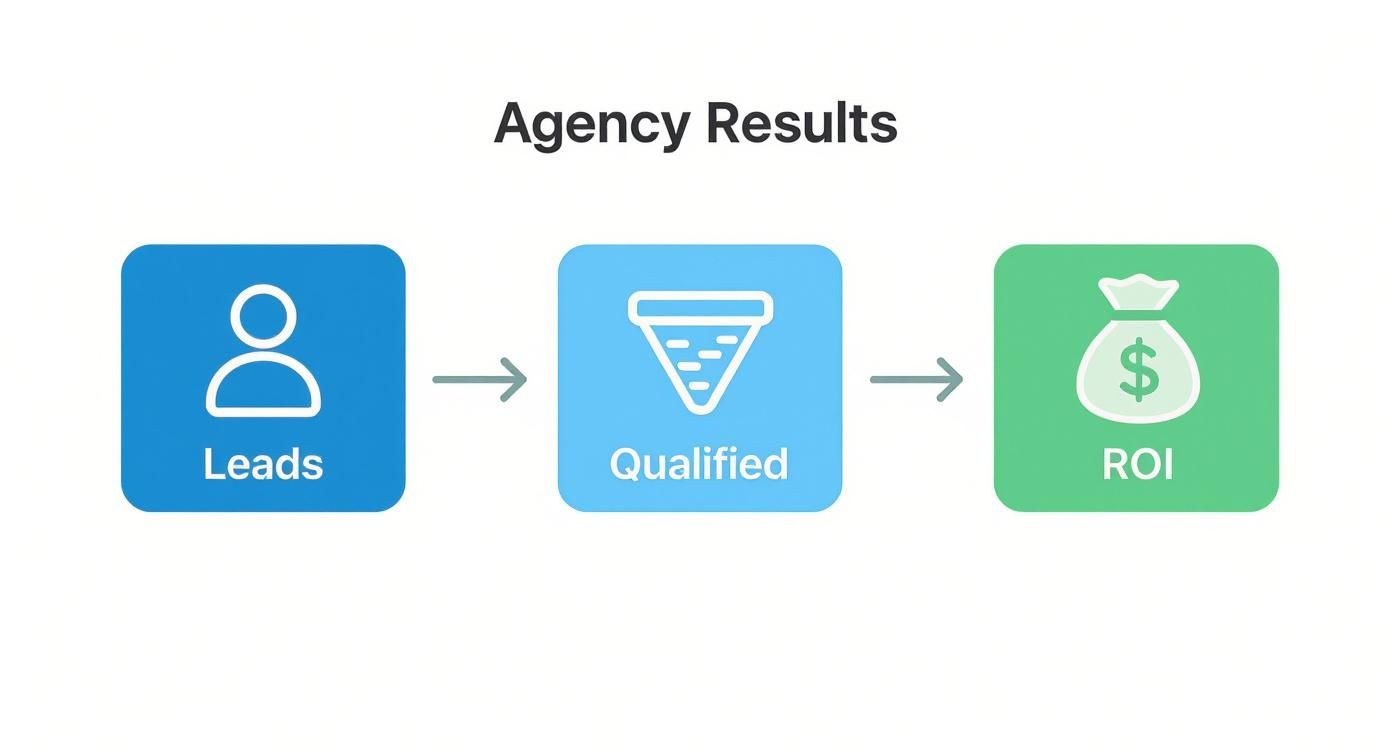
The key takeaway here is that success isn't just about generating leads. It's about qualifying them effectively to make sure you get a high return on investment.
Analysing Case Studies and Checking References
Don't get blinded by big brand logos in a case study. Look for relevance. Ask for examples from clients in your industry, with similar budgets or targeting challenges. A huge win for a global enterprise doesn't mean much if you're a mid-sized SaaS company.
A truly confident agency will be transparent. They won't just show you the highlight reel; they'll also be willing to discuss campaigns that didn't go as planned and, more importantly, what they learned from them.
Finally, always check references. Ask to speak with one or two of their current clients. Prepare a few questions that focus on communication, reporting clarity, and proactivity. This final step often uncovers the small but critical details that will define your day-to-day working relationship.
Onboarding Your Agency and Setting Expectations

You’ve made your choice. The proposals are stacked, the calls are done, and you’ve picked the LinkedIn advertising agency that feels like the right fit. Now the real work begins—building a partnership that actually delivers.
This phase is less about flashy presentations and more about laying solid groundwork. The contract is your starting point, and it’s crucial to look past the monthly fee. Dig into the service level agreement (SLA), paying close attention to their promised response times and reporting deadlines. Also, make sure the clauses around data ownership and termination are crystal clear, so you know exactly who owns the ad account history if you ever part ways.
Kicking Off with a Seamless Onboarding Process
A great agency will take the lead on onboarding, but they can't do it alone. They can’t read your mind, so your proactive involvement is essential for a smooth start. Getting them timely access and clear information sets the tone for the entire relationship.
To avoid delays and crossed wires, your onboarding checklist should cover a few key areas:
- Platform Access: Granting the right permission levels to your LinkedIn Campaign Manager and company page.
- Asset Handoff: Supplying all brand guidelines, logos, existing creative, and any customer personas you have. To get on the same page from day one, it's also worth exploring our guide on ad copy best practices.
- Technical Setup: Working together to make sure the LinkedIn Insight Tag is correctly installed across your website. Without this, tracking conversions is just guesswork.
- Communication Rhythm: Setting a clear schedule for weekly check-ins and monthly performance reviews. Decide where you'll communicate—be it email, Slack, or a project management tool like Asana.
The first 30 days are about alignment, not just action. A structured onboarding ensures your new agency understands your business deeply before spending a single dollar of your ad budget.
Starting with a Pilot Campaign
Instead of jumping into a massive, year-long commitment, think about proposing a trial period or a pilot campaign. It’s a fantastic, low-risk way to test the working relationship and see if they can walk the walk.
A typical pilot runs for 60-90 days and zeroes in on a single, highly specific goal.
For instance, you could task them with generating leads for one specific service line or driving registrations for an upcoming webinar. This self-contained project lets you evaluate their strategic thinking, creative process, and communication style in a real-world scenario. You get to see how they handle challenges and report on results without committing your entire annual budget.
If the pilot campaign hits its marks, it builds tremendous confidence on both sides. It’s the perfect launchpad for a more ambitious, impactful, and long-term partnership.
Got Questions Before You Hire a LinkedIn Agency?
Even with the best plan, jumping into a partnership with a LinkedIn advertising agency is a big step. It’s natural to have a few practical questions buzzing around your head. Getting these sorted upfront is the key to setting realistic expectations and making sure you and your new partner kick things off on the right foot.
Let's run through some of the most common queries we hear from businesses before they sign on the dotted line. These answers should give you a clearer picture of what to expect when it comes to costs, timelines, and how the team should work together.
How Much Does a LinkedIn Agency Cost in Australia?
Agency fees in Australia can swing pretty wildly depending on what you need and the agency's track record. As a general guide, you can expect monthly retainers to start around $2,500 for basic campaign management. For a full-blown strategy that includes creative work, landing page support, and deep-dive analytics, you’ll be looking at upwards of $10,000.
Another popular model is a percentage of your ad spend, which usually lands somewhere between 10-20%. This is often tied to a minimum monthly fee to make sure the agency’s time is covered, even if you’re starting with a smaller budget. Always, always ask for a detailed breakdown of what’s included in the fee to avoid nasty surprises down the track.
How Long Until We See Real Results?
You’ll see activity like clicks and impressions almost straight away, but genuine business impact? That takes a little longer to show up. Nailing down a realistic timeline is vital for managing expectations internally.
Here’s how things usually play out:
- Months 1-2: The Testing Phase. Your agency will be deep in data-gathering mode, testing different audiences, and figuring out what creative hits the mark. This period is all about learning what works (and what doesn't).
- Month 3: Consistent Lead Flow. By now, the initial optimisations should be paying off. You should start to see a more predictable flow of qualified leads coming through.
- Months 6-12: Measuring True ROI. For most B2B companies with longer sales cycles, it can easily take six months or more to track leads all the way to closed deals and calculate a true Return on Ad Spend (ROAS).
Patience is your best friend in those early months. The platform's professional focus is a massive advantage; by 2025, its ad audience hit 17 million users, covering over 80% of Australians aged 18 and over. That kind of reach lets a good agency find high-quality prospects, but it demands a methodical approach, not a sprint. Plus, Aussies are highly engaged, ranking in the top five globally for Android app usage, which just shows how baked into daily life the platform is. You can discover more insights about Australian social media usage to see the full picture.
A good agency isn’t chasing a quick win; they’re building you a sustainable lead generation engine. That initial phase is an investment in long-term, predictable growth.
Should One Agency Handle Creative and Campaign Management?
Ideally, yes. When a single agency manages both the creative development and the nuts and bolts of the campaign, the feedback loop is incredibly tight. They can see in real-time which ad copy, images, or videos are landing with your audience and make smart, data-backed changes on the fly.
Keeping it all under one roof helps you sidestep the communication breakdowns that can happen when you're juggling separate teams. If you do have an in-house or third-party creative team, just make sure you establish a seamless workflow with your ad management agency from day one. That’s the only way to keep the strategy and execution perfectly in sync.
Ready to stop guessing and start getting real results from your LinkedIn ads? Click Click Bang Bang specialises in data-driven PPC campaigns that deliver qualified leads and measurable ROI. Book a free, no-obligation strategy call with our experts today!
Read NeXt
Or Read Our Latest
- Reporting Portal Login: Access Your Client Dashboard Fast
- How to Calculate Sample Size for A/B Tests and Campaigns
- How to Fix Google Merchant Center Errors Step by Step
- What Is Pagination and Why It Matters for AU Sites
- What Is Value Proposition? PPC & SEO Guide
- How to Choose a Google Ads Agency Australia
Click. CLick. Subscribe.
Get our best PPC insights, industry updates, and power moves delivered straight to your inbox. No fluff, just high-caliber strategies that actually work.
Don’t Leave Just Yet
Try Us For 30-Days,
Risk Free!!
We guarantee that you’ll love our work within the first 30 days, if not you’ll get your money back.
What have you got to lose?