

Localization Strategy: How to Win in Any Market
Last Updated

A lot of teams hit the same wall. The homepage is translated, the paid ads are localised, the product team has a regional rollout plan, and yet conversion in the new market barely moves. The problem usually isn't effort. It's that the work was treated like a translation project instead of a localization strategy built around revenue friction, trust, and market fit.
That mistake is easy to make in Australia, where localisation is not a niche exercise. The 2021 Census recorded 5.5 million people, or 22.8% of the population, who spoke a language other than English at home, and 22.3% were born overseas. It also showed 813,000 people spoke Mandarin at home and 654,000 spoke Arabic, which makes language choice a real segmentation decision, not a branding preference. The Australian Census localisation data points to a market where the same message in standard English won't reach the whole addressable audience, especially once you move into dense metro communities.
Why Most Global Launches Stall in the First 90 Days
A familiar pattern shows up in stalled launches. A brand ships every page into a new market, keeps the same offers, keeps the same checkout, and expects revenue to follow because the copy now “sounds local”. The ads get clicks, the site gets visits, and then the numbers flatten out because the experience still feels imported.
The failure is usually hidden in the assumptions. Teams often think localisation only means language, when in practice the customer is reacting to six layers at once, language, culture, UX, legal context, payments, and measurement. If those layers aren't aligned, the launch looks busy on the surface but still leaks trust underneath.
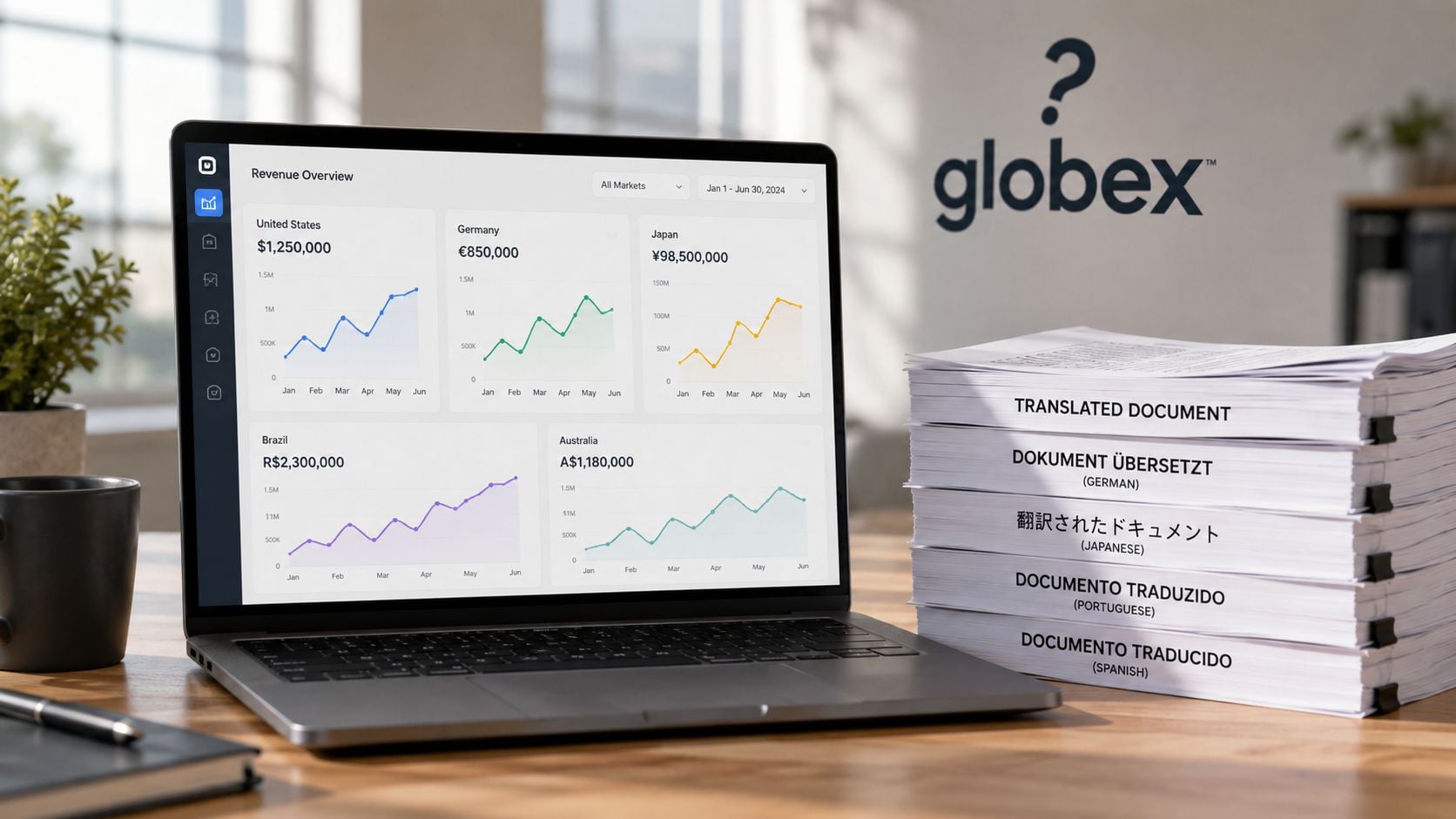
In Australia, the gap between effort and outcome is especially visible because digital buying is already mainstream. The ABS reported that 79% of internet users aged 14 and over made an online purchase in 2022–23, which means localisation can influence the majority of active users rather than a fringe group. CSA Research also found that 75% of consumers in Australia and New Zealand prefer to buy products with information in their own language, and 52% say they would be willing to pay more for products presented that way, which is a strong signal that market-specific presentation matters in commercial journeys. Australian digital commerce localisation data
A launch stalls when the organisation treats local language as the finish line. It's the starting point. The work that follows is making the site, the offer, and the proof points feel like they belong in the market the customer is already shopping in.
What a Localization Strategy Actually Is
A localization strategy is the plan for making a product, brand, and growth engine feel native in each priority market. That includes language, yes, but it also includes the details that shape confidence, such as UX choices, payment methods, legal copy, tone, and measurement. Translation converts words. Strategy decides what has to change for the market to buy.
That distinction matters because the job isn't one-dimensional. Internationalisation is the technical groundwork that makes a product easier to adapt later. Transcreation is the creative rewrite that preserves intent while changing expression. Localisation sits above both, coordinating what gets translated, what gets rewritten, what gets redesigned, and what stays in English because it's clearer, safer, or more efficient.
Practical rule: localise the parts that touch trust and conversion first, not the parts that are easiest to translate.
In Australia, that staged mindset is especially relevant because the country uses the en-AU locale and AUD conventions. Misconfigured language tags, U.S.-style formatting, or pages that ignore local search behaviour can erode crawl clarity and user trust. The localisation SEO technical guide is useful for teams setting up the plumbing correctly, while Sovran's local business ad strategy is a helpful reference for thinking about brand context in local markets without collapsing strategy into word-for-word translation.
A good localisation strategy usually aims at four business outcomes. It should improve conversion, reduce acquisition waste, strengthen retention, and make attribution cleaner. None of that happens because a page exists in another language. It happens because the market sees a version of the offer that matches how people search, compare, pay, and decide.
The Six Core Components Every Strategy Needs
A useful localisation strategy holds together only when each pillar has an owner. In practice, that means the work belongs across marketing, product, legal, and analytics, not inside a translation queue. Teams that try to centralise everything under one function usually end up with either good language and weak systems, or good systems and flat commercial impact.
Audience research and market prioritisation
The team decides which communities, channels, and customer journeys justify the first wave of work. In-house growth leads or regional marketers usually own it, with support from SEO and paid media. The common failure mode is choosing markets by headline population size instead of conversion friction, intent, and channel readiness. In Australia, that mistake is expensive because multilingual demand isn't evenly distributed, and the best entry point is often the segment with the clearest purchase intent, not the biggest crowd.
Content and SEO localisation
SEO leads and content strategists should own this pillar, with native reviewers on the quality check. It covers keyword mapping, metadata, landing page copy, internal linking, and the adjustments needed so search content reads naturally in-market. The failure mode is direct translation of English keyword sets, which often misses how people search. The earlier SEO localisation reference makes the point clearly: search visibility depends on adapting for local search behaviour, not just language.
Paid media targeting
Paid search and social teams handle this layer. It includes geo-targeting, audience segmentation, ad group structure, creative variants, and landing page alignment. The biggest mistake is sending traffic from local ads to generic pages that don't match the promise in the ad. That mismatch inflates spend and depresses conversion, especially in channels like Google, Meta, and LinkedIn where message consistency shapes click quality.
UX and product adaptation
Product, design, and web development own the experience layer. Layouts, checkout flow, form fields, error messages, support touchpoints, and mobile behaviour all need to feel native. The failure mode is treating UX as a visual polish task instead of a conversion dependency. The more complex the market, the more likely a small detail, such as address formats or field validation, becomes the reason users abandon.
Legal and compliance
Legal and privacy teams should be involved early, not after launch. This includes terms, consumer law considerations, privacy handling, regulated claims, and accessibility expectations. For a practical lens on this area, this data privacy and compliance resource is a useful benchmark for teams that need to align marketing execution with real-world risk. The failure mode is leaving legal review until the last mile, when copy, offers, and tracking choices are already locked.
Measurement and attribution
Analytics and performance teams own this layer. It covers locale-level reporting, conversion tracking, revenue attribution, and feedback loops back into the brief. The failure mode is measuring traffic only. Traffic can rise while revenue stays flat if the local experience doesn't reduce friction. Good measurement shows which market, page, and channel combinations are producing incremental value.
A localisation programme fails quietly when every function thinks someone else owns the hard parts. The cleanest stacks assign one accountable owner per pillar, then define how those owners hand work off.
The Seven-Step Localization Playbook
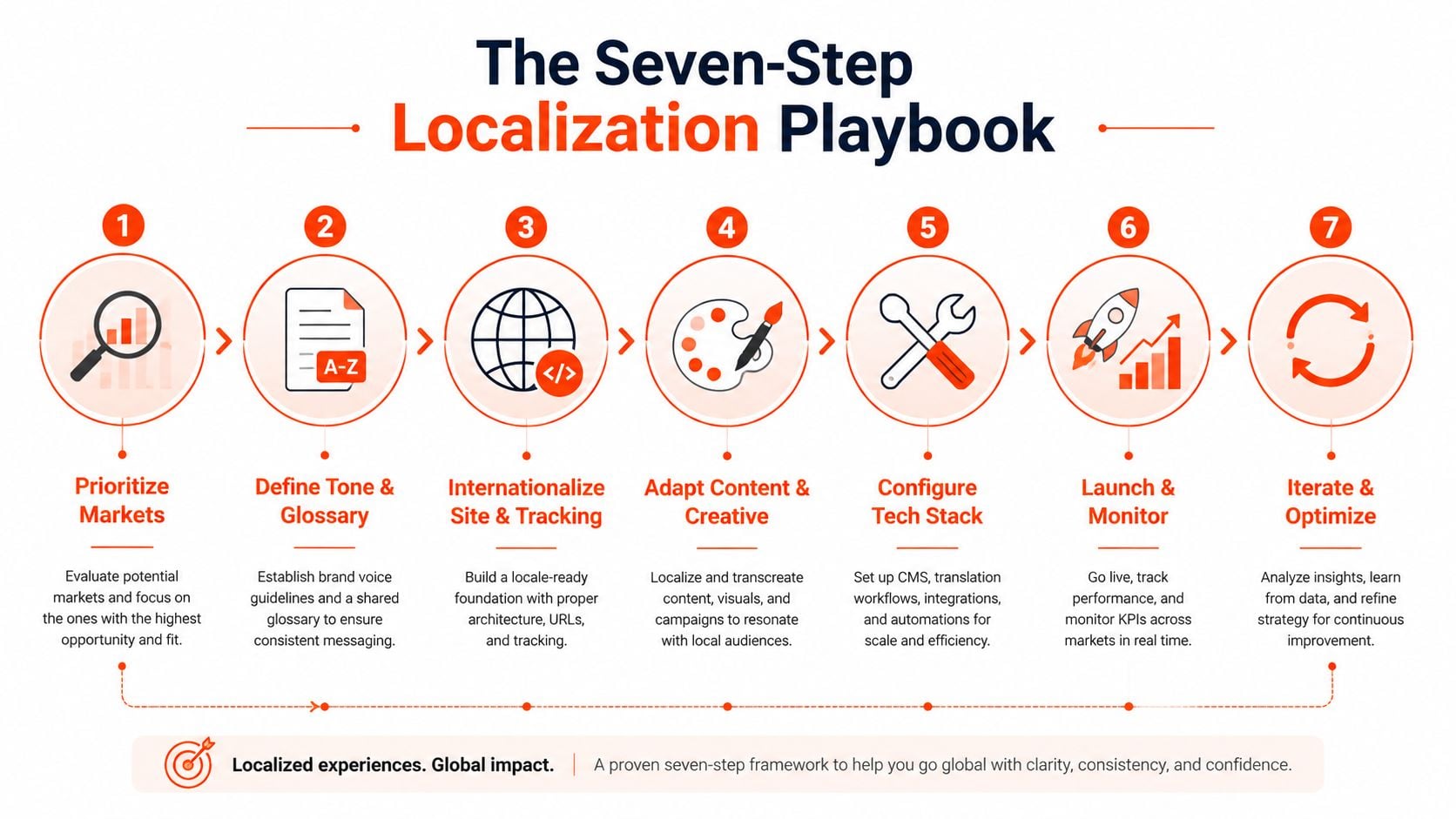
A workable rollout is staged. It starts with choosing the right market and ends with measurement that tells you where to scale next.
Step 1 Prioritise markets by opportunity
Don't start with the biggest population. Start with the biggest combination of intent, fit, and friction. In Australia, that often means checking language, device behaviour, and payment preference before you touch creative. The ODI policy brief linked in the brief's background is directionally useful here, because it reflects the reality that localisation planning has to account for fragmented demand signals, not just a demographic headline.
Step 2 Define tone and glossary per locale
A glossary keeps the brand from sounding inconsistent across pages, ads, and support content. Tone rules keep local writers from flattening nuance into generic copy. This step is where teams decide what stays global and what can flex, including idiom, formality, and taboo references.
Step 3 Internationalise the site and tracking
This is the technical foundation. Build in hreflang, self-referencing canonicals, separate XML sitemaps per locale, and locale-aware currency, date, and unit formatting. If the site can't serve the correct version cleanly, everything else becomes harder to trust and harder to measure.
Step 4 Localise high-intent pages first
Start with pages closest to revenue, landing pages, product detail pages, checkout, pricing, FAQs, and comparison pages. These are the surfaces where users decide whether the brand feels credible. A broad translation of low-value pages before the high-intent flow is usually a poor use of effort.
Step 5 Adapt creative and offers
Offers don't travel unchanged. The message that works in one region can feel too aggressive, too vague, or too salesy somewhere else. Local creative should match the market's expectations for proof, urgency, and social context.
Step 6 Configure geo-targeted PPC and SEO
Your ad groups, keywords, metadata, and landing pages should be built together. That alignment matters because local search behaviour and local ad relevance are tightly linked. If the keyword set is native but the page isn't, the campaign works harder than it should.
Step 7 Wire up measurement and feedback loops
Tracking should report by locale, not just by campaign. Set up dashboards that let you compare organic visibility, PPC quality, and checkout behaviour across markets. Then review feedback from sales, support, and user testing so the next sprint reflects what the market did, not what the team hoped it would do.
Tailoring the Playbook to E-commerce, B2B and PPC SEO
The same framework behaves differently depending on the business model. That's where many teams over-invest in the wrong assets, usually by localising content that looks impressive but doesn't change the path to purchase.
For e-commerce, the priority is the checkout journey. Currency, shipping, returns, taxes, and mobile form design matter more than a long brand essay. A retailer that localises product pages but leaves checkout confusing will still lose revenue. If you need the technical side of that setup to behave properly, this ecommerce conversion tracking resource is useful as a reference point for tying local changes to transactions.
For B2B, the emphasis shifts to credibility and risk reduction. Buyers want local proof, compliant language, sector-specific case studies, and a sales motion that fits regional buying cycles. LinkedIn targeting, not broad consumer-style creative, is usually where the message gets tested first. That's also where the wrong kind of localisation can become expensive, because a polished site won't help if the sales team can't back up the claim in-market.
For PPC and SEO, localisation is more surgical. Keyword sets need to reflect local phrasing, metadata needs to match search intent, and geo-targeted ad groups need landing pages that mirror the promise in the ad. Teams that specialise in this work, including those involved in hiring Shopify SEO pros, usually focus less on volume and more on intent alignment, because that's where cost efficiency usually improves. The key trade-off is speed versus depth. Broad translation is faster, but custom search and landing-page work tends to create stronger commercial outcomes.
Measuring What Localization Actually Returns
The measurement layer should prove whether localisation is reducing friction, not just generating more traffic. That means looking at market-specific visibility, click quality, funnel completion, and revenue attribution together. If those signals don't sit in the same reporting view, the business ends up debating opinions instead of results.
Localization KPIs by Pillar
| Pillar | Primary KPI | Reporting Source |
|---|---|---|
| Audience research | Qualified market opportunities identified | CRM, market brief |
| Content and SEO localisation | Organic impressions and CTR by locale | Search Console, analytics |
| Paid media targeting | PPC CPL by geo | Google Ads, Meta Ads, LinkedIn Ads |
| UX and product adaptation | Checkout completion by language | Ecommerce analytics, product analytics |
| Legal and compliance | Review turnaround and issue closure rate | Legal workflow tracker |
| Measurement and attribution | Revenue attributed to localised assets | Analytics, CRM, CDP |
The cleanest reporting stack ties these KPIs back to one view of performance. If your organisation already uses a customer data platform, this customer data platform resource is a practical way to think about unifying signals across channels and locales. That matters because CFO conversations rarely start with brand awareness. They start with whether the localised work created incremental revenue or just moved traffic around.
A strong monthly review should answer three questions. Which locale is growing efficiently. Which pages or ads are leaking conversion. Which assets deserve more investment next month. If the team can't answer those quickly, the localisation programme is still acting like a translation project.
Hard Questions Teams Keep Asking About Localization
Should you localise everything on day one? No. Localise the surfaces where friction blocks revenue first, then expand once the data proves the market deserves more depth. That staged approach usually beats a broad but thin rollout because it concentrates effort where customers decide.
How do you pick the first language or community? Use conversion friction, not population size. In Australia, the Census data shows multilingual demand is real, but the right first move still depends on where buying intent, device behaviour, and payment expectations line up most cleanly. The goal is to find the fastest path to trust, not the broadest possible translation queue.
When does localisation become a legal requirement instead of a marketing choice? The moment the market, product, or claim creates legal, privacy, or accessibility exposure. At that point, localisation is part of risk management, not just positioning. Teams that wait until launch to think about this usually pay for it later in rework.
How do you avoid breaking attribution when you add locales? Standardise tracking before launch, keep locale logic explicit, and make sure every localised page maps back to a clean reporting structure. The earlier measurement table is the right starting point. If the analytics stack can't separate locale performance, the business won't know what to scale.
Your 30-Day Localization Quick Start
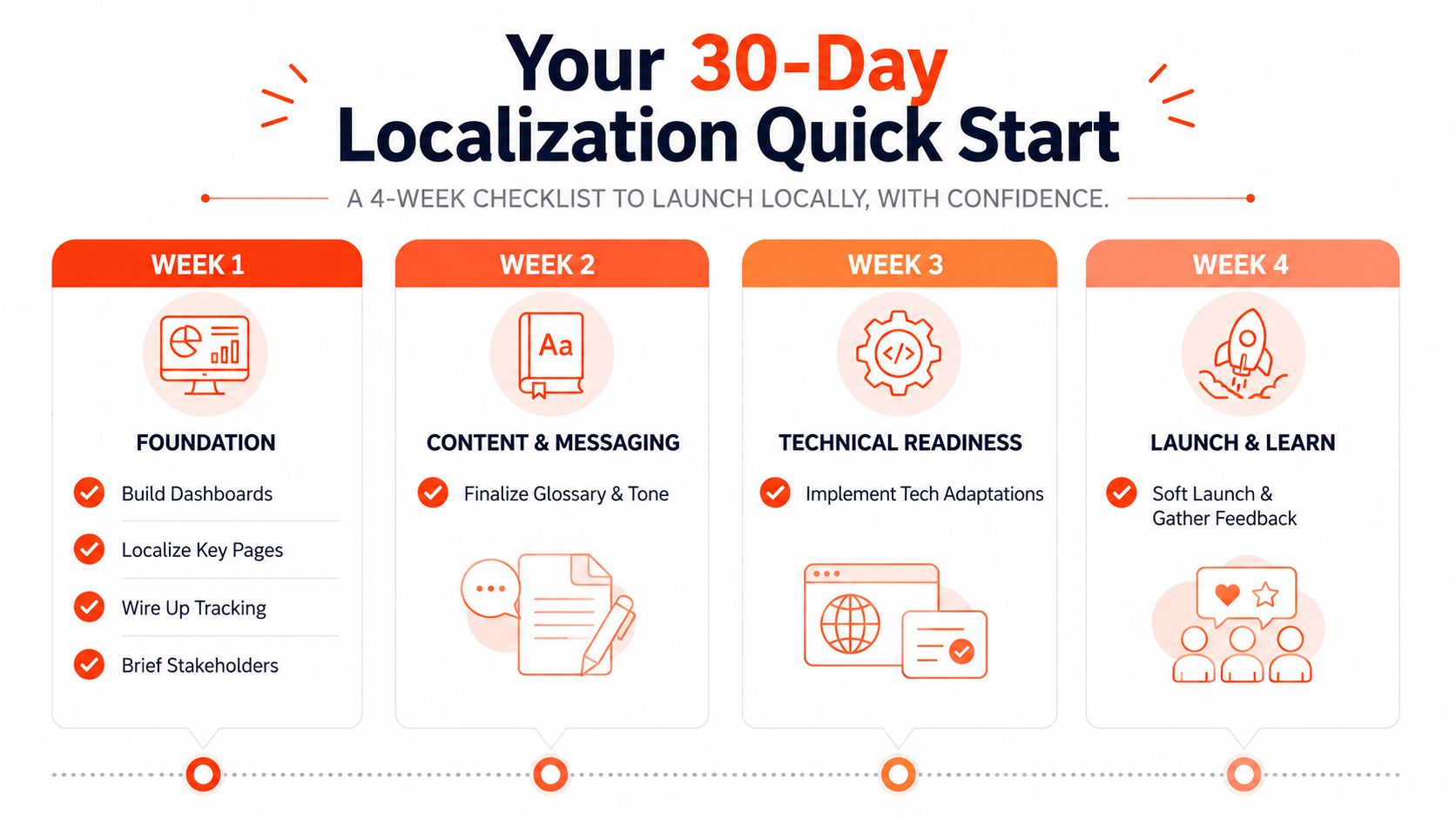
In week one, build the dashboard, localise the highest-intent pages, wire up tracking, and brief the people who can block or unblock the rollout. In week two, finalise the glossary and tone rules. In week three, implement the technical adaptations. In week four, soft launch, collect feedback, and tighten the pages that matter most.
The point is to move from planning to proof. Once the first localised assets are live, you can measure what the market does instead of guessing what it might want.
If you want a localisation plan that's tied to revenue, not just a translation queue, Click Click Bang Bang can help you build the SEO, PPC, and conversion tracking foundation around it. Visit Click Click Bang Bang to see how a staged localisation strategy can turn new markets into measurable growth.
Read NeXt
Or Read Our Latest
- Localization Strategy: How to Win in Any Market
- Phone Call Tracking: Methods, Metrics, and Best Practices
- Supplier Relationship Management: Strategic Guide 2026
- Reporting Portal Login: Access Your Client Dashboard Fast
- How to Calculate Sample Size for A/B Tests and Campaigns
- How to Fix Google Merchant Center Errors Step by Step
Click. CLick. Subscribe.
Get our best PPC insights, industry updates, and power moves delivered straight to your inbox. No fluff, just high-caliber strategies that actually work.
Don’t Leave Just Yet
Try Us For 30-Days,
Risk Free!!
We guarantee that you’ll love our work within the first 30 days, if not you’ll get your money back.
What have you got to lose?