

Mastering Services Lead Generation for Business Growth
Last Updated

Lead generation for a service-based business is all about strategically finding and attracting potential clients who actually need what you do. It’s not about casting a wide net or just collecting a list of random contacts. It's about starting conversations with people and businesses who are already looking for the solutions you offer.
Think of it as strategic matchmaking for your business.
What Is Services Lead Generation

Imagine you're a specialist tour guide in a massive, bustling city. You could stand on every street corner shouting about your amazing tour, hoping someone passing by happens to be interested. That's one way to do it.
Or, you could find the exact spots where history buffs or foodies gather and offer them a curated experience you know they’re already searching for. Service-based lead generation is that second approach. It’s a deliberate process focused on quality over quantity.
This isn't just about running a few ads. It’s about deeply understanding who your ideal client is, what problems keep them up at night, and where they go looking for answers. Once you have that figured out, you can build a clear path for them to find you and instantly see your value.
The Modern Sales Funnel
The journey from a complete stranger to a paying client usually follows a pretty predictable path, which we often picture as a sales funnel. Each stage needs a different touch to guide potential clients along without being pushy or aggressive.
- Awareness (Top of the Funnel): This is where potential clients first discover you exist. They might not be ready to buy just yet, but they're definitely researching a problem you can solve. Your job here is to be helpful and visible.
- Consideration (Middle of the Funnel): At this point, a lead knows they have a problem and they’re actively weighing up their options. You need to show them why your service is the best choice, maybe with detailed information, case studies, or a free consultation.
- Decision (Bottom of the Funnel): The lead is ready to pull the trigger. Your focus now shifts to making it incredibly easy for them to sign on the dotted line, book a call, or purchase your service.
The core idea of modern lead generation is to stop chasing clients and instead build a system that attracts them to you. By giving away value upfront, you build trust and position your service as the most logical solution to their problem.
Having a system like this is absolutely vital for sustainable growth. A well-oiled lead generation machine brings in a steady stream of qualified prospects, which takes the pressure off those stressful, unpredictable sales cycles.
This is especially critical in specialised industries. For example, a solid strategy for IT lead generation services ensures tech companies connect with businesses that need their specific kind of expertise. Nailing this foundation is the first real step toward creating a predictable and scalable way to bring in new clients.
A New Chapter for Lead Generation in Australia
The game has changed. If your idea of generating leads in Australia still involves hammering the phones or blasting out generic email campaigns, you’re playing by a set of rules that no longer apply. That old-school, volume-first approach just doesn’t land with today’s clients.
Let's face it, modern Australian customers are sharp. They do their homework, compare their options, and guard their privacy fiercely, thanks in no small part to robust laws like the Australian Privacy Act. They can spot a generic sales pitch from a mile away and expect something more—a conversation that speaks directly to their problems.
This isn't just a minor tweak in tactics; it's a fundamental shift. Data and technology are no longer shiny add-ons; they're the engine room of any successful lead generation strategy. It’s all about understanding what your clients are doing, predicting what they’ll need next, and showing up with the right answer at just the right moment.
The Rise of Data-Driven Strategies
The smartest service businesses in Australia today are starting to think less like traditional marketers and more like data scientists. They’re digging into the numbers to find the human stories within, turning raw information into real, meaningful client relationships. This is especially true in hyper-competitive fields like fintech and banking.
These sectors are at the forefront, using AI-powered tools to get razor-sharp with their lead scoring and real-time analytics. It lets them pour their energy into the prospects who are actually leaning in and ready to talk, which massively boosts their efficiency and return on investment.
Adapting to this new reality isn't just about "keeping up with the times." It's about survival. Businesses clinging to outdated, high-volume tactics are going to find themselves left behind by competitors who get that quality and personalisation are the new currency.
As Australia's lead generation landscape continues to evolve, AI-powered tools are becoming a game-changer for efficiency and accuracy. Industries from fintech to professional services are now using sophisticated algorithms for lead scoring, dynamically analysing behaviour to flag leads with the highest chance of converting. This move away from cold calling and mass emails is a direct response to a savvier consumer base that has more information and privacy awareness than ever before. If you want to dive deeper into this shift, it's worth exploring the direct impact that high-quality sales leads can have on business growth.
What This Means for Your Business
To win today, your entire approach to generating leads needs a refresh. It’s not just about bolting on a new piece of software; it’s a commitment to understanding your clients on a deeper level and using technology to serve them better.
Here’s what this new era demands from you:
- A Focus on Quality: Stop chasing huge numbers. Prioritise finding a handful of genuinely interested, qualified leads over a mountain of uninterested contacts.
- Personalised Communication: Use the data you have to make your messages feel like they were written for one person. Address their specific needs and solve their specific problems.
- Compliance and Trust: Be transparent. Respecting privacy laws isn't just a legal requirement; it's how you build the kind of trust that turns a prospect into a long-term client.
Getting this quality-first mindset right is the key. It won’t just help you attract better leads; it will help you build a stronger, more resilient business that truly stands out.
Proven Strategies to Generate High-Quality Service Leads
To build a reliable pipeline of clients, you can't just sit around waiting for the phone to ring. That's a hope, not a strategy. Success in services lead generation comes from being intentional and using a mix of proven methods to actively find and connect with your ideal customers.
Think of it as a two-pronged attack: inbound and outbound. Inbound strategies are all about drawing potential clients to you by offering value upfront. It’s like being the most helpful expert at a networking event—people naturally want to talk to the person with all the answers. Outbound is more direct; it involves reaching out to prospects who you already know fit your ideal client profile. You need both for a balanced, consistent flow of new business.
The infographic below shows how much things have changed. We've moved away from old, interruptive sales tactics to a modern approach that's built on a solid foundation of trust and real value.
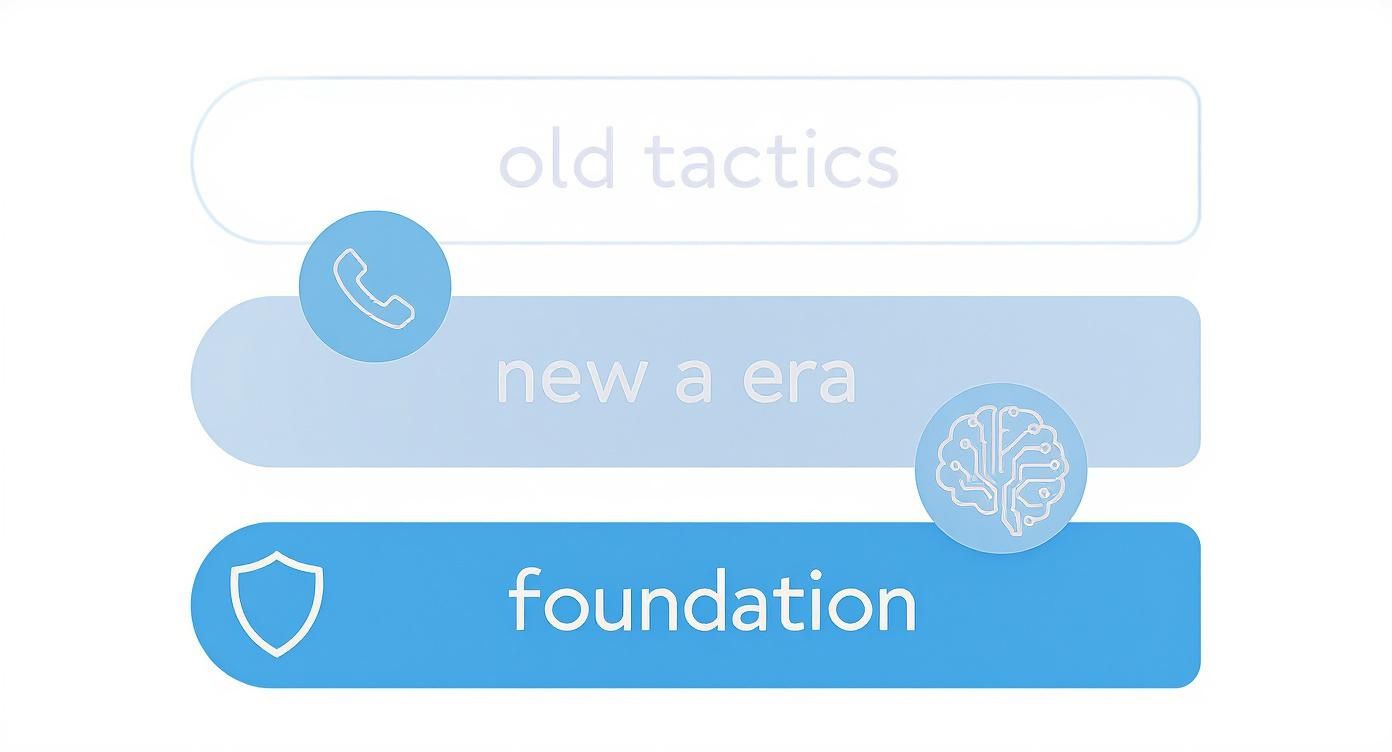
This really drives home the point that while new tools are great, they’re useless without a solid foundation. Long-term success is built on earning your audience's trust.
Mastering Inbound Lead Generation
Inbound lead generation is the art of pulling customers in, not pushing your message out. It’s about building so much authority and trust that you become a magnet for qualified prospects who are already looking for the solutions you offer.
The whole game is about creating and sharing content that genuinely solves problems. The core parts of a strong inbound machine include:
- Content Marketing: This is your engine room. Creating valuable resources like blog posts, in-depth case studies, or detailed whitepapers that tackle your clients' biggest headaches positions you as the go-to expert in your field.
- Search Engine Optimisation (SEO): SEO is the glue that connects your content to the people who need it. By optimising your website, you make sure your business shows up right when potential clients are typing their problems into Google.
The big idea with inbound is to earn attention, not buy it. When you consistently create content that helps your audience, you build credibility. You become the obvious choice when they’re finally ready to make a purchase.
This isn't a quick fix; it's about building a sustainable asset over time. For a deeper dive, check out this excellent guide on how to get inbound leads.
Implementing Effective Outbound Strategies
While inbound builds that slow, steady burn of long-term momentum, outbound strategies are for getting results right now. This approach involves proactively contacting potential clients you've already identified as a perfect match for what you do. It's about starting conversations, not waiting for them.
But forget about aggressive, old-school cold calling. Modern outbound is all about precision and personalisation.
- Paid Advertising (PPC): Platforms like Google Ads and LinkedIn Ads let you put your service directly in front of a hyper-specific audience. You can target by industry, job title, company size, or location, making sure every dollar of your marketing budget is spent reaching the right people.
- Personalised Email Outreach: This isn't about spamming a generic list. It’s about crafting targeted emails for a small, curated group of prospects. The secret is to focus on their specific challenges and show them exactly how your service is the solution, making your message impossible to ignore.
When you combine these inbound and outbound methods, your services lead generation becomes incredibly resilient. You'll have a system that both attracts organic interest and actively hunts down high-value opportunities, ensuring your pipeline is never empty.
Using Influencer Marketing to Drive Leads
Influencer marketing often gets pegged as just a brand awareness play, but that view is far too narrow. Its real strength, especially for services lead generation, is its incredible ability to build trust on the spot.
Think about it: partnering with a respected voice in your industry is like getting a warm, personal introduction to thousands of your ideal clients, all at once. Instead of you shouting from the rooftops about how great your service is, a trusted expert is endorsing it for you. This approach cuts straight through the marketing noise because it leans on credibility that's already been built.
When an influencer your target audience already follows and admires recommends your service, it’s a powerful validation. This strategy is particularly effective for service-based businesses where trust is everything—think consulting, financial advice, or high-end creative work.
Finding the Right Influencers
Here’s the thing: the key isn’t chasing the influencer with the biggest follower count. It’s about finding the one with the right followers. A micro-influencer with a super-engaged, niche audience of 5,000 ideal customers is infinitely more valuable than a macro-influencer with a million generic followers.
Your search should zero in on:
- Audience Alignment: Do their followers actually match your ideal client profile?
- Authenticity and Trust: Does their content feel genuine? Do their followers hang on their every word?
- Engagement Rates: A massive follower count means nothing if the audience isn't actively liking, commenting, and interacting. That's just a vanity metric.
Partnering with an influencer isn't just a transaction; it's a collaboration. The most successful campaigns happen when the influencer genuinely believes in the value of your service and can communicate that passion to their audience authentically.
Structuring a Lead-Focused Campaign
Once you’ve found the perfect partner, the campaign itself has to be designed to capture leads, not just rack up likes. This means you need a clear, compelling call-to-action that guides people from a social media platform directly into your sales funnel.
This is an area where influencer marketing is making a serious impact in Australia, backed by significant investment and proven consumer trust. Forecasts predict that Australian spending on influencer advertising will hit around AUD 929 million in 2025. This effectiveness is crystal clear, as 46% of Australians have bought products promoted by influencers. You can dig deeper into these trends with these Australian marketing statistics.
A few effective tactics to get you started include:
- Exclusive Offers: Give the influencer’s audience a unique discount code or a special bonus for signing up. It makes them feel special and creates urgency.
- Co-hosted Webinars: Host a live online event with the influencer. You get to provide genuine value while capturing attendee information for follow-up.
- Custom Landing Pages: Create a dedicated page just for their audience to learn more and convert. This not only provides a seamless experience but also makes tracking your results a breeze.
Solving Common B2B Lead Generation Challenges

Navigating B2B services lead generation can feel like trying to solve a puzzle with half the pieces missing. Even the sharpest strategies hit roadblocks, whether it's grabbing the attention of the right people or getting your internal teams on the same page.
Pinpointing these pain points is the first step toward building a sales pipeline that's actually resilient and efficient. For Aussie businesses, common hurdles include attracting high-quality prospects, aligning sales and marketing, and managing customer data responsibly under ever-changing privacy laws.
The good news? These challenges aren't brick walls. With the right framework and a few smart tools, you can diagnose the weak spots in your process and start putting concrete solutions in place.
Overcoming Poor Lead Quality
One of the most frustrating issues in B2B is the flood of low-quality or completely irrelevant leads. It’s a huge drain on time and resources, sending your sales team on a wild goose chase after prospects who were never going to be a good fit.
This inefficiency is a major headache for many Australian B2B companies. To fight back, businesses are adopting advanced targeting tools and AI-driven platforms that automatically screen and qualify prospects. The goal is to make sure only the leads with the highest potential land in front of your sales team.
Bridging the Sales and Marketing Divide
It's a classic story: marketing generates what they see as a pile of brilliant leads, only for the sales team to dismiss them as unqualified. This disconnect creates a leaky funnel where potential revenue slips through the cracks, all thanks to poor communication and mismatched goals.
To fix this, you need to get both teams singing from the same hymn sheet. Here’s how:
- Integrated CRM Systems: A shared Customer Relationship Management (CRM) platform acts as the single source of truth. It gives both teams full visibility into the customer's journey from start to finish.
- Shared KPIs: Forget separate goals. Establish Key Performance Indicators (KPIs) that both teams are measured on, like the lead-to-customer conversion rate, not just the raw number of leads generated.
- Regular Feedback Loops: Set up consistent meetings where sales can give direct feedback on lead quality. This helps marketing continually refine its targeting and messaging.
Creating alignment isn't just about using the same software; it's about fostering a culture of collaboration where both teams are united by the common goal of driving revenue. This synergy is essential for effective lead nurturing.
By tackling these challenges head-on, you can transform your lead generation process from a source of frustration into a powerful, predictable engine for growth. If you’re looking to sharpen your approach, our deep dive into B2B digital marketing strategies offers more practical advice.
How to Measure Your Lead Generation Success
Launching brilliant services lead generation campaigns is only half the job. If you aren't measuring your results, you're essentially flying blind, unable to tell which efforts are landing clients and which are just burning through your budget.
Effective measurement is what turns raw data into genuine business intelligence, giving you the power to prove your return on investment and make smarter decisions.
Forget about vanity metrics like social media likes or impressions. They might feel good, but they don't pay the bills. True success is tracked by focusing on the key performance indicators (KPIs) that directly impact your bottom line. These are the numbers that tell the real story.
Core Metrics That Truly Matter
To get a clear picture of how your campaigns are really performing, you need to track a few essential metrics. These KPIs give you a solid framework for understanding both your cost-efficiency and overall effectiveness.
Start by getting a handle on these three critical data points:
- Cost Per Lead (CPL): This one is straightforward—it tells you exactly how much you're spending to acquire a single lead. To calculate it, just divide your total marketing spend by the number of new leads you generated. A low CPL is a sign of an efficient campaign.
- Lead-to-Client Conversion Rate: This is arguably the most important number on the list. It measures the percentage of leads that actually become paying clients, revealing the quality of your leads and the effectiveness of your sales process.
- Customer Lifetime Value (CLV): This KPI predicts the total revenue your business can expect from a single client over the entire relationship. Understanding your CLV is critical because it helps you figure out how much you can afford to spend on acquiring new leads while still staying profitable.
The whole point of measurement isn't just to look back at what happened; it's to inform what you do next. When you know your numbers inside and out, you can confidently double down on the channels that work and cut the dead weight.
You don't need a suite of expensive software to get started. The tools you're likely already using, like Google Analytics and your Customer Relationship Management (CRM) system, are more than powerful enough to track these core metrics.
By setting up a few simple dashboards, you can keep an eye on your campaign health in real-time. For a more detailed breakdown, our guide explains how to measure advertising effectiveness across different channels. This data is what empowers you to optimise your campaigns, justify your marketing spend, and ultimately build a predictable engine for business growth.
A Few Final Questions, Answered
When you're diving into the world of service-based lead generation, a few practical questions always come up. Getting your head around timelines, key terms, and what actually signals a win is the first step to putting these strategies into action.
Key Timelines and Terms
How long does it take to see results from lead generation?
This really depends on the path you take. If you’re running paid ads, you could see leads trickling in within a few days, which is great for getting quick feedback.
But for the long game—think organic methods like SEO and content marketing—you need a bit more patience. These are more like investments, typically showing real, meaningful results in 3-6 months. The payoff is a steady, low-cost stream of traffic that builds on itself over time.
What is the difference between a lead and a prospect?
It's a simple but crucial distinction. A lead is anyone who’s raised their hand, showing some initial interest in what you do—maybe they filled out a form or downloaded a guide.
A prospect, on the other hand, is a lead you’ve qualified. They’re not just interested; they’re a genuine fit. They match your ideal client profile and have a real need for the service you offer. It’s the difference between a crowd and a curated guest list.
The single most important metric to track in lead generation is often the Lead-to-Client Conversion Rate. While things like Cost Per Lead (CPL) are handy, this one number tells you how good you are at turning casual interest into actual, paying business. It’s the ultimate report card on your lead quality and sales process.
Focusing on conversion quality is what separates a busy campaign from a profitable one. It ensures every dollar you spend on marketing is directly fuelling your bottom line and growing your business.
Ready to stop chasing leads and start attracting qualified clients? The team at Click Click Bang Bang specialises in precision-driven SEO and PPC campaigns that deliver measurable results. Let us build your lead generation engine.
Learn more and book your free strategy session at https://clickclickbangbang.com.au.
Read NeXt
Or Read Our Latest
- Localization Strategy: How to Win in Any Market
- Phone Call Tracking: Methods, Metrics, and Best Practices
- Supplier Relationship Management: Strategic Guide 2026
- Reporting Portal Login: Access Your Client Dashboard Fast
- How to Calculate Sample Size for A/B Tests and Campaigns
- How to Fix Google Merchant Center Errors Step by Step
Click. CLick. Subscribe.
Get our best PPC insights, industry updates, and power moves delivered straight to your inbox. No fluff, just high-caliber strategies that actually work.
Don’t Leave Just Yet
Try Us For 30-Days,
Risk Free!!
We guarantee that you’ll love our work within the first 30 days, if not you’ll get your money back.
What have you got to lose?