

Master Shopify SEO Melbourne: Boost Your Store Sales
Last Updated
Your Shopify store is live. The theme looks sharp, products are loaded, and paid ads might even be bringing in a few early sales. But when someone in Melbourne searches for what you sell, your store is nowhere useful. You’re buried under marketplaces, bigger brands, review sites, and local competitors that look less polished than you do.
That’s the point where basic SEO stops being enough.
For shopify seo melbourne, the stores that win usually do three things well at the same time. They fix Shopify’s technical weak spots, they build strong local relevance, and they adapt for AI-driven search instead of pretending Google still works the way it did a few years ago. If you only do one of those, you can get some traction. If you do all three properly, you build something that compounds.
Why Your Melbourne Shopify Store Needs More Than Basic SEO
Melbourne is a hard market to rank in because search intent is mixed. A shopper might want a local pickup option, same-day delivery, a product comparison, or a nearby store they can trust. Generic Shopify advice doesn’t handle that well because it usually treats every store like it’s competing on a blank national stage.
It isn’t.
Australia’s Shopify ecosystem is growing fast, with 23.14 million users projected by 2029, and organic search contributes 13.81% of all Shopify traffic according to Red Search’s Shopify statistics for Australia. That makes organic visibility too valuable to leave to default theme settings and a few rewritten product titles.
What basic Shopify SEO misses
Most store owners start with the obvious jobs. They rename a few pages, install an SEO app, maybe add alt text, then assume Google will catch up. In Melbourne, that rarely carries you far because your competitors are already doing the basics.
The gap usually sits in three places:
- Technical weakness: Shopify can create crawl and indexing mess if collections, filters, redirects, and theme code aren’t handled carefully.
- Local intent mismatch: A category page written for broad traffic won’t rank as well for searches with Melbourne context or suburb-level buying intent.
- AI visibility loss: If your content isn’t structured clearly, Google can answer the query without sending the click.
Practical rule: Don’t ask whether your store is “SEO-friendly”. Ask whether Google can crawl it cleanly, understand it quickly, and trust it for Melbourne-specific searches.
The playbook that works now
A strong Shopify SEO campaign in Melbourne isn’t about chasing tricks. It’s about sequencing the work properly.
First, get the technical foundation stable. Then improve product and collection pages so they satisfy search intent and conversion intent at the same time. After that, strengthen local authority with Google Business Profile, citations, local links, and content that only a Melbourne business would create credibly.
The AI layer sits across all of it. You don’t bolt that on later. You structure pages, FAQs, collections, and supporting content so they can surface in AI summaries and still earn the click when buyers are ready to compare, validate, or purchase.
Your Foundational Shopify Technical SEO Audit
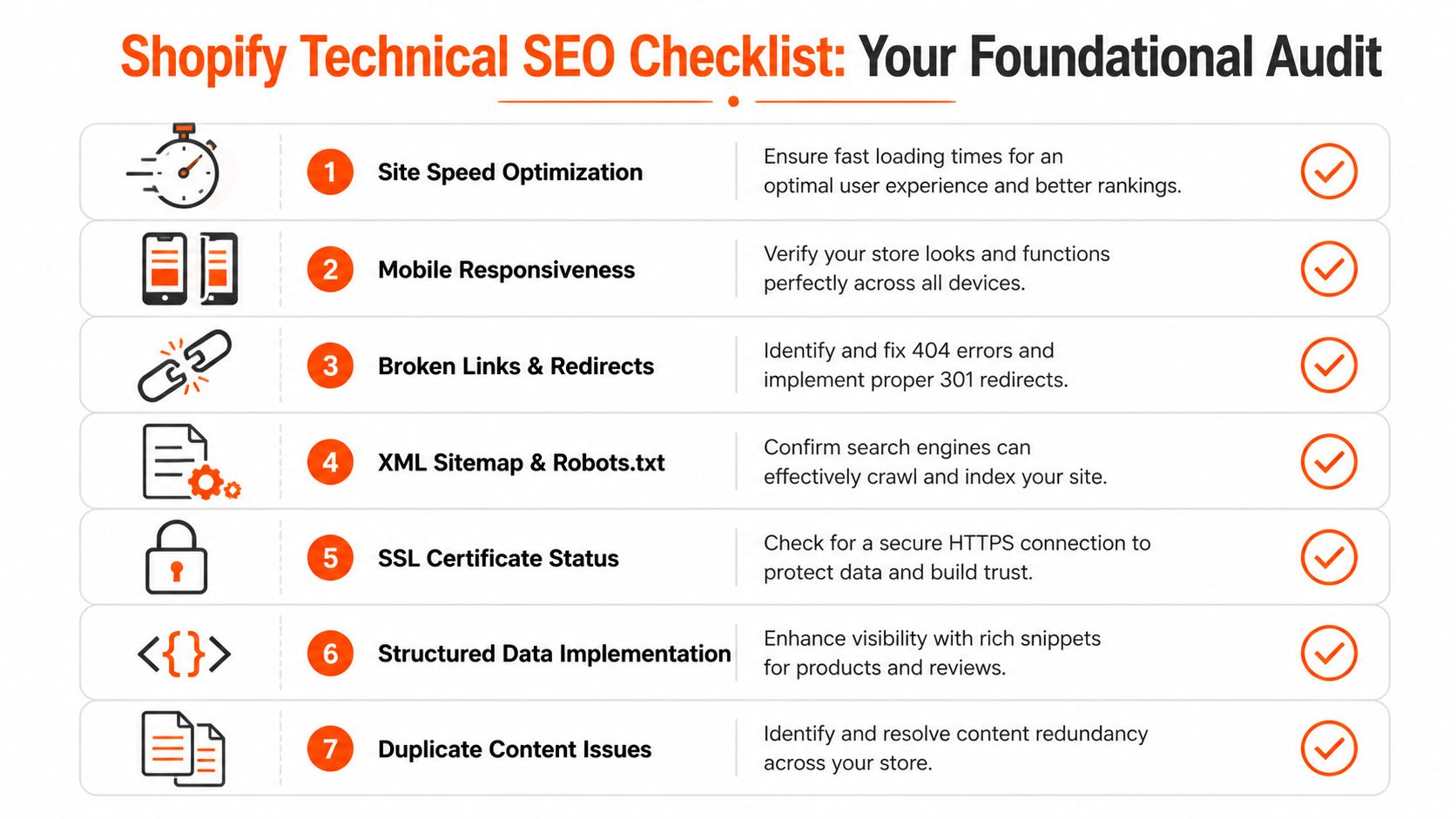
The first audit on a Shopify store should be boring in the best possible way. You’re not looking for magic. You’re looking for the technical issues that suppress rankings even when the products are good and the site looks fine.
Start with crawlability and index control
Open Google Search Console and inspect what Google is indexing. Then compare that to the pages you want indexed. On many Shopify stores, those two lists don’t match well enough.
Check these first:
-
Product and collection URLs
Make sure the canonical version is clear. Shopify can create duplicate paths to the same product through collections, tags, or internal linking quirks. -
Sitemap health
Confirm the XML sitemap includes the right commercial pages and doesn’t overemphasise low-value URLs. -
Robots and noindex issues
Theme edits, app installs, and template customisations can accidentally hide pages that should rank. -
Redirect chains
Stores that have been through migrations, discontinued products, or collection changes often have redirect clutter.
Fixing crawl issues before rewriting content usually gives cleaner gains than publishing more blog posts onto a site Google still can’t interpret properly.
If you need a framework for validating what’s broken rather than what an app reports, it helps to gain clarity on your product's SEO before making changes at scale.
Audit speed where it affects revenue
A lot of Shopify themes look premium but load like a mess once apps, third-party scripts, oversized imagery, and custom sections pile up. That’s not just a user experience issue. It hits visibility and conversion.
For Australian Shopify stores, failing the Largest Contentful Paint metric above 2.5 seconds can lead to a 32% lower conversion rate, and optimising with image compression and lazy loading can lift click-through rates by 15% according to Ziff Digital’s Melbourne organic growth guide.
Focus on the pages that matter most:
- Homepage: Remove heavy sections that don’t support discovery or conversion.
- Collection pages: Compress banners and avoid app widgets that slow filtering.
- Product pages: Optimise image sizes, defer non-essential scripts, and test review apps carefully.
- Mobile templates: Check real device rendering, not just desktop tools.
Check schema and structured data properly
Shopify themes often include some product schema out of the box, but “some” isn’t the same as “correct”. Variants, availability, pricing, review markup, and breadcrumb schema often need review.
Critical fix: Don’t assume your theme’s schema is enough. Validate live pages and test key templates after app installs, especially review, bundle, and upsell apps.
A clean technical workflow usually looks like this:
| Area | What to check | Why it matters |
|---|---|---|
| Indexing | Search Console coverage, canonical tags | Prevents duplicate and low-value pages from diluting authority |
| Speed | LCP, image weight, script load | Improves user experience and supports rankings |
| Internal links | Collection depth, orphaned pages | Helps Google reach and prioritise key categories |
| Structured data | Product, breadcrumb, review markup | Improves understanding and eligibility for richer results |
For a deeper review of store architecture, rendering issues, and crawl path problems, a dedicated technical SEO audit process is usually where underlying blockers become obvious.
Optimising Product and Collection Pages for Melbourne Shoppers
A Melbourne shopper searches for “linen dresses Fitzroy”, opens three Shopify stores, and decides within seconds which one feels relevant. The store that wins usually does two things well. It matches the search intent precisely, and it answers buying questions before the shopper has to hunt for them.
On Shopify, product and collection pages do more than rank for category terms. They shape whether Google understands your commercial relevance, whether AI Overviews can pull useful summaries from your page, and whether a buyer in Carlton, South Yarra, or St Kilda feels confident enough to buy now instead of comparing five more tabs.
Basic product copy rarely gets that job done. A SKU, a generic paragraph, and a few bullet specs leave too much unanswered. Strong pages give search engines clean context and give shoppers specific reasons to choose you.
Build collection pages around real Melbourne buying intent
Collection pages should target the category term, but that is only the starting point. The stronger play is to align the page with the way people refine searches when they are close to purchase. In Melbourne, that often means style, urgency, season, suburb relevance, pickup options, or delivery expectations.
For example:
- Too broad: “Women’s Dresses”
- Better fit: “Women’s Dresses Melbourne”
- Stronger purchase intent: “Women’s Event Dresses Melbourne” or “Women’s Dresses with Fast Melbourne Delivery”
That does not mean forcing suburb names into every heading. It means using copy that reflects how people search. Intro text, FAQs, filter labels, and metadata should reinforce the category with useful qualifiers such as fabric, fit, occasion, same-day dispatch, or local delivery windows.
This matters for AI-first SEO too. Google’s AI systems are more likely to cite pages that answer narrow commercial questions clearly, not pages that repeat a head term with no added context.
Write product copy that reduces hesitation
Many Shopify product pages fail in the same place. They describe the product, but they do not resolve the friction that stops the sale.
A strong product description should do four things:
- Explain the product clearly
- Use natural search language
- Answer practical objections
- Support conversion with specific details
Before
“Premium soy candle with a clean burn and elegant jar design. Perfect for any home.”
After
“Hand-poured soy candle suited to smaller Melbourne apartments and gifting. Clean burn, reusable glass jar, and a scent profile that works in bedrooms, bathrooms, and home offices. Available for local delivery and easy online ordering.”
The second version gives Google clearer signals about use case and buyer intent. It also gives AI Overviews more useful phrasing to summarise. For the shopper, it answers a simple question fast. Where does this fit in my life?
That is the standard to aim for on every product page.
Add the details buyers actually look for
Good product pages usually include more than a polished description. They include the information that removes uncertainty before it becomes a support ticket or an abandoned cart.
For Melbourne-focused stores, that often includes:
- delivery timeframes by metro area
- click and collect or warehouse pickup details
- sizing notes for Australian buyers
- material and care information
- returns policy summaries near the add-to-cart area
- FAQs that address fit, shipping, and availability
These elements also help search visibility. Clear answers can support rich snippets, improve long-tail relevance, and increase the chances of your page being used in AI-generated summaries.
Treat images as commercial SEO assets
Images influence rankings, click-through, and conversion at the same time. On many Shopify stores, they are still handled as a design task instead of a search and revenue asset.
Use images with intent:
- Descriptive filenames: Use product-specific naming before upload.
- Alt text: Describe what is shown accurately. Skip keyword stuffing.
- Context shots: Show scale, fit, texture, packaging, or in-room use.
- Variant coverage: Match key colours or styles to their actual imagery.
Fashion, beauty, furniture, and gifting stores especially depend on this. If your team needs a practical reference, this guide to Shopify fashion images is useful for balancing presentation with page performance.
Make collection pages worth ranking
A collection page should not be a thin grid with a title tag. It needs enough original value to earn visibility in a competitive city like Melbourne, where multiple retailers often target the same commercial terms.
The pages that perform best usually have:
- a short intro that defines the range clearly
- internal links to related subcategories
- filters that support shopper decision-making without creating junk URLs
- FAQ content tied to delivery, sizing, materials, or use case
- copy that reflects local demand patterns, not generic supplier language
This is one of the clearest trade-offs in Shopify SEO. Add too little copy, and the page stays weak. Add too much generic text, and the page becomes bloated and harder to use. The right balance is enough content to clarify intent and support indexing, without pushing products and filters below the fold.
For stores reviewing category targeting, product copy, and AI-visible page structure together, a specialist Shopify SEO service for Melbourne eCommerce stores usually gets better results than relying on disconnected app fixes or template-level tweaks alone.
Dominating Local Search with Google Business Profile
For a Melbourne store with any local footprint, Google Business Profile matters almost as much as the Shopify site itself. That includes retailers with a showroom, studio, warehouse pickup, consultation space, or suburb-based delivery model.
Too many eCommerce brands ignore it because they think it’s only for cafés, tradies, or physical shops. That’s a mistake. If someone searches for your category plus a Melbourne location signal, Google will often test local results first. If your profile is weak or incomplete, you lose that visibility before the website even gets considered properly.
What a strong profile actually looks like
A useful Google Business Profile isn’t just verified. It’s active, complete, and aligned with what’s on your site.
Make these elements consistent:
- Primary category and supporting categories: Choose the closest commercial fit.
- Business description: Write for real searchers, not for brand slogans.
- Photos: Add current images of products, premises, team, packaging, or pickup experience.
- Products and services: Reflect your core commercial offers clearly.
- Q&A entries: Seed common buyer questions and answer them properly.
- Website destination: Link users to the most relevant page, not always the homepage.
The profile should support local trust. If your store serves Melbourne broadly but has strong relevance in places like Richmond, Fitzroy, South Yarra, Brunswick, or the inner west, your local signals should make that obvious without forcing it.
Directories still matter when they’re the right ones
Local authority isn’t built only through blogs and editorial mentions. Citations and directory links still play a role, especially when they’re clean, relevant, and consistent.
According to Digital Darts’ Shopify SEO guidance, top-performing Melbourne e-commerce stores secure around 25% of their links from local directories, and that strategy drives approximately 40% of their lead generation. That doesn’t mean submitting your site to every directory you can find. It means choosing reputable Australian and Melbourne-relevant listings that reinforce legitimacy.
A practical shortlist usually includes:
- Established Australian business directories
- Industry-specific listings
- Local chamber or precinct directories
- Relevant suppliers, stockists, or partner pages
Local SEO wins when your business details match everywhere. Inconsistent names, addresses, phone numbers, and landing pages create friction for Google and for customers.
This video gives a useful overview of how local visibility mechanics work in practice.
For businesses that want map pack visibility, suburb relevance, and cleaner citation management, a dedicated Melbourne local SEO strategy is usually the missing piece between “present online” and “found locally”.
Building Authority with Melbourne-Focused Content
The stores that dominate local organic search don’t just optimise product pages. They publish content that proves they belong in the market.
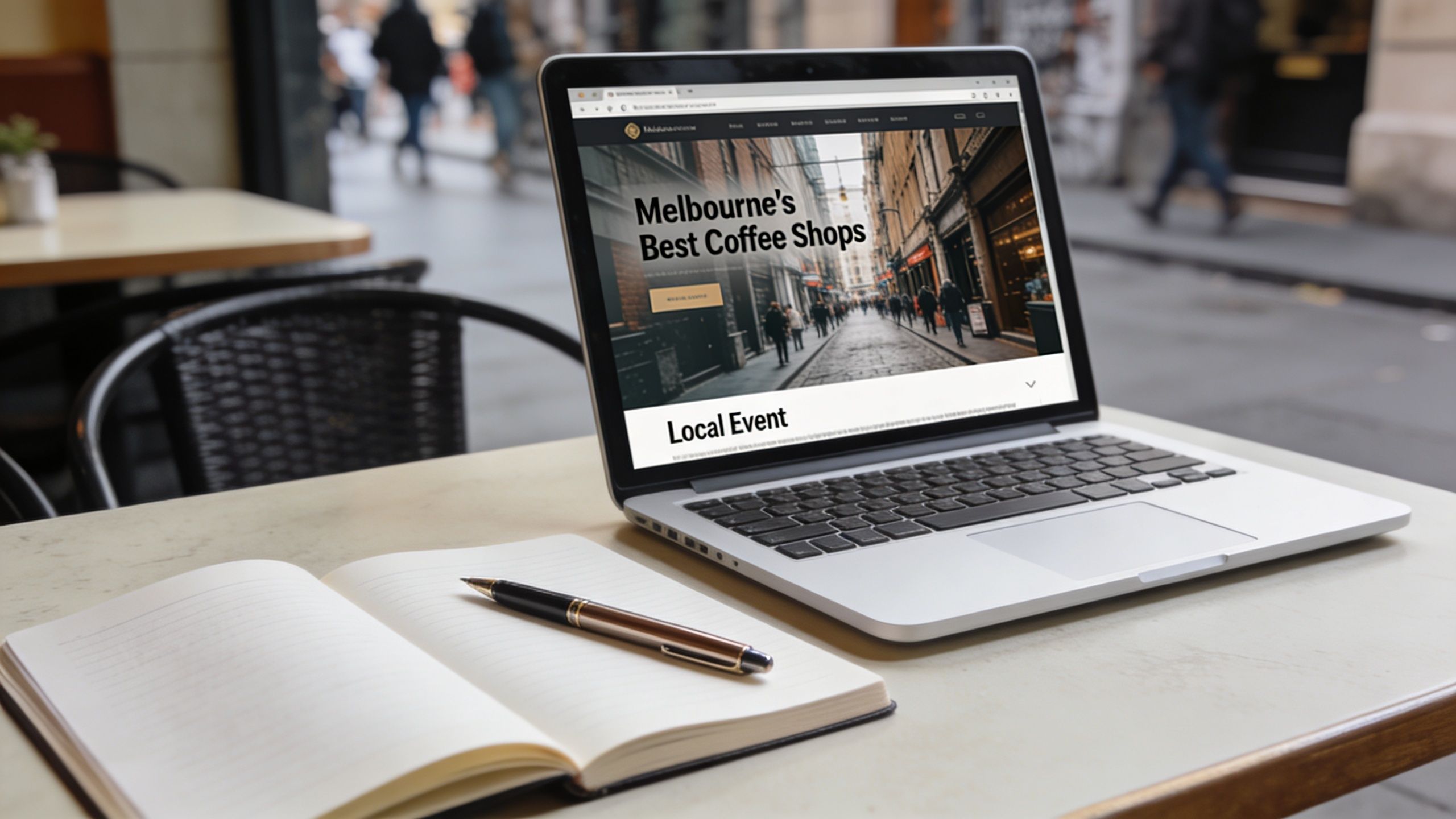
A Melbourne fashion boutique is a good example. If it only publishes products, it competes on catalogue depth, price, and brand recognition. If it also publishes content around race day outfits, layering for Melbourne weather, local event dressing, and fabric choices for travel between suburbs and seasons, it starts to become useful beyond the transaction.
That shift matters because useful local content earns links more naturally than product pages do.
A simple content cluster that feels local
Take a boutique selling women’s eventwear. Instead of posting generic articles like “summer style trends”, the smarter cluster might look like this:
| Content type | Topic angle | Why it works |
|---|---|---|
| Guide | What to wear to the Spring Racing Carnival | Matches a real Melbourne event and seasonal intent |
| Advice article | Layering eventwear for Melbourne weather | Solves a local buying problem |
| Styling page | Dress codes for rooftop venues and weddings | Supports commercial category pages |
| Local roundup | Accessories from Melbourne makers | Creates partnership and link opportunities |
Each piece supports a category or product set. Each one gives local publishers, stylists, venues, and adjacent brands something more linkable than a product listing.
The link earning effect
When content is specific enough, outreach gets easier. A florist, venue blog, local event guide, or Melbourne lifestyle site is far more likely to reference a resource with clear local relevance than a standard ecommerce article.
The mistake most brands make is writing content that could have been published by anyone, anywhere. That doesn’t build authority. It fills a blog archive.
Create pages that a Melbourne customer, editor, or partner would recognise as local expertise rather than templated SEO copy.
This also helps internal linking. A category like occasion dresses can be supported by guides on event dressing, local venue considerations, delivery timing, and care advice. That gives Google a stronger sense of topical depth and gives shoppers more paths back into the commercial pages.
What works and what doesn't
What works
- Local examples: Mention real Melbourne contexts your buyers understand.
- Commercial adjacency: Link every informational piece back to collections or products.
- Useful specificity: Answer practical questions your sales team or inbox sees repeatedly.
What doesn't
- Generic trend posts: They rarely earn links or drive qualified traffic.
- Thin suburb pages: Changing only the suburb name doesn’t build authority.
- Content with no destination: If it can’t support a category, collection, or buying decision, it often becomes dead weight.
The strongest Melbourne content programmes feel like a buyer’s guide written by a business that serves the city, not by a content calendar trying to hit a publishing quota.
Measuring Success and Adopting AI-First SEO
A Shopify SEO campaign isn’t healthy just because traffic rises. If the extra sessions don’t improve qualified visibility, assisted conversions, and revenue from organic search, you’ve probably attracted the wrong audience or optimised the wrong pages.
For Melbourne stores, the KPI stack should stay close to commercial reality.
Track the metrics that affect decisions
Use GA4 and Google Search Console together. Search Console tells you what Google is surfacing. GA4 tells you what those visitors do once they land.
The useful metrics usually include:
- Organic landing pages by revenue
- Search queries tied to product and collection pages
- Melbourne-focused keyword movement
- Engagement and conversion by device
- Assisted conversions from informational content
- Index coverage for priority pages
If a collection page is gaining impressions but not clicks, the issue might be title tags, weak SERP presentation, or poor match to intent. If it’s getting clicks but not sales, the issue is usually on-page UX, offer clarity, or trust signals.
AI-first SEO is now part of the job
Google’s search results are changing fast, and ignoring that change is expensive. According to Octopus Digital’s Melbourne Shopify SEO article, Google’s AI Overviews impact 32% of Australian search queries. That means your content now competes not only for rankings, but also against Google’s ability to summarise the answer without sending the click.
The response isn’t panic. It’s better formatting and better strategy.
Focus on:
-
Clear entity signals
Make brand, product, category, and location relationships obvious. -
Structured answers inside commercial pages
Add concise FAQ-style copy where buyers need it. -
Supportive informational content
Publish pieces that answer comparison, use case, and trust-building questions. -
Schema and page structure
Help search engines extract useful context cleanly.
If you’re trying to understand how your brand appears in AI-generated responses, this resource on brand visibility in AI answers is worth reviewing.
AI-first SEO doesn’t replace classic SEO. It rewards stores that already communicate clearly, structure content well, and demonstrate local expertise better than competitors.
Frequently Asked Questions
How long does shopify seo melbourne usually take to show results?
For a new Melbourne Shopify client, I usually set expectations at 3 to 6 months before organic gains become consistent. The shorter end applies when the store has a clean site structure, focused collections, and a category that is not heavily contested. The longer end is more common for stores selling into crowded segments like fashion, beauty, furniture, or supplements.
Some changes land fast. Indexation fixes, title rewrites, internal linking, and collection page improvements can lift visibility within weeks. Revenue takes longer because rankings, click-through rate, and conversion rate rarely improve at the same speed.
What does Shopify SEO cost in Melbourne?
Shopify SEO in Melbourne usually starts from around $1,500 per month for a small to mid-sized store, then climbs based on catalogue size, technical issues, content scope, and competition. A 40-product store targeting a tight local niche is a different job from a 2,000-SKU retailer trying to win statewide or national searches.
Good pricing is tied to workload. If an agency gives you a flat number before reviewing your collection structure, theme limitations, crawl issues, and current rankings, treat that as a risk. On Shopify, the core work sits in prioritisation. You need to know whether to fix faceted navigation, strengthen collection intent, improve product copy, or build supporting content for AI Overviews first.
Should I focus on SEO or paid ads first?
Use paid ads if you need demand now. Build SEO early if you want acquisition costs that improve over time.
The right answer for many Melbourne stores is both, with each channel doing a different job. Google Ads can test product demand, offer angles, and search terms quickly. SEO then turns those lessons into stronger collection pages, better product copy, and content that can rank in standard search results and appear in AI-generated summaries.
That matters more now because search behaviour is changing. A store that only runs ads rents visibility. A store that builds search demand capture through technical SEO, local relevance, and answer-focused content is harder to displace.
If you want a partner that understands both AI-first SEO and performance-led growth, Click Click Bang Bang is built for exactly that. They combine technical SEO, local strategy, and paid media thinking so Melbourne brands can grow traffic that turns into revenue, without long-term lock-ins or vague reporting.
Read NeXt
Or Read Our Latest
- User Generated Content Strategies That Actually Convert
- Copyright and Infringement Guide for Business Marketers 2026
- What Is Brand Positioning and Why It Drives Growth
- Push vs Pull Marketing: A 2026 Decision Guide
- Ad Relevance Score Explained: How It Impacts PPC Performance
- Best ROI Digital Marketing: 10 Channels Ranked for 2026
Click. CLick. Subscribe.
Get our best PPC insights, industry updates, and power moves delivered straight to your inbox. No fluff, just high-caliber strategies that actually work.
Don’t Leave Just Yet
Try Us For 30-Days,
Risk Free!!
We guarantee that you’ll love our work within the first 30 days, if not you’ll get your money back.
What have you got to lose?