

Affordable Website Design Brisbane: A 2026 Price Guide
Last Updated
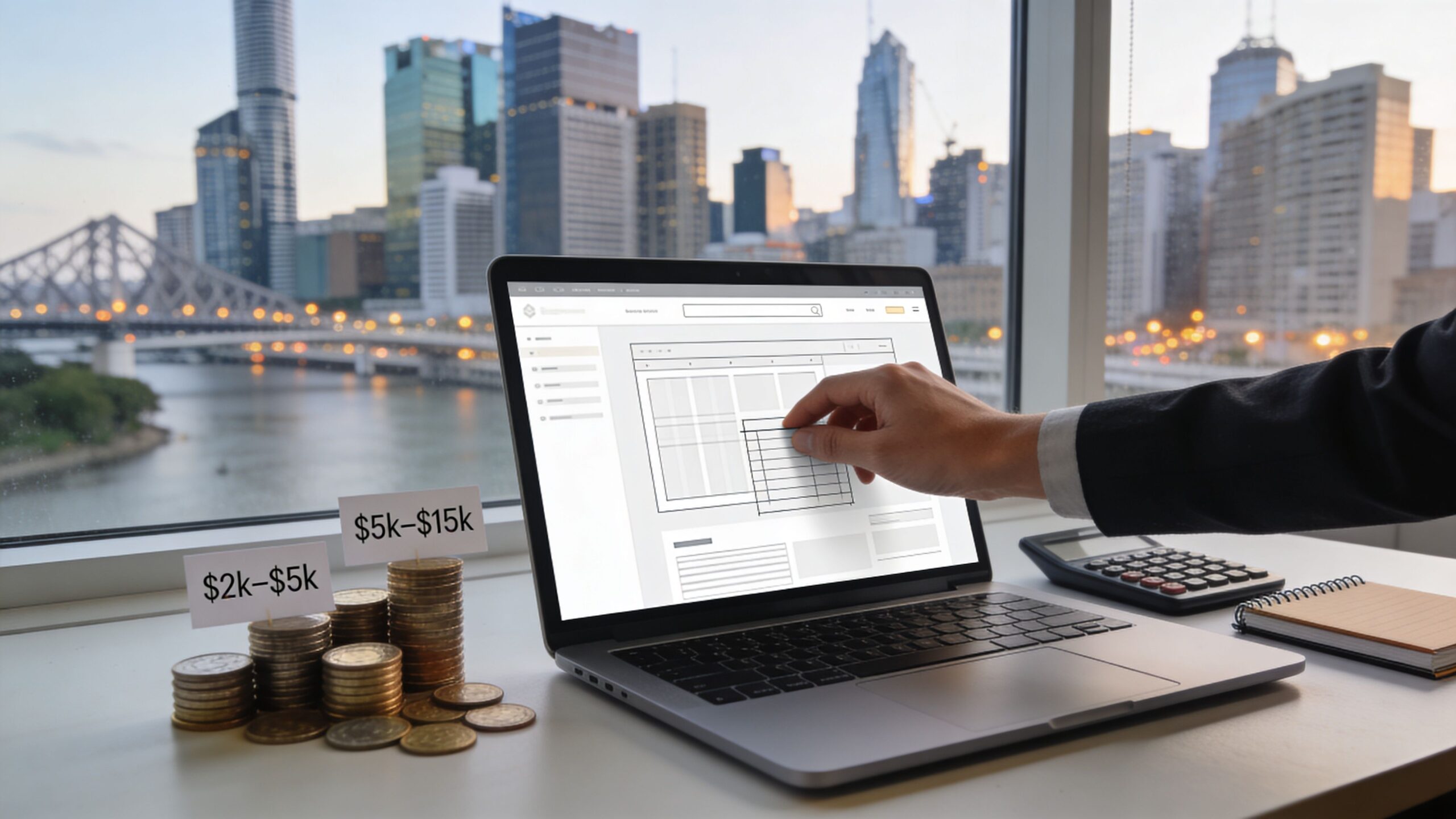
A professional, affordable website in Brisbane typically costs $2,000 to $5,000 AUD for a small business brochure site, while more custom builds with advanced functionality usually land between $5,000 and $15,000 AUD. True value isn’t finding the cheapest quote. It’s choosing a partner who builds for long-term SEO visibility, user experience, and lead generation in an AI-shaped search market.
A lot of Brisbane business owners start in the same place. They’ve outgrown a dated site, they’re finally ready to launch properly, or they’ve realised their social pages can’t carry the whole sales process anymore. Then the quotes start coming in. One provider says a few hundred dollars. Another says several thousand. Another talks about strategy, SEO, hosting, structured data, tracking, and conversion paths, and suddenly the whole thing feels harder than it should.
That confusion is normal. The web design market in Brisbane has matured, but the language around “affordable” still trips people up. Some offers are cheap because they strip out the work that helps a site get found and convert. Others cost more because they include the parts that make the website useful after launch.
If your goal is leads, bookings, enquiries, or online sales, the cheapest build can become the most expensive mistake. A site that looks acceptable but loads slowly, has weak technical foundations, and gives Google little structure to understand will often sit there doing nothing. You still paid for it. You just don’t get a return.
Beyond the Price Tag What ‘Affordable’ Really Means in 2026
The search for affordable website design brisbane isn’t about being cheap. It’s about avoiding overpaying.
That’s sensible. But there’s a difference between controlling cost and buying a site that can’t do its job. In practice, “affordable” should mean a website that fits your current budget and gives you a workable base for visibility, trust, and enquiries. If it launches fast but stays invisible, it isn’t affordable at all.
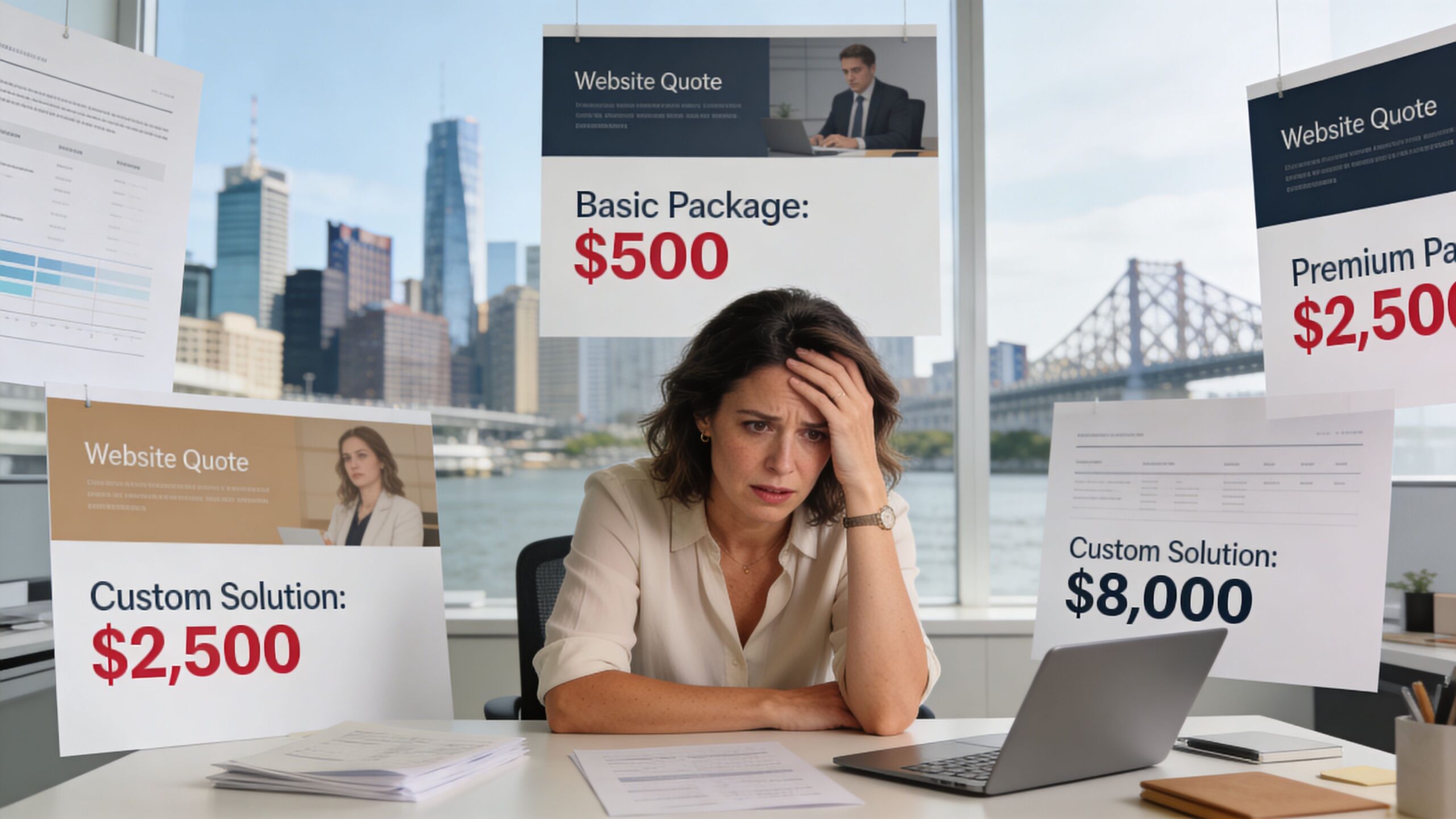
Why the cheapest quote often costs more later
The hidden problem in Brisbane isn’t just bad design. It’s weak post-launch performance. Recent market commentary highlights a serious gap: 68% of Australian SMEs struggle with post-design traffic due to poor technical SEO setup, and Google’s AI Overviews are reducing traditional organic traffic by 25% for AU sites that lack proper structured data (Sk Web Sketch).
That lines up with what many businesses discover too late. Their low-cost site is live, but no one’s finding it. Or traffic arrives and doesn’t convert because the pages weren’t planned around user intent, trust signals, or action.
Practical rule: If a provider talks only about colours, layouts, and launch dates, you’re hearing half the story.
A useful way to benchmark your expectations is to compare local quotes with broader guides on how much a small business website costs. Not because overseas pricing maps neatly to Brisbane, but because the same commercial reality applies everywhere: scope, technical depth, and performance planning change the value of the build.
What affordable should include now
An affordable site in 2026 should give you more than a digital brochure. At minimum, you want a build that supports the basics of search visibility and conversion from day one.
That usually means looking for these foundations:
- Clear page structure: Your services, locations, and offers need a logical hierarchy so users and search engines can follow them.
- Technical readiness: Structured data, clean metadata, indexable content, and usable internal linking matter more now than they did a few years ago.
- Conversion intent: Forms, calls, click-to-call elements, and page flow should support action, not just browsing.
- Tracking setup: If no one sets up measurement properly, you can’t tell what’s working after launch.
A cheap launch can feel like progress. A site that earns traffic and enquiries is progress.
Decoding Brisbane Website Design Prices
Brisbane pricing is no longer the bargain outlier it once was. The local market now sits much closer to the national average, which is good news if you want clearer benchmarks and fewer wildly misleading quotes.
According to SMG’s Brisbane website cost guide, Brisbane’s professional small business website sector now operates within a standard pricing corridor. Basic brochure sites typically range from $2,000 to $5,000 AUD, while custom-designed websites with advanced functionality fall between $5,000 and $15,000 AUD. That same source notes this reflects Brisbane’s maturity as part of Australia’s broader digital services market.
What you should expect in the lower bracket
If you’re quoted within the $2,000 to $5,000 AUD range, you’re generally looking at a straightforward small business website. Think service businesses, consultants, local retailers without complex e-commerce requirements, or a company replacing an old brochure-style site.
That budget usually suits projects with:
- A defined page set: Home, About, Services, Contact, and a few supporting pages.
- A templated or semi-custom design approach: Enough tailoring to reflect your brand, but not a ground-up bespoke interface.
- Standard content management: Commonly WordPress, with straightforward editing and publishing.
- Core business functionality: Contact forms, maps, image galleries, testimonials, and lead capture.
This is the range where “affordable” can still mean professional. But only if the provider is disciplined about scope. If you expect strategy workshops, copywriting for many pages, booking systems, custom user flows, and advanced integrations, this bracket gets stretched quickly.
Where the custom range starts making sense
Once your project moves into $5,000 to $15,000 AUD, you’re usually paying for complexity, not just prettier visuals.
That can include:
| Project need | Why it pushes cost up |
|---|---|
| Custom page layouts | More design and development time than adapting an existing framework |
| Advanced functionality | Booking tools, gated areas, calculators, or custom forms need extra planning and testing |
| Larger content footprint | More templates, more page design decisions, more implementation work |
| Sales-focused UX work | Conversion paths, landing page logic, and funnel alignment require strategic input |
A custom build makes sense when the website is central to how you sell. If your site only needs to establish credibility and generate simple enquiries, custom development can be overkill. If it needs to support complex enquiries, paid traffic, or product sales, it often pays for itself through better fit and fewer compromises.
A suspiciously low quote usually means one of three things: the scope has been misunderstood, important work has been excluded, or the provider is relying on shortcuts you’ll pay for later.
How to read a quote without getting lost
Business owners often compare quotes as if they’re buying the same thing from different vendors. They rarely are.
A better way to assess a quote is to ask what the provider has included. Compare:
- Design depth. Is it a template setup, a bespoke design, or something fully custom?
- Content scope. How many pages are included, and who’s handling copy and image prep?
- Technical build. Are SEO basics, redirects, analytics, and structured page setup covered?
- Launch support. Will they test forms, mobile layouts, speed issues, and post-launch fixes?
If you want a broader regional comparison point, guides on startup website costs in NZ can be useful because they show the same pattern Brisbane buyers now face: the spread isn’t random, it’s driven by scope and business objectives.
For a local benchmark that helps frame quotes in plain language, it’s also worth reviewing what a website should cost in Australia. Not to chase a magic number, but to keep expectations realistic when vendors describe very different deliverables under the same word, “website”.
Key Factors That Influence Your Website Cost
Web design pricing makes more sense when you stop thinking about websites as a single product. It’s closer to building a premises. A small fitted office costs less than a custom showroom because the requirements are different. Websites work the same way.
Two businesses can both ask for “a new website” and need completely different levels of work. One wants a clean service site with a contact form. The other wants product filtering, booking logic, landing pages for ad traffic, CRM integration, and a content structure built for search growth. Those are different projects.
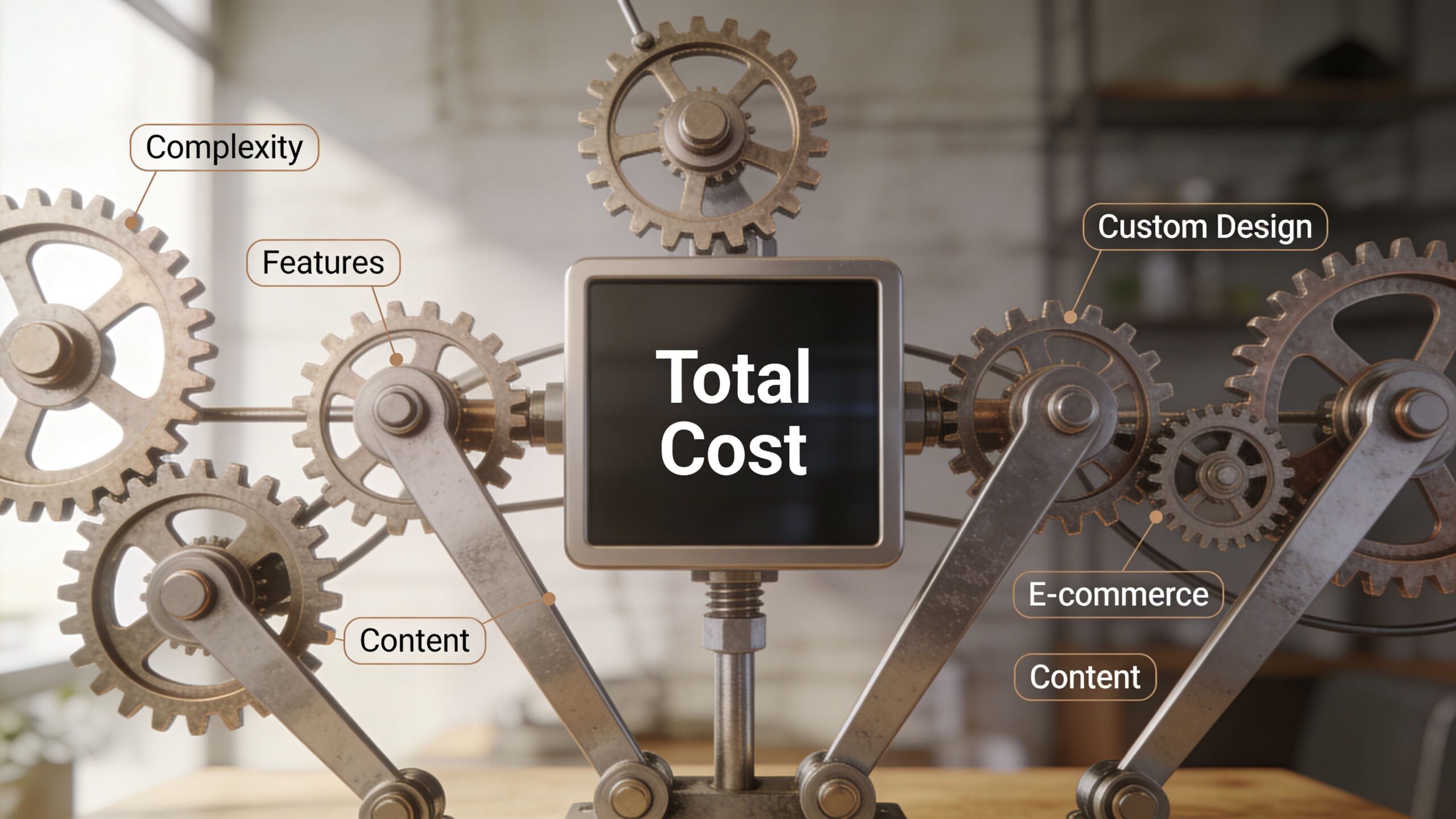
Scope is the biggest driver
The biggest cost variable is usually scope. Not platform. Not colour palette. Scope.
A basic site has fewer page types, fewer user journeys, and fewer edge cases to design around. Once you add more services, more landing pages, more stakeholders, or more customer actions, the project expands. That increase is justified when every extra page or feature supports how the business sells.
Here’s where scope typically grows fast:
- More page types: A standard service page is simple. A location page, case study template, and resource hub add planning and production work.
- Longer approval chains: If several decision-makers need to sign off, timelines and revisions tend to expand.
- Multiple goals: Sites that need to support SEO, PPC, recruitment, and customer support at once require stronger information architecture.
Design method changes the budget
Template-based work is cheaper because the visual and structural foundation already exists. That isn’t automatically bad. For some businesses, it’s a practical choice.
Custom design costs more because the provider has to solve more from scratch. They’re not just changing fonts and swapping images. They’re deciding layout behaviour, content hierarchy, mobile interactions, and how each page supports the user journey.
That’s why the trade-off matters:
| Approach | Best fit | Common limitation |
|---|---|---|
| Template-based | Small businesses that need a clean, fast launch | Can feel generic and may restrict future flexibility |
| Semi-custom | Businesses wanting tailored branding without full custom development | Requires clear scope to avoid drifting into custom territory |
| Fully custom | Brands with complex functionality or highly specific user flows | Higher upfront investment and longer delivery time |
If SEO matters to your business, the design method should also support clean implementation. A visually nice template can still become a mess if it’s overloaded with plugins, awkward content blocks, or bloated code. That’s why many businesses pair design decisions with a stronger search strategy from the start, which is exactly where thoughtful website design for SEO becomes valuable.
Custom isn’t always better. Fit is better.
Features add build time fast
Features are where many “cheap” quotes fall apart. A provider may quote for a website, but not for what your team expects the site to do.
These additions often push cost up:
- E-commerce: Product management, checkout behaviour, shipping logic, and transactional emails all add moving parts.
- Booking systems: Appointment flows sound simple until availability, notifications, and rescheduling enter the picture.
- Third-party integrations: CRM tools, payment gateways, live chat, and external databases all require testing and maintenance planning.
- Member areas or portals: These bring user permissions, privacy concerns, and more complex support requirements.
Content and platform choices matter too
The platform affects both upfront and ongoing cost. WordPress often suits service businesses that need flexibility and content control. Shopify usually makes more sense for stores that need a commerce-first environment. Neither platform is cheap or expensive by default. The key issue is whether the chosen system matches your business model.
Content also changes the budget more than people expect. If your provider is restructuring thin service pages, writing copy, sourcing images, and organising calls to action, they’re doing strategic work. If you supply polished content and clear direction, the build becomes leaner.
The right brief saves money. Not because it forces prices down, but because it removes waste, confusion, and revision loops.
Choosing Your Path DIY vs Freelancer vs Agency
The right build path depends less on ideology and more on risk, time, and business stakes.
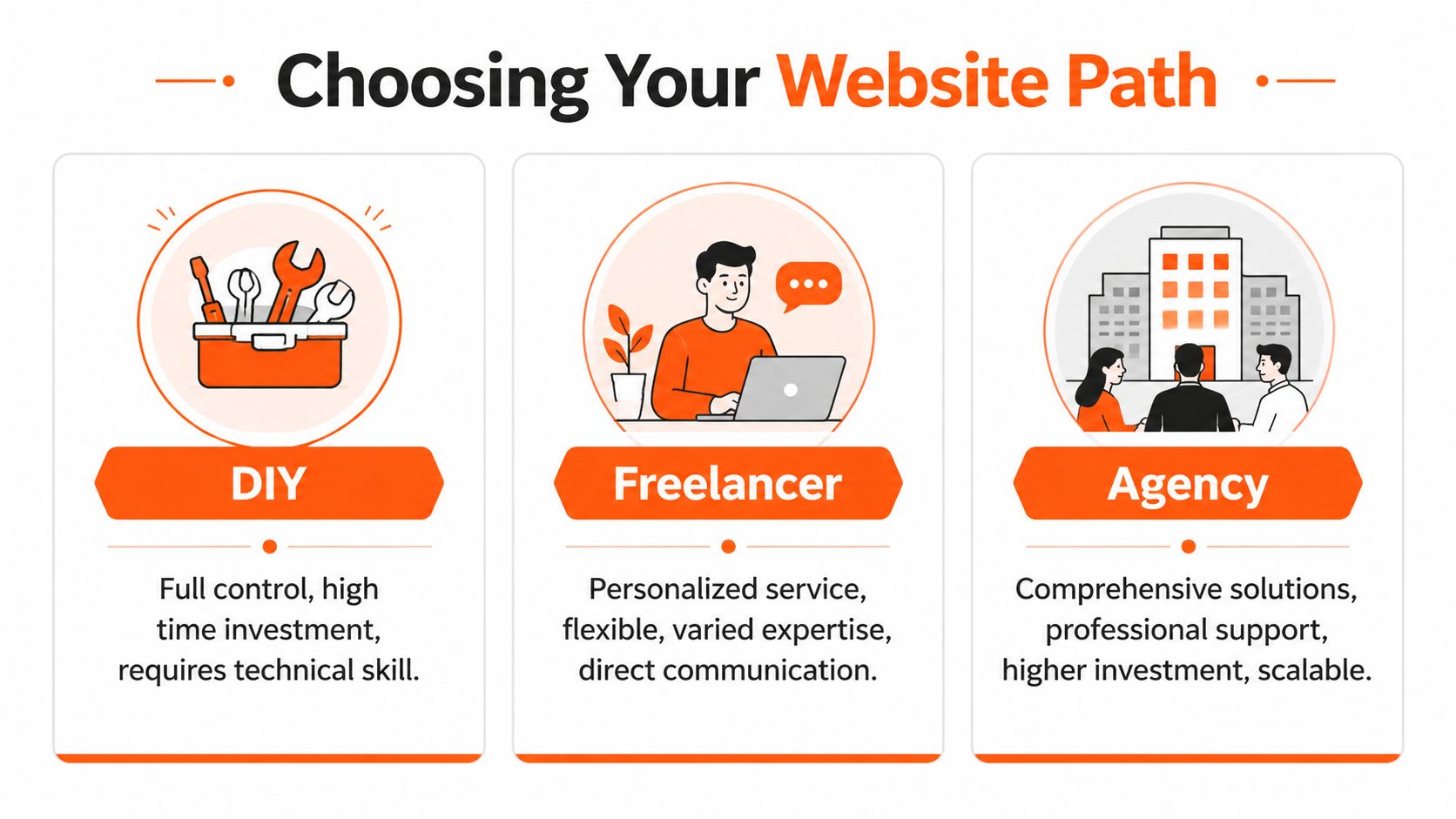
If you’re a sole trader with a simple offer and time to learn, DIY can work. If you want a customized site without the overhead of a larger team, a freelancer can be a solid option. If the website needs to support serious lead generation, paid media, multiple service lines, or long-term growth, an agency often gives you the safest structure.
The practical trade-off in plain English
DIY tools like Wix and Squarespace are attractive because they lower the upfront barrier. You can move quickly, choose a decent template, and get something live without a large project. The trade-off is that you become the strategist, designer, content lead, QA tester, and often the ongoing troubleshooter.
Freelancers sit in the middle. You usually get more flexibility and direct communication. A good freelancer can do excellent work. The risk is inconsistency across strategy, copy, SEO, development, and support. Some are strong all-rounders. Some are brilliant designers but weak on technical SEO. Some disappear after launch.
Agencies cost more because you’re often paying for process, specialist input, testing, and accountability. That doesn’t mean every agency is worth the investment. It means the good ones reduce business risk.
Website Provider Comparison DIY vs Freelancer vs Agency
| Consideration | DIY (e.g., Wix, Squarespace) | Brisbane Freelancer | Brisbane Agency |
|---|---|---|---|
| Upfront cost | Lowest entry point | Usually mid-range | Usually higher |
| Time required from you | High | Moderate | Lower once scope is agreed |
| Design flexibility | Limited by builder | Varies by skill set | Usually broader and more structured |
| SEO setup quality | Basic unless you know what to configure | Varies significantly | Usually stronger if SEO is part of the process |
| Support after launch | Self-managed | Depends on availability | More likely to be formalised |
| Best fit | Very small businesses with simple needs | Businesses wanting direct access to the builder | Businesses that treat the website as a growth asset |
The reason provider choice matters is that outcomes differ. Brisbane web design professionals typically charge $50 to $80 per hour, and local agency data indicates that websites built with integrated SEO foundations in the $3,000 to $10,000+ range can produce a 20% to 50% organic traffic uplift within 3 to 6 months, while outperforming generic templates by over 35% in key engagement metrics (Affordable Website Brisbane).
That doesn’t mean every agency project wins or every template fails. It means foundational work has measurable consequences.
Here’s a helpful video if you’re weighing your options and want another perspective before you commit:
When DIY is enough, and when it isn’t
DIY is usually enough when:
- Your offer is simple: One core service, one location, one obvious conversion goal.
- You can write and organise content well: Builders don’t solve messaging problems.
- You’re comfortable maintaining the site: Updates, layout fixes, and plugin decisions still need attention.
DIY usually stops being enough when your business depends on search visibility, paid traffic, multiple service categories, or a more competitive buyer journey. At that point, the time you save on upfront spend often gets lost in weak performance and rework.
How to choose without overthinking it
Ask a blunt question: what happens if this website underperforms for the next year?
If the answer is “not much, we just need something live,” DIY may be fine. If the answer is “we’ll miss leads, waste ad spend, or look second-rate against stronger competitors,” the cheapest path isn’t your lowest-risk option.
The right provider isn’t the one with the lowest price. It’s the one whose process matches the commercial importance of the website.
Beyond Aesthetics Building a Website That Converts
A website doesn’t need to win design awards. It needs to help the right visitor take the next step.
That step might be a phone call, a quote request, a booking, an online purchase, or a form submission. If the site looks polished but makes those actions harder, the design has failed where it matters most.
Speed and mobile usability aren’t optional
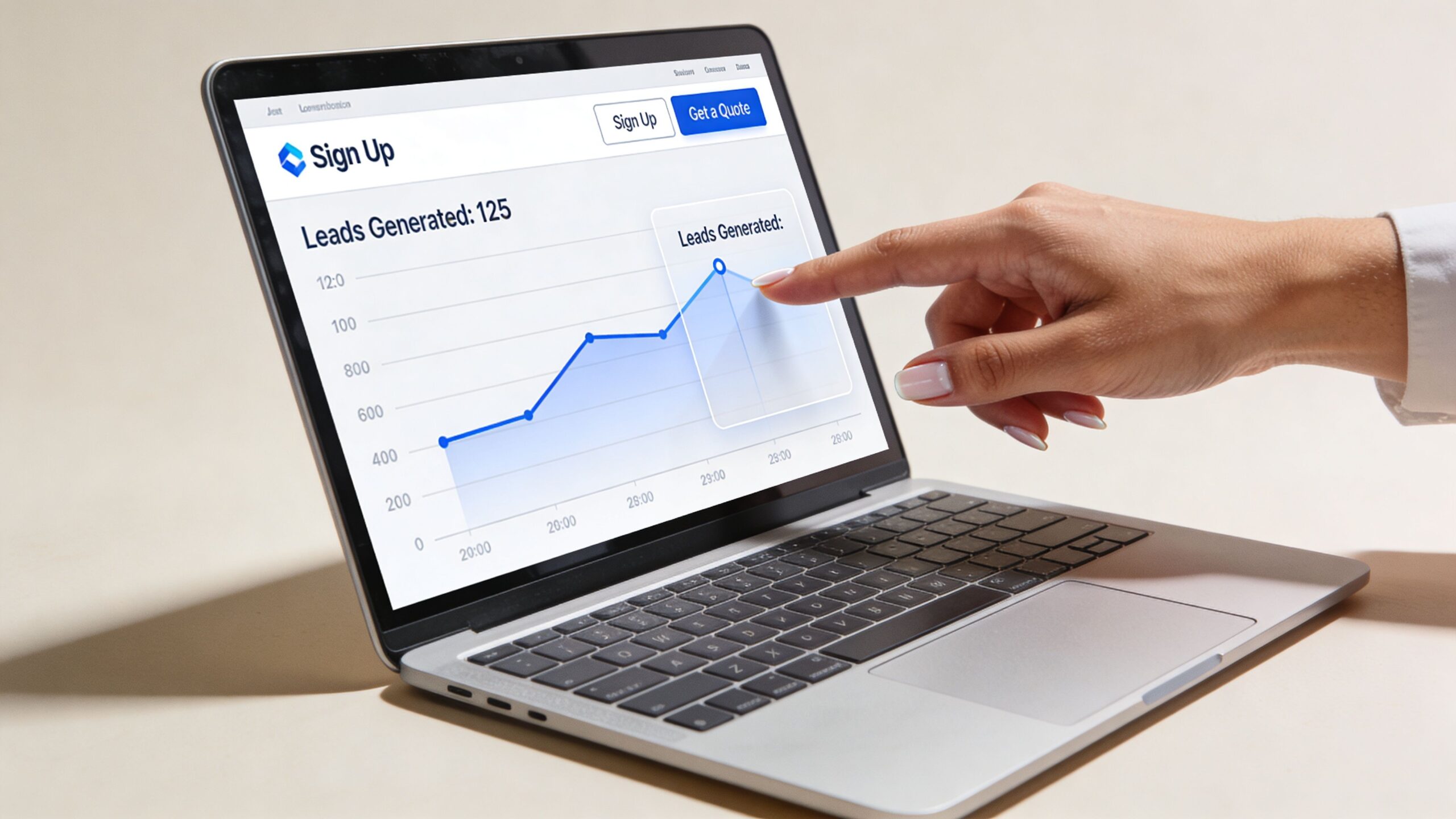
In Brisbane, site speed directly affects both visibility and user retention. Google’s Core Web Vitals penalise sites that take longer than 2.5 seconds to load, and Brisbane-based VPS hosting with SSD storage can achieve up to 40% faster load times. Responsive design can reduce bounce rates by 25% to 30%, and 53% of Australian mobile users abandon sites that take over 3 seconds to load (Affordable Websites Brisbane).
That’s why cheap builds often disappoint after launch. They rely on bloated themes, oversized images, too many scripts, or poor hosting choices. The homepage may look fine in a preview, but the live user experience on mobile is clunky and slow.
Conversion starts with clarity
Most small business websites don’t fail because the colours are wrong. They fail because visitors don’t know what the business does, why they should trust it, or what to do next.
A converting website usually gets a few basics right:
- Strong message hierarchy: The first screen should tell people what you offer and who it’s for.
- Clear calls to action: “Request a quote”, “Book a consultation”, and “Call now” outperform vague prompts.
- Reduced friction: Shorter forms, obvious contact points, and simple navigation make action easier.
- Trust signals: Reviews, service areas, credentials, and project examples help visitors commit.
If a visitor has to think too hard about the next step, many of them won’t take one.
For businesses that want to sharpen this side of the site after launch, resources like Keywordme's optimization insights can help frame how user behaviour, page layout, and message clarity affect action.
What works better than “nice design”
Plenty of attractive websites underperform because they were designed as visual pieces, not sales tools.
What usually works better is:
- Mobile-first layouts that keep headlines, buttons, and contact actions visible without hunting.
- Fast-loading pages with compressed images, sensible scripts, and reliable local hosting.
- Service pages built around intent, not generic filler copy.
- Tracking-ready forms and phone actions so you can measure which pages generate leads.
The businesses that get value from affordable website design brisbane are usually the ones that treat the site as part of a wider sales process. They don’t ask only, “Does it look good?” They ask, “Will this page help a buyer move forward?”
Your Checklist for Hiring a Brisbane Web Designer
Once you understand pricing, scope, provider types, and conversion basics, the next job is choosing well. That means filtering out providers who speak in broad promises and looking for people who can explain trade-offs clearly.
A good Brisbane web designer shouldn’t get defensive when you ask practical questions. They should welcome them.
What to check before you sign anything
Start with the portfolio, but don’t stop there. A pretty portfolio tells you almost nothing about how a project ran, how the site performs, or what support looks like after launch.
Use this checklist instead:
- Relevant work: Have they built sites for businesses with a similar sales process, not just a similar visual style?
- Technical thinking: Can they explain how they handle mobile layout, metadata, structured content, redirects, forms, and tracking?
- Content process: Do they expect you to provide all copy, or can they help shape messaging and page structure?
- Ownership and access: Make sure you’ll control the domain, hosting, CMS access, and key accounts.
- Post-launch support: Ask what happens if forms break, a plugin causes issues, or you need edits soon after launch.
Questions that separate serious providers from order-takers
You don’t need to sound technical. You just need to ask direct questions.
Try these:
- How do you approach SEO from day one on a new website?
- What do you need from me to make this website perform well, not just launch?
- What platform do you recommend for my business, and why?
- What’s included in the quoted scope, and what usually becomes an extra?
- How will you set up lead tracking or enquiry tracking?
- Who handles hosting, updates, and maintenance after launch?
- If we run SEO later, will this build support that properly?
If you want a designer who understands the commercial side of visibility as well as the build itself, it also helps to understand what ongoing search engine optimisation services in Brisbane typically involve. That gives you a better sense of whether the site is being built as a long-term asset or just a short-term deliverable.
A reliable provider can explain what they’re doing, what they’re not doing, and why the difference matters.
Red flags worth taking seriously
Some warning signs show up early:
- They avoid specifics: If every answer is vague, expect vague outcomes.
- They promise everything cheaply: Broad scope with no detail usually means corners somewhere.
- They talk only about design: Businesses buy outcomes, not mock-ups.
- They don’t ask about leads or sales: If they never ask how the website supports your business, they’re probably building pages, not a growth tool.
The right choice is rarely the flashiest pitch. It’s usually the provider who understands that your website has to work after the launch email is sent.
If you want a website strategy that connects design, SEO, PPC, and conversion tracking from the start, talk to Click Click Bang Bang. They help Brisbane businesses build digital growth systems around real performance goals, so your website isn’t just affordable to launch, it’s capable of generating traffic, leads, and sales.
Read NeXt
Or Read Our Latest
- How to Calculate Sample Size for A/B Tests and Campaigns
- How to Fix Google Merchant Center Errors Step by Step
- What Is Pagination and Why It Matters for AU Sites
- What Is Value Proposition? PPC & SEO Guide
- How to Choose a Google Ads Agency Australia
- Influencer Collaboration Playbook for E-Commerce & B2B
Click. CLick. Subscribe.
Get our best PPC insights, industry updates, and power moves delivered straight to your inbox. No fluff, just high-caliber strategies that actually work.
Don’t Leave Just Yet
Try Us For 30-Days,
Risk Free!!
We guarantee that you’ll love our work within the first 30 days, if not you’ll get your money back.
What have you got to lose?