

7 Best Native Advertising Examples & Platforms for 2025
Last Updated

In a world saturated with digital ads, capturing genuine audience attention is tougher than ever. Traditional banner ads are often ignored, leading to wasted budgets and minimal engagement. This is where native advertising becomes a critical tool for marketers. It works by integrating promotional content so seamlessly into a platform's design and user experience that it feels like a natural, value-adding part of the content a user is already consuming.
This approach solves a fundamental problem for businesses: ad fatigue. By presenting information in a non-disruptive format, native ads foster trust and deliver your message to an engaged audience, rather than an annoyed one. For e-commerce retailers, B2B companies, and startups across Australia, this means higher click-through rates, better quality leads, and a stronger return on investment. The key is understanding how to execute it effectively, which requires seeing what actually works in the real world.
That's precisely what this guide delivers. We've compiled a detailed list of powerful native advertising examples, breaking down the strategies behind them and the platforms that make them possible, such as Taboola, Outbrain, and MGID. We'll also explore competitive intelligence tools like Anstrex and Adplexity that let you analyse your competitors' successful campaigns. Each entry includes screenshots, direct links, and a strategic breakdown with actionable takeaways you can implement immediately. Forget generic advice; this is your practical playbook for mastering native advertising and achieving your marketing goals.
1. Anstrex
Before launching a native advertising campaign, wouldn't it be valuable to see what your competitors are already doing successfully? Anstrex is not a platform for placing ads, but rather a powerful competitive intelligence or "spy" tool. It provides a massive, searchable database of native advertising examples from around the world, allowing you to deconstruct winning campaigns before spending a single dollar.
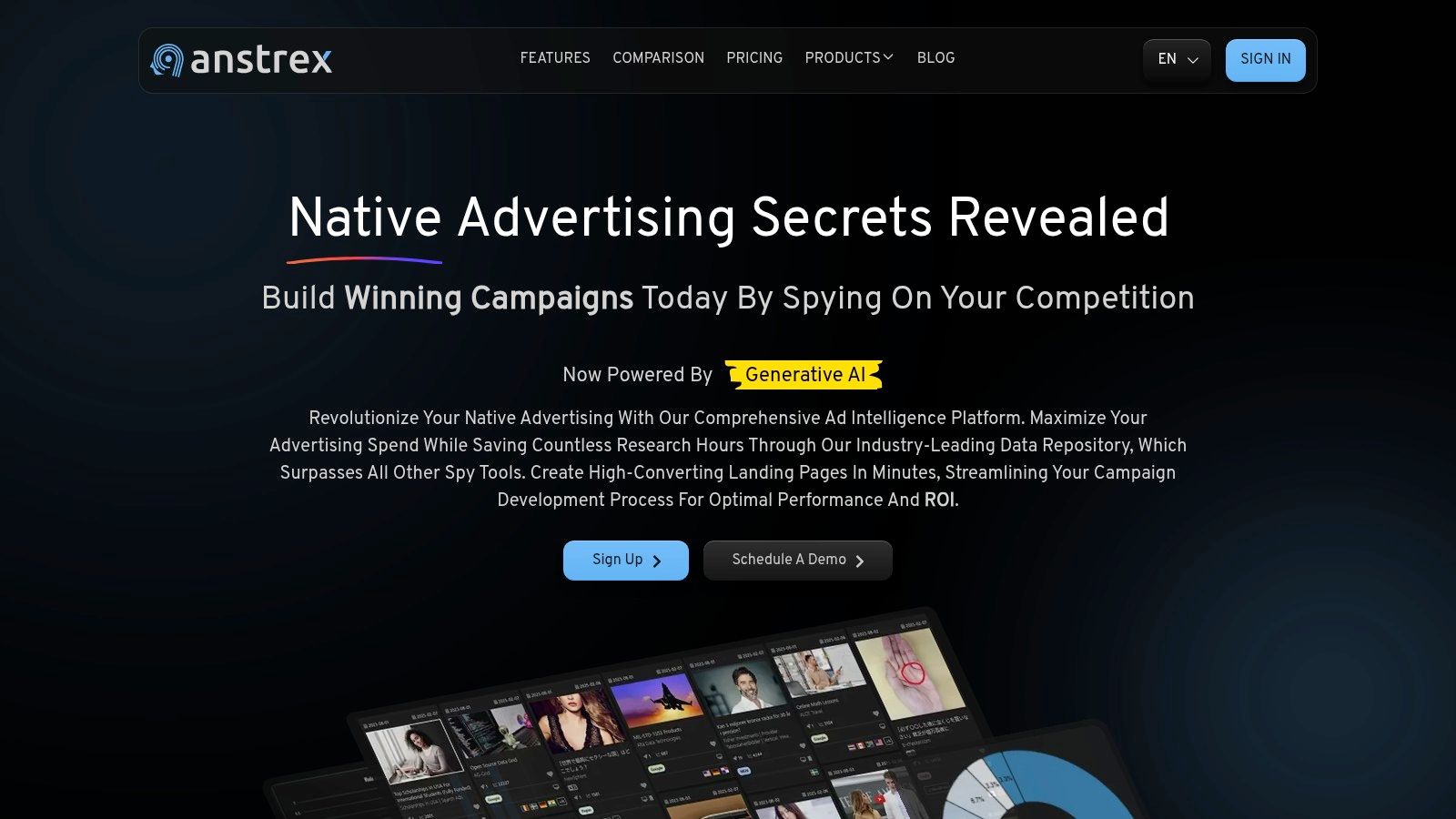
For marketers, particularly in performance and affiliate marketing, Anstrex is an indispensable resource for research and strategy. It indexes over 14 million native ad creatives from more than 27 native ad networks. This allows users to reverse-engineer entire advertising funnels, from the ad creative and copy to the landing page and affiliate offers. Its strong support for the Australian market makes it especially relevant for local businesses and advertisers targeting AU audiences.
Strategic Analysis & Key Features
Anstrex’s primary strength lies in its deep filtering and analysis capabilities. You can slice the data by numerous variables to find highly relevant examples.
- Granular Filtering: Users can filter ads by ad network (e.g., Taboola, Outbrain), geography (including specific Australian cities), device, language, and even the affiliate network being promoted.
- Full Funnel Visibility: A standout feature is the landing page downloader. This tool lets you analyse and save the entire landing page associated with an ad, providing a complete picture of the user journey.
- Trend & Competitor Tracking: You can set up alerts and save advanced searches to monitor new creatives from specific competitors or within a particular niche, ensuring you stay ahead of market trends.
Actionable Takeaways for Marketers
Leveraging Anstrex effectively can significantly reduce the cost and time involved in campaign testing. It provides a data-backed starting point for your creative strategy.
Key Takeaway: Use Anstrex to identify proven ad angles, copy, and imagery in your niche. Instead of guessing what might work, you can model your initial campaigns on creatives that have already been running successfully for an extended period, indicating profitability.
Practical application involves searching for ads in the Australian market within your industry that have a long "ad-strength" or run duration. Analyse their headlines, images, and the psychological triggers they use. Then, use the landing page ripper to study their sales funnels to inform your own conversion optimisation strategy.
Platform Access and Pricing
Anstrex operates on a subscription model, offering different tiers based on the ad formats you wish to analyse (Native, Push, Pops, etc.). The "Native Only" plan provides access to its extensive database of native advertising examples. Pricing is very competitive compared to other spy tools in the market, often with promotions available.
- Website: https://www.anstrex.com/product/native
- Pros: Competitive pricing, broad network coverage, excellent landing page and funnel analysis tools.
- Cons: Data is observational and may not capture every ad on every platform; coverage can be uneven across all networks.
2. Adplexity
As a long-established leader in the competitive intelligence space, Adplexity provides a deep well of data for marketers looking to validate their native advertising strategies. Like Anstrex, it is a "spy" tool designed to reveal what’s already working for competitors, offering a comprehensive view of successful ads, landing pages, publishers, and traffic sources. It’s an essential platform for media buyers who want to minimise risk and base their campaigns on proven concepts.
Adplexity is trusted by performance marketers and media buying agencies worldwide for its robust dataset, which includes over 20 million ads from more than 60 countries. Its extensive coverage of the Australian market allows local advertisers to analyse top-performing creatives and funnels with precision. The platform's core value is helping users discover profitable ad angles, placements, and offers before they invest heavily in their own campaigns.
Strategic Analysis & Key Features
Adplexity shines in its ability to provide a multi-faceted view of the native advertising landscape, with powerful tools to dissect competitor campaigns.
- Extensive Database: The platform boasts a massive database, giving users a broad perspective on what is currently trending across major native ad networks. Its AI-powered categorisation helps sort through the noise to find relevant examples.
- Landing Page Functionality: Similar to its competitors, Adplexity allows users to download the complete landing pages associated with any ad. This is critical for analysing the full conversion path and understanding the messaging that turns a click into a customer.
- Data-Driven Insights: Users can filter ads by duration, ad network, device, country, and more. A key feature is the ability to see which publishers an ad is running on, and conversely, which ads are performing well on a specific publisher’s site.
Actionable Takeaways for Marketers
Using Adplexity effectively means moving beyond simple creative imitation and toward strategic funnel replication. It provides the data needed to make informed decisions about every aspect of a campaign. For those managing complex campaigns, this level of insight is invaluable and often a core part of a successful PPC ad management strategy.
Key Takeaway: Leverage Adplexity to not only find winning ad creatives but to also identify the most profitable traffic sources (publishers) for your offers. By seeing where successful competitors are consistently buying media, you can build a highly targeted placement list for your own campaigns, dramatically improving your ROI from the start.
A practical approach involves searching for long-running ads in Australia within your niche. Analyse the ad’s copy and creative, then download the landing page to study its structure and call-to-action. Finally, examine the publisher data to see which websites are driving the most traffic for that campaign and add them to your initial media buy.
Platform Access and Pricing
Adplexity is a premium tool with a price point that reflects its comprehensive dataset and features. It operates on a monthly subscription model, with different plans for native, push, mobile, and other ad formats.
- Website: https://adplexity.com/native
- Pros: Large and trusted dataset, excellent publisher and placement insights, strong filtering capabilities.
- Cons: Higher monthly price point compared to some newer alternatives on the market.
3. Taboola
As one of the world's largest content discovery and native advertising platforms, Taboola places your brand directly within the content feeds of premium publishers. It’s not just a network; it's a massive ecosystem for distributing native advertising examples that reach millions of users as they consume news and articles, offering a prime opportunity for brand engagement when audiences are most open to discovering new things.
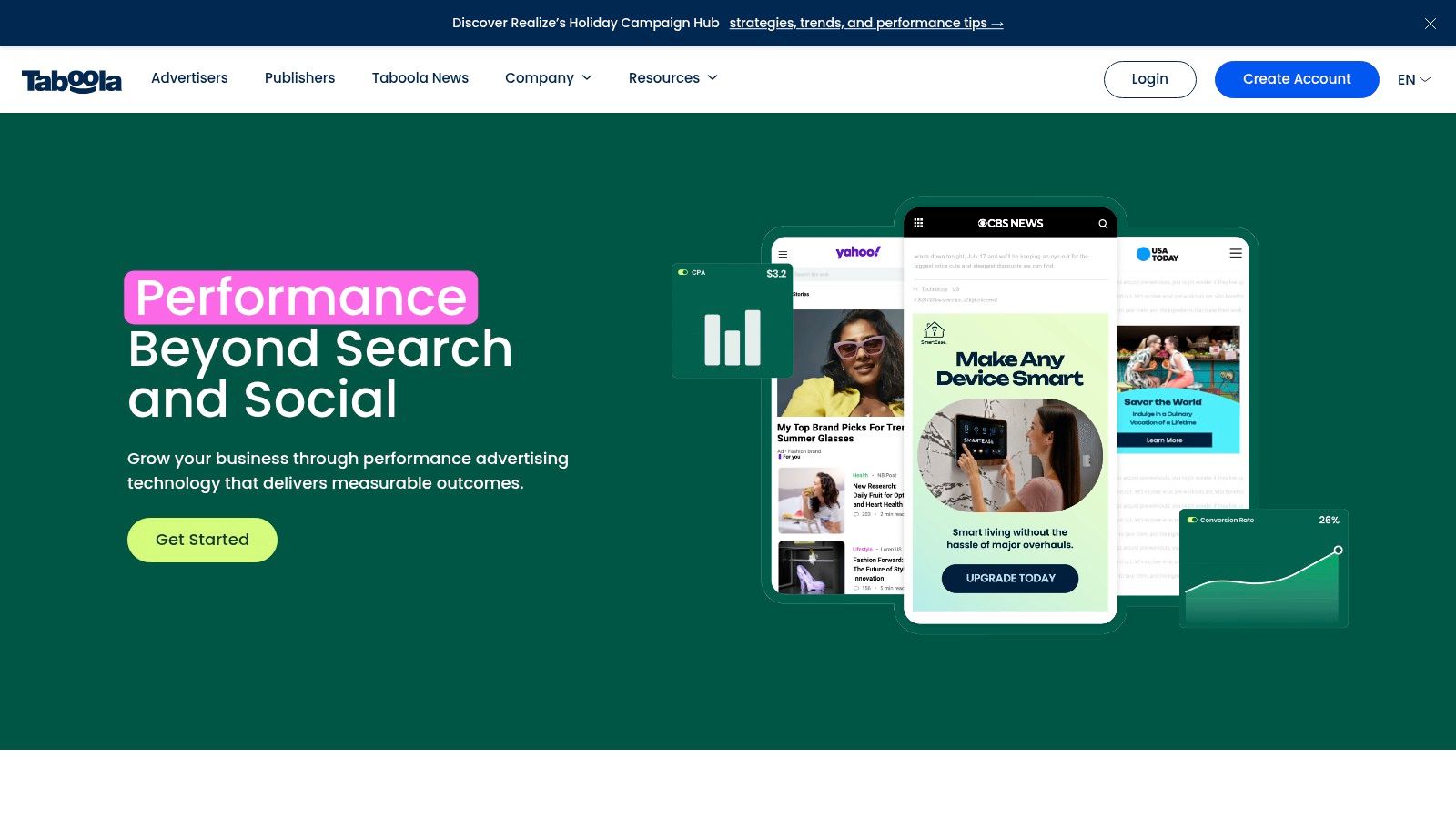
For businesses looking to scale their reach, Taboola provides a powerful channel to connect with audiences across the open web. It excels at driving top-of-funnel traffic, generating leads, and building brand awareness through in-feed video and sponsored content formats. Its significant footprint in Australia, with partnerships including major local news outlets, makes it a highly relevant platform for marketers targeting the AU market. The platform's extensive library of case studies provides clear, proven performance examples for local brands.
Strategic Analysis & Key Features
Taboola's strength lies in its vast publisher network and sophisticated bidding algorithms, which help advertisers find the right audience at the right price. It's designed for both performance and brand objectives.
- Extensive Publisher Network: Gain access to an enormous audience on top-tier publisher sites, placing your content alongside trusted editorial, which can enhance your brand's credibility.
- SmartBidding & Automation: Features like "Maximize Conversions" and SmartBid use AI to automatically optimise campaign bidding towards your specific goals, removing much of the manual guesswork.
- Diverse Creative Formats: Move beyond static images with motion ads and in-feed video to capture user attention more effectively and tell a more compelling story.
- Audience Retargeting: Taboola offers robust retargeting capabilities, allowing you to re-engage users who have previously visited your website, making it a powerful tool for full-funnel marketing strategies.
Actionable Takeaways for Marketers
Success on Taboola often hinges on creating content that feels native to the publisher's environment. The goal is to inform or entertain, not just to sell. This approach builds trust and encourages clicks from a curious, rather than a transactional, mindset.
Key Takeaway: Use Taboola to test a wide range of headlines and images for your top-of-funnel content. The platform's A/B testing capabilities are essential. A compelling, curiosity-driven headline paired with an engaging image is the most critical factor for success.
A practical strategy is to promote blog posts, articles, or advertorials that solve a problem for your target audience. Track which creative combinations drive the lowest cost-per-click (CPC) and the highest on-site engagement. As you gather data, it becomes crucial to understand how to measure advertising effectiveness to refine your campaigns and allocate budget to the top-performing assets for maximum ROI.
Platform Access and Pricing
Taboola offers a self-serve platform with flexible budgeting, making it accessible for small and medium-sized businesses, as well as managed services for larger enterprises. You set a daily budget, and the platform operates on a cost-per-click (CPC) model, where you only pay when someone clicks on your ad.
- Website: https://www.taboola.com
- Pros: Massive reach on premium publisher sites, powerful AI-driven optimisation tools, strong AU footprint with relevant local case studies.
- Cons: Can require a significant budget and consistent testing to achieve optimal performance; CPCs can become competitive in popular niches.
4. Outbrain
As one of the world's leading native advertising platforms, Outbrain is a go-to choice for businesses aiming to place their content on premium publisher websites. It connects advertisers with highly engaged audiences across a vast network of well-respected media outlets, making it a powerful tool for driving brand awareness, engagement, and conversions. Unlike spy tools, Outbrain is where you actually build, launch, and manage your campaigns.
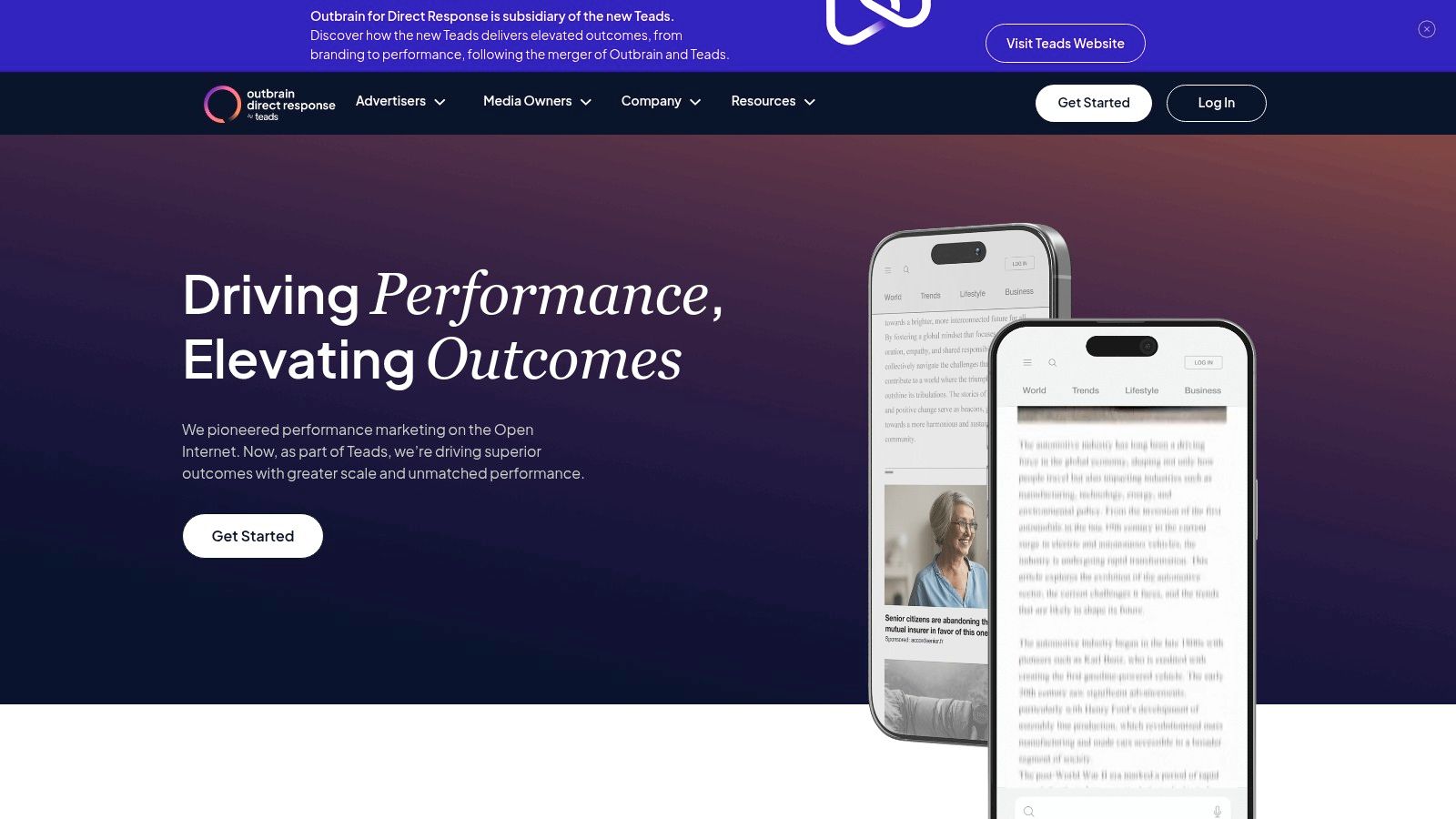
For Australian marketers, Outbrain's strong local publisher network and dedicated support resources are significant advantages. The platform offers both self-serve and managed options, catering to businesses of all sizes, from startups to large enterprises. Its Amplify interface allows advertisers to create campaigns that seamlessly integrate with the look and feel of publisher sites, presenting ads as recommended articles or videos rather than disruptive banners.
Strategic Analysis & Key Features
Outbrain's strength lies in its premium network and sophisticated bidding technology, which is designed to optimise for specific campaign goals beyond just clicks. This makes it a robust platform for both performance and brand-focused advertisers.
- Goal-Oriented Bidding: Advertisers can choose from various bid strategies, including optimising for conversions, page views, or brand awareness. This allows the algorithm to automatically adjust bids to find users most likely to complete the desired action.
- Detailed Targeting & Analytics: The platform provides comprehensive targeting options based on interest, demographics, and lookalike audiences. Its dashboard offers clear analytics to track performance and measure ROI effectively.
- Publisher Quality: Outbrain is known for its high-quality publisher inventory, ensuring brands appear alongside trusted and credible content, which can enhance brand safety and perception.
Actionable Takeaways for Marketers
To maximise results on Outbrain, it's crucial to align your content with the platform's discovery-oriented nature. Users are there to consume content, not to be sold to directly.
Key Takeaway: Treat your Outbrain ads as the start of a conversation. Create compelling, value-driven headlines and images that pique curiosity and lead to informative landing pages or blog posts, rather than hard-sell product pages. This approach builds trust and warms up traffic for future conversion.
A practical application involves using Outbrain's "Conversion Bid Strategy" combined with its tracking pixel. Start by promoting a high-value piece of content (e.g., a detailed guide or an industry report) and optimise for a micro-conversion, like a newsletter sign-up. This helps the algorithm learn your ideal audience, which you can then retarget with more direct, bottom-of-funnel offers.
Platform Access and Pricing
Outbrain operates on a Cost-Per-Click (CPC) model, where you only pay when a user clicks on your ad. The platform has a self-serve option called Amplify, which is accessible to most advertisers, although it does have minimum daily budget requirements that may be higher than some smaller platforms.
- Website: https://www.outbrain.com
- Pros: Access to a premium publisher network, advanced goal-oriented bidding strategies, and strong brand lift measurement tools.
- Cons: Minimum budget requirements might be a barrier for very small advertisers or those just starting with testing.
5. TripleLift
For advertisers seeking to run native campaigns programmatically at scale, TripleLift is a leading supply-side platform (SSP) that bridges the gap between premium publishers and demand-side platforms (DSPs). It specialises in creating beautiful, non-intrusive ad formats that mimic the look and feel of the surrounding publisher content, making it a powerful source for high-quality native advertising examples.
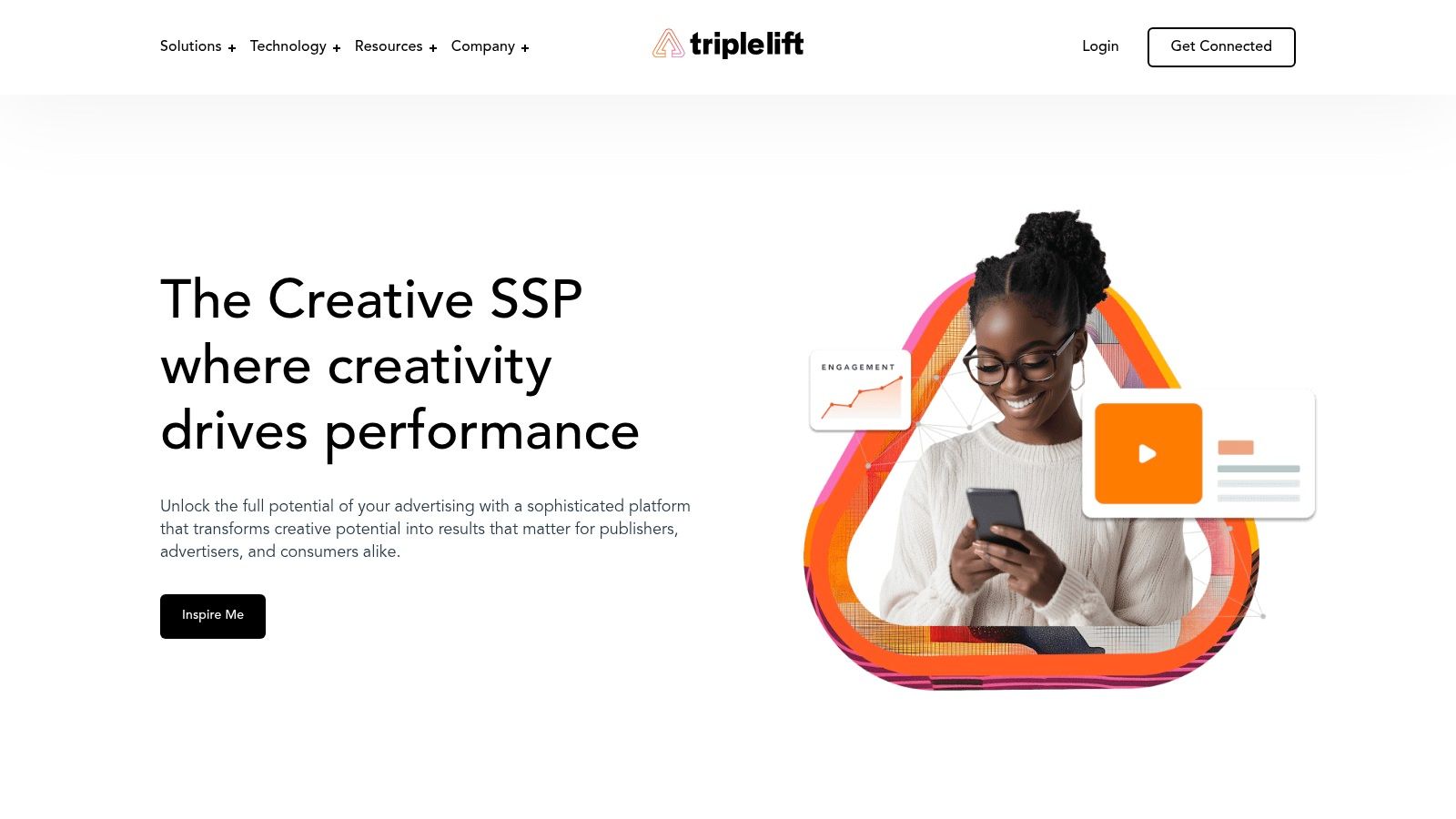
Unlike self-serve networks, TripleLift integrates directly with major DSPs like The Trade Desk and DV360, allowing media buyers to access its premium inventory through their existing programmatic workflows. The company is particularly known for its innovative creative technology and has a strong presence in Australia, offering local support and partnerships that are highly relevant for advertisers targeting the ANZ market. Their case studies often leverage eye-tracking and attention metrics to prove creative effectiveness.
Strategic Analysis & Key Features
TripleLift’s core strength lies in its ability to automatically render brand assets into elegant native ads that fit seamlessly into any publisher's site design. This technology-first approach ensures both scale and performance.
- Creative Technology: TripleLift’s platform can take standard brand assets (images, logos, text) and transform them into various native ad formats, including in-feed, in-article, and even branded video units. This simplifies the creative process for agencies and brands.
- Programmatic Integration: It provides access to thousands of premium publisher sites through all major DSPs, allowing advertisers to use their own data and targeting strategies to buy native inventory efficiently.
- Focus on Attention Metrics: The company goes beyond simple clicks and impressions, using sophisticated research like eye-tracking studies to demonstrate that its formats capture genuine user attention, leading to higher brand lift and engagement.
- Local Australian Support: With an office and team in Australia, TripleLift offers localised support, making it an accessible and strategic partner for Australian brands and agencies.
Actionable Takeaways for Marketers
Engaging with TripleLift’s inventory requires a programmatic mindset. Success is driven by pairing strong creative with sophisticated targeting available through your DSP.
Key Takeaway: Use TripleLift to scale native advertising across premium, brand-safe environments without sacrificing creative quality. Leverage its unique formats and proven high-attention placements to build brand awareness and drive consideration, moving beyond direct-response goals.
For practical application, marketers in Australia can work with their agency or trading desk to specifically target TripleLift’s inventory. Test their innovative formats like the "Flipbook" or "Scroll" units against standard in-feed native ads to measure differences in user engagement and brand recall. Their attention-based case studies can provide a valuable benchmark for your own campaign’s performance.
Platform Access and Pricing
TripleLift is not a self-serve platform. Access is gained by buying media programmatically through a DSP. Pricing is determined by real-time bidding (RTB) auctions, where costs (CPMs) fluctuate based on the publisher quality, audience targeting, and overall market demand.
- Website: https://triplelift.com
- Pros: Access to premium publisher inventory at scale, innovative and high-impact creative formats, strong local support for the Australian market.
- Cons: Requires access to a DSP and programmatic trading expertise; not suitable for advertisers looking for a simple, self-serve platform.
6. Nativo
Where many native ad networks focus on simple in-feed formats that click out to an external landing page, Nativo specialises in creating a more immersive and integrated brand experience. The platform is known for its proprietary formats, such as Native Articles and Native Stories, which allow brands to publish their content directly onto publisher sites. This approach delivers a seamless user experience, keeping the audience within the publisher's environment rather than sending them away.
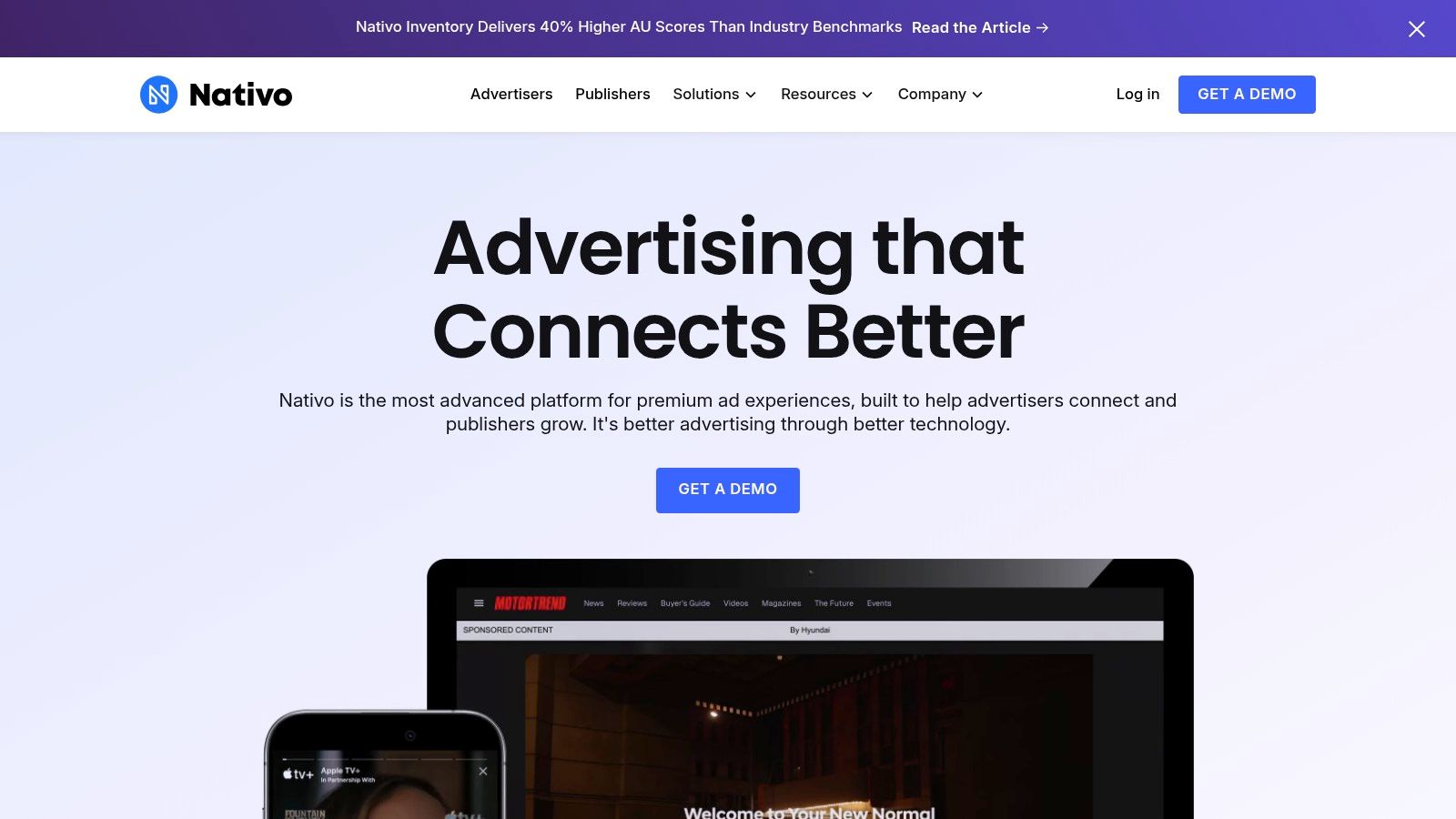
For brands aiming to build trust and authority through high-quality content, Nativo provides an enterprise-level solution. Instead of just a headline and image, advertisers can deliver entire articles or video experiences that match the publisher's look and feel perfectly. This creates some of the most authentic native advertising examples available, as the ad is the content. Their public case studies demonstrate measurable engagement lifts and clear return on investment.
Strategic Analysis & Key Features
Nativo's core strength lies in its ability to serve rich content experiences at scale, bridging the gap between programmatic efficiency and custom content marketing.
- Advanced Native Formats: The platform excels with its Native Article, Stories, and Video formats. These formats live on the publisher's page, reducing user friction and leading to higher engagement metrics compared to standard click-out ads.
- Enterprise-Level Tools: Nativo is built for both brands and publishers, offering sophisticated tools for content distribution, measurement, and optimisation. It also supports in-app native advertising with MRAID compatibility.
- Proven ROI: The company provides numerous public case studies across various industries, showcasing strong click-through rates, brand lift, and engagement. This transparency helps marketers understand the potential outcomes.
Actionable Takeaways for Marketers
Nativo is best suited for brands that have invested in creating valuable, long-form content and want to distribute it in a contextually relevant and non-disruptive way. The platform helps this content find its audience on premium publisher sites.
Key Takeaway: Use Nativo to turn your best blog posts, articles, or case studies into native placements. Instead of driving traffic to your own site, you can capture attention directly on trusted publications, building brand credibility and reaching audiences where they already consume information.
A practical application involves repurposing a high-performing piece of content and using Nativo to place it as a Native Article on a portfolio of relevant publisher sites. By focusing on engagement metrics like time-on-content and scroll depth, you can effectively improve conversion rates by educating and nurturing potential customers before they ever visit your website.
Platform Access and Pricing
Nativo operates as an enterprise solution and does not publicly list its pricing. Access typically requires direct contact with their sales team to establish a partnership or a managed service contract. It is best suited for larger brands with significant content marketing budgets rather than small businesses seeking a self-serve platform.
- Website: https://www.nativo.com
- Pros: Delivers deeply integrated and high-quality creative experiences, provides clear examples of advertising ROI, offers enterprise-scale solutions with strong publisher support.
- Cons: Pricing is not public and generally requires a sales contract, primarily designed for managed or enterprise-level advertisers.
7. MGID
MGID is a global native advertising network that provides advertisers with direct access to a vast ecosystem of publishers. It's a comprehensive platform for creating, managing, and optimising native campaigns, offering formats from standard in-feed widgets to native video. The platform is particularly noted for its self-serve model, making it accessible for businesses of all sizes to tap into native advertising.
With a network spanning over 32,000 publishers and serving more than 185 billion recommendations each month, MGID offers significant scale. A key resource for advertisers is its growing library of case studies, which provide real-world native advertising examples across various verticals like automotive, education, and finance. This makes it a valuable platform for Australian marketers looking for proven strategies and inspiration before launching their own campaigns.
Strategic Analysis & Key Features
MGID’s strength lies in its combination of a user-friendly self-serve platform and extensive reach, empowering marketers to take direct control over their native advertising efforts.
- Diverse Ad Formats: The platform supports multiple native formats, including under-article widgets, in-content ads, and native video, giving advertisers flexibility in how they engage their target audience.
- Broad Publisher Network: Access to a global network of publishers allows for extensive reach, with targeting options to pinpoint specific demographics and geographic locations, including the AU market.
- Resourceful Case Studies: MGID provides detailed case studies that break down successful campaigns, offering insights into effective creatives, targeting strategies, and achieved results (e.g., CPC, CPA).
Actionable Takeaways for Marketers
The self-serve nature of MGID, combined with its educational resources, allows for a hands-on, data-informed approach to campaign creation and optimisation. It’s an ideal starting point for businesses new to native advertising.
Key Takeaway: Utilise MGID's case studies as a blueprint for your initial campaigns. Analyse examples from your industry to understand which headlines, images, and value propositions resonate with audiences on their network, significantly reducing your initial testing phase.
A practical application is to select a relevant case study from the MGID blog, note the targeting parameters and ad formats used, and create a small test campaign that mirrors that successful strategy. As you gather data, you can then methodically adjust bids, creatives, and publisher targets to optimise for performance based on your specific goals.
Platform Access and Pricing
MGID operates on a Cost-Per-Click (CPC) bidding model within its self-serve platform, offering flexibility for various budget sizes. The minimum deposit to start is relatively low, making it accessible for small and medium-sized businesses.
- Website: https://www.mgid.com
- Pros: Broad global reach with competitive CPCs, valuable educational content and real case studies, accessible self-serve platform.
- Cons: Campaign performance can vary significantly by publisher quality; requires active management and optimisation to achieve the best results.
Native Advertising Platforms Comparison
| Platform | Implementation Complexity 🔄 | Resource Requirements ⚡ | Expected Outcomes 📊 | Ideal Use Cases 💡 | Key Advantages ⭐ |
|---|---|---|---|---|---|
| Anstrex | Moderate; requires familiarity with filtering and funnel analysis | Moderate; access to large datasets and landing page tools | Competitive native ad insights and funnel intelligence | Competitive research and funnel reverse-engineering | Comprehensive network coverage; strong AU market support |
| Adplexity | Moderate to High; extensive data handling and AI categorization | High; large database and account management on paid plans | Reliable ad validation and creative benchmarking | Media buyers validating creatives globally | Large dataset; trusted by media buyers |
| Taboola | Low to Moderate; self-serve with automation options | Moderate to High; budget and testing investment needed | Scalable native ad campaigns with automation | Brands seeking premium publisher access and automation | Proven AU market cases; mature optimization tools |
| Outbrain | Low to Moderate; easy self-serve with managed options | Moderate; minimum daily budgets may apply | Strong brand lift and performance measurement | Advertisers focusing on brand and performance uplift | Transparent billing; robust support and education |
| TripleLift | High; requires DSP integration and programmatic expertise | High; DSP access and local support needed | Advanced attention metrics and creative effectiveness | Programmatic buyers wanting advanced creative insights | Innovative formats; strong AU/NZ market presence |
| Nativo | Moderate to High; typically managed service or enterprise scale | High; enterprise contracts and sales engagement | Measurable engagement with strong ROI | Enterprises needing scalable native formats and outcomes | Strong creative formats; clear ROI case studies |
| MGID | Low to Moderate; self-serve platform with flexible budgets | Moderate; requires optimization and monitoring time | Access to broad global inventory with competitive CPC | Advertisers needing cost-effective global native reach | Wide publisher network; accessible with self-serve model |
Launch Your Next Winning Campaign with Expert Guidance
We’ve journeyed through a diverse landscape of native advertising examples, from the forensic competitor analysis enabled by tools like Anstrex and Adplexity to the large-scale content discovery offered by industry titans Taboola and Outbrain. The examples showcased aren't just creative showcases; they are strategic blueprints built on a deep understanding of audience, platform, and purpose. We've seen how brands masterfully blend in, provide genuine value, and ultimately guide users toward a desired action without disrupting their experience.
The core lesson from these successful campaigns is clear: great native advertising is never an accident. It is the product of meticulous research, strategic platform selection, and continuous, data-driven optimisation. Whether it’s a B2B company using LinkedIn’s sponsored content to generate high-quality leads or an e-commerce brand leveraging MGID’s network to drive sales, the formula for success involves aligning the ad's format and message perfectly with the user's context and intent.
From Inspiration to Implementation: Your Action Plan
Seeing these powerful native advertising examples is inspiring, but turning that inspiration into a profitable campaign requires a structured approach. The journey from idea to execution is where many marketing initiatives falter. To bridge this gap, focus on translating the key takeaways from this article into a concrete action plan for your own business.
Here are your immediate next steps:
- Define Your Primary Objective: What is the single most important outcome you want to achieve? Is it generating qualified leads for your sales team, boosting online sales for a specific product, or increasing brand awareness in a new market? Your goal will dictate every subsequent decision.
- Profile Your Ideal Customer: Go beyond basic demographics. What publications do they read? What content do they engage with? Understanding their digital behaviour is crucial for selecting the right platform and crafting a message that resonates.
- Analyse the Competitive Landscape: Before spending a single dollar, use a tool like Anstrex or Adplexity to dissect what your competitors are doing. Identify their most successful ads, the publishers they are targeting, and the landing pages they are using. This intelligence is invaluable for benchmarking and finding strategic gaps.
- Select the Right Tools and Platforms: Your choice of platform should be a direct reflection of your goals and audience.
- For maximum reach and content discovery, platforms like Taboola and Outbrain are unparalleled. They are ideal for top-of-funnel awareness and driving traffic to blog posts or articles.
- For programmatic native and seamless integration, TripleLift and Nativo offer sophisticated solutions that place your ads within the core content stream, delivering a less intrusive user experience.
- For performance-focused campaigns and niche targeting, a network like MGID can provide access to a diverse range of publishers, often with flexible and scalable options perfect for small to medium-sized businesses.
The Final Piece of the Puzzle: Expert Execution
Choosing the right platform is only half the battle. The true challenge lies in managing the campaign effectively. This involves crafting compelling ad creatives, writing persuasive copy, designing high-converting landing pages, and constantly analysing performance data to optimise your return on investment. The difference between a campaign that breaks even and one that delivers exponential growth often comes down to the expertise behind the execution.
The most successful native advertising examples we've explored are backed by teams who live and breathe data. They understand the nuances of A/B testing, audience segmentation, and bid management. For startups, e-commerce retailers, and B2B companies, dedicating the necessary resources to master these complexities can be a significant hurdle. This is where partnering with a specialist agency can provide a decisive advantage, allowing you to leverage expert knowledge without the steep learning curve. The goal is to ensure your investment in native advertising doesn't just generate clicks, but delivers tangible business results and a measurable return.
Ready to transform these native advertising examples from inspiration into your own success story? The team at Click Click Bang Bang specialises in building and managing high-performance PPC and native advertising campaigns that drive real results. We handle the complex strategy, targeting, and optimisation, so you can focus on running your business. Book a free strategy session with us today and let's build your next winning campaign together.
Read NeXt
Or Read Our Latest
- Manual vs Automated Bidding for PPC Success
- Conversion Tracking Setup: A Complete AU Guide
- Instagram Advertising Australia: Complete 2026 Guide
- Pay Per Click: A Beginner’s Guide for Australian Marketers
- Display Advertising on Google: The Complete Australian Guide
- Stakeholder Communication Plan How to Build One That Works
Click. CLick. Subscribe.
Get our best PPC insights, industry updates, and power moves delivered straight to your inbox. No fluff, just high-caliber strategies that actually work.
Don’t Leave Just Yet
Try Us For 30-Days,
Risk Free!!
We guarantee that you’ll love our work within the first 30 days, if not you’ll get your money back.
What have you got to lose?