

What is edms in marketing: A Quick Guide to Electronic Direct Mail
Last Updated
Ever found yourself staring at a new marketing acronym, wondering what on earth it means? When marketers talk about what is EDMS in marketing, they're referring to Electronic Direct Mail. Think of it as the strategic, grown-up version of email marketing, designed to build a real, direct relationship with your customers.
Decoding EDMS: What It Really Means
Forget generic flyers stuffed into a letterbox. A better way to picture EDMS (Electronic Direct Mail) is as a personalised digital postcard, sent straight to your customer's inbox. It marks a huge shift away from the old days of broadcasting a single message to everyone. Instead, it’s all about tailoring your communication based on what you actually know about your audience.
Now, if you're in a tech-heavy industry, you might hear 'EDMS' used for Electronic Document Management Systems. But in the marketing world, it’s all about email. It’s the banner under which everything from your weekly newsletter, to your automated welcome series, to a flash sale announcement sits. The whole point is to move beyond the classic "batch and blast" approach that gives email a bad name.
The Power of a Direct Connection
The single biggest difference between EDMS and channels like social media comes down to one word: ownership. When you post on social media, you’re essentially renting space. Your ability to reach the audience you've built is at the mercy of algorithms that can, and do, change overnight.
EDM, on the other hand, gives you a direct, owned line of communication. Your email list is a valuable business asset, completely independent of any platform’s algorithm. This gives you a reliable, predictable way to engage your audience and drive results.
This direct access gives you a level of control and precision that other channels simply can't offer.
Personalisation at Its Core
Modern EDM is fuelled by data and personalisation. It’s not just about sending emails; it’s about sending the right email to the right person at the right time. This magic happens by segmenting your audience based on their behaviour, preferences, and history with your brand.
For an e-commerce store, this might look like:
- Sending abandoned cart reminders to customers who got distracted mid-purchase.
- Recommending products based on what a user has bought or browsed before.
- Celebrating a customer’s birthday or anniversary with a special discount code.
This concept map breaks down the key pillars that make an EDM strategy work.
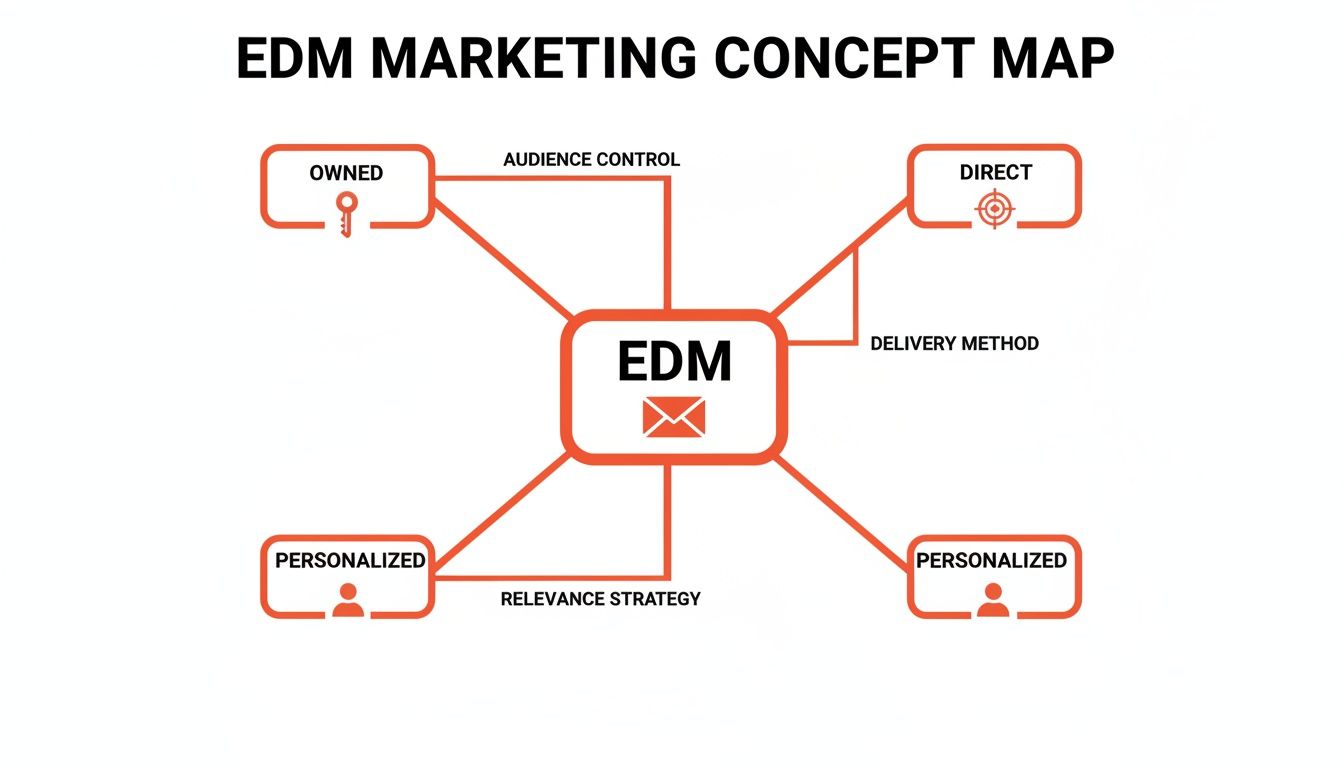
As the visual shows, great EDM sits at the intersection of being a direct channel, an owned asset, and a deeply personalised tool. When you get these three elements right, you transform your email marketing from a simple bulletin into a powerhouse for building relationships and generating revenue.
The Core Benefits of Using EDMS for Business Growth
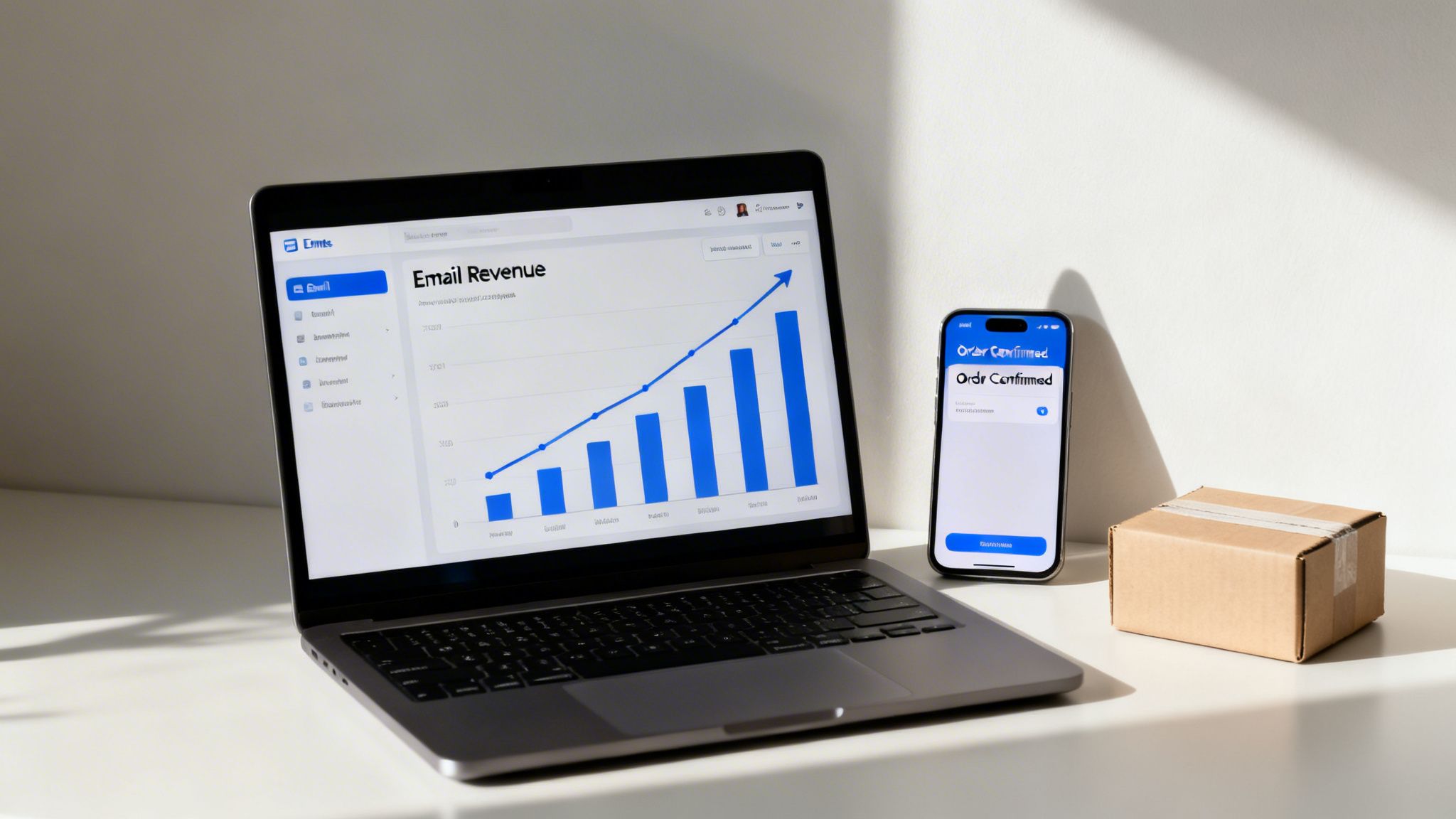
When you ask what is edms in marketing, the conversation quickly shifts from definitions to real-world results. The biggest drawcard for Electronic Direct Mail is its staggering return on investment (ROI). It’s widely cited as having a potential return of up to $40 for every $1 spent, consistently outperforming most other digital channels.
But it’s not just about blasting out emails; it’s about building a predictable revenue machine. Unlike social media or paid ads, your email list is an asset you own. This gives you a direct, unfiltered line to your customers, completely free from the whims of algorithm changes or soaring ad costs. That ownership is the true foundation of sustainable business growth.
Driving Conversions and Loyalty
For an e-commerce brand, the benefits are immediately obvious. A simple automated abandoned cart sequence can recapture sales you’d otherwise lose. It sends a timely reminder—maybe with a small incentive—to shoppers who left items behind. This one workflow alone can give your bottom line a serious boost with minimal ongoing effort.
In the same way, you can use EDMs to increase customer lifetime value. By segmenting your audience based on past purchases, you can send personalised product recommendations that are genuinely helpful. A customer who bought hiking boots might get an email about waterproof jackets, creating a tailored shopping experience that fosters loyalty and encourages repeat business.
For B2B companies, the game is all about nurturing relationships over the long haul.
Imagine a potential client downloads a whitepaper from your website after clicking one of your LinkedIn ads. This single action can trigger an EDM sequence that drips a series of valuable case studies and insights into their inbox over several weeks. You’re methodically guiding them from a flicker of interest to a sales-ready conversation.
This strategic nurturing is what turns cold leads into warm prospects. If you want to dive deeper into how this works, check out our guide on effective lead generation in digital marketing.
Personalisation and Scalable Growth
A smart EDM strategy is all about delivering personalisation at scale. You can create campaigns that speak directly to thousands of individuals based on their unique behaviours and interests, creating a powerful sense of connection that generic advertising just can't replicate.
The growing importance of managing these digital assets is reflected in market trends. Australia's Enterprise Content Management (ECM) market, which includes systems vital for organising marketing assets, hit USD 1,518.00 million in 2024. It’s projected to climb to USD 4,145.70 million by 2033, which shows just how seriously businesses are taking data-driven communication.
This explosive growth highlights the need for agencies and businesses to properly manage massive libraries of campaign documents, from ad creative to performance reports.
Essential Metrics to Measure EDM Campaign Success
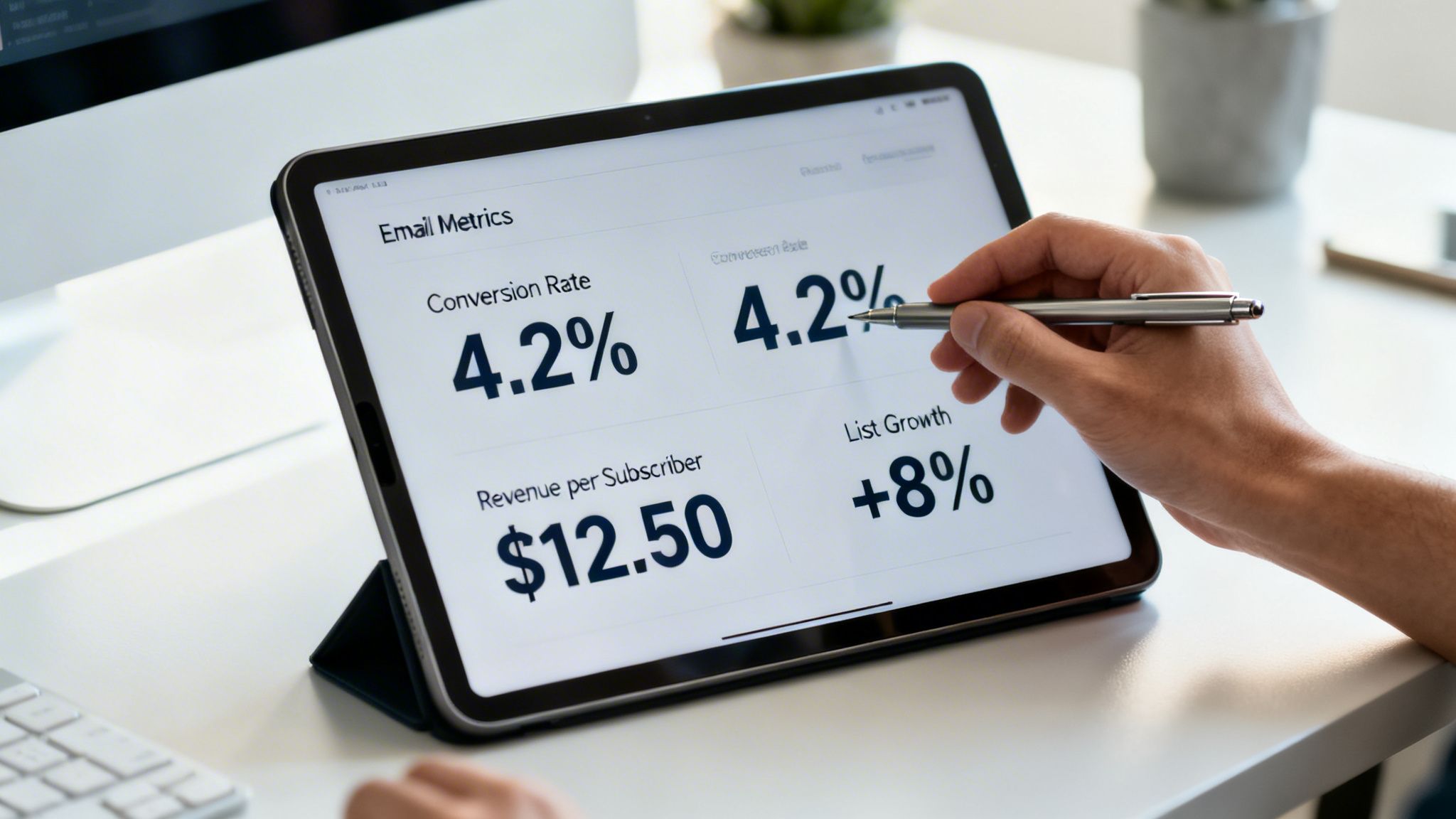
Sending out an EDM campaign without tracking the right metrics is a bit like driving with your eyes closed. Sure, you're moving, but you have no idea if you're headed in the right direction. To figure out if your efforts are actually paying off, you need to look past the surface-level numbers and focus on the data that truly impacts your business.
Open rates can give you a quick pulse check on whether your subject line worked, but they’re often just a “vanity metric”. The real story begins after the open. The most reliable signs of success are the actions your subscribers take once they’re inside your email.
Engagement and Conversion Metrics
The numbers that really matter are the ones that connect your EDM sends to tangible results, like leads and sales. These metrics reveal the true health of your email strategy.
-
Click-Through Rate (CTR): This is the percentage of people who clicked on at least one link in your email. A strong CTR is a clear sign that your message and call-to-action were compelling enough to make someone act. If you're wondering what to aim for, our guide on what is a good click-through rate breaks down the industry benchmarks.
-
Conversion Rate: This is the gold-standard metric. It tracks the percentage of recipients who actually completed the goal of your email, whether that was making a purchase, downloading an ebook, or filling out a form. This is the number that directly ties your EDM campaign to your bottom line.
-
Click-to-Open Rate (CTOR): This metric compares the number of unique clicks to the number of unique opens. It gives you a much clearer view of how engaging your content was for the audience that actually saw it, cutting through the noise of inflated open rates.
To really dial in your performance, it's worth exploring proven strategies for boosting email click-through rates and turning more of those opens into valuable actions.
Revenue and List Health Metrics
Beyond the immediate clicks and conversions, you need to keep an eye on the long-term value and health of your email list. These metrics help you calculate the direct financial return from your EDM marketing and ensure you're building a sustainable asset.
For e-commerce businesses, Revenue Per Subscriber (RPS) is an absolute game-changer. Simply divide your total email-generated revenue by the number of subscribers on your list over a specific period. This puts a clear dollar value on every single person in your audience.
On top of that, you should be tracking your List Growth Rate to see how quickly you're bringing in new subscribers. At the same time, keep a close watch on your Unsubscribe Rate. If that number is consistently high, it’s a massive red flag that your content or frequency isn't resonating.
By analysing these key indicators together, you can stop guessing and start making data-driven decisions to refine your EDM strategy for maximum impact.
EDM Best Practices and Common Mistakes to Avoid

Getting your EDM campaigns right is a balancing act. Get it right, and you build a powerful, revenue-driving asset. Get it wrong, and you can quickly damage your sender reputation and alienate your audience.
The foundation of any healthy EDM program is an email list built with permission. Never, ever buy an email list. Not only is it a guaranteed way to get flagged as spam, but it’s also a direct violation of Australia’s Spam Act 2003, which demands explicit consent.
Instead, concentrate on growing your list with people who actually want to hear from you. Use website pop-ups, offer valuable lead magnets like checklists or discounts, and make it simple for customers to opt-in during checkout. This ensures your messages arrive in front of a receptive audience, which is the secret to great engagement.
Audience Segmentation and Personalisation
Blasting the same generic message to your entire list is a massive missed opportunity. The real key to making your EDMs feel personal and relevant is audience segmentation. It’s about grouping your subscribers based on their behaviour, purchase history, or stated interests.
For instance, you could create segments for:
- New Subscribers: Guide them into your brand with a dedicated welcome series that might include a first-purchase offer.
- VIP Customers: Make your most loyal buyers feel special with exclusive early access to sales or new products.
- Disengaged Subscribers: Try to win them back with a compelling offer or a simple poll asking what kind of content they’d prefer.
This kind of targeting ensures your content connects rather than just clutters up an inbox. For a deeper dive into optimising your campaigns, check out these B2B Email Marketing Best Practices.
Critical Mistakes to Avoid
Even with a fantastic list, a few simple slip-ups can destroy your results. The most common pitfall is completely ignoring mobile optimisation. The vast majority of emails are now opened on a mobile device. If your EDM is a mess to read on a small screen, it’s getting deleted in seconds.
Another frequent error is failing to maintain list hygiene. You have to regularly remove inactive subscribers who haven't opened your emails in months. Keeping them on your list actively hurts your sender reputation with email providers, which can cause your campaigns to land in the spam folder for everyone.
Key Takeaway: A solid EDM strategy boils down to a cycle of Permission, Relevance, and Maintenance. Get clear permission to send emails, deliver highly relevant content through smart segmentation, and regularly clean your list to ensure its long-term health.
Integrating EDMS with Your SEO and PPC Campaigns
Your Electronic Direct Mail shouldn't operate in a silo. Its real power is unleashed when you integrate it with your other marketing channels, especially your Pay-Per-Click (PPC) and Search Engine Optimisation (SEO) efforts.
Think of your EDM list as more than just an audience to email. It's a rich source of first-party data you can use to make your paid ads dramatically more effective and give your organic rankings a serious push.
This integration creates a powerful feedback loop where each channel strengthens the others. Your email list becomes a tool to boost ad performance, and your ads, in turn, help grow a more qualified email list. It’s a symbiotic relationship that turns disconnected activities into a cohesive marketing machine.
Supercharging Your PPC with EDM Lists
Your email list is a goldmine for refining your ad targeting on platforms like Google and Meta. This list is packed with people who have already shown interest in your brand, allowing you to create hyper-specific ad audiences. This is how you move away from broad, expensive targeting and towards surgical precision.
You can put your EDM list to work in two main ways:
- Create Custom Audiences: Upload your email list directly to ad platforms to create a Custom Audience. This lets you retarget engaged subscribers with tailored ad campaigns, like promoting a new product exclusively to your most loyal customers.
- Build Lookalike Audiences: Once you have a Custom Audience, ad platforms can analyse the common traits of your subscribers. They then build a Lookalike Audience by finding new people who share those same characteristics, massively expanding your reach to a highly relevant new audience.
This strategy turns your ad spend into a surgical tool. Instead of shouting into a crowded room, you’re whispering directly to your best prospects and people who look just like them, significantly improving your Return On Ad Spend (ROAS).
To get a better handle on just how valuable this asset is, you can learn more about what is first-party data and why it's crucial.
Boosting SEO with Strategic Email Sends
Your EDM campaigns can also give your SEO efforts a welcome nudge. When you publish a new blog post or a cornerstone piece of content, search engines are on the lookout for immediate signals of its quality and relevance. A well-timed email to your subscribers can deliver exactly that.
Sending your new content to an engaged audience generates an instant surge of traffic. This spike in activity signals to Google that your content is valuable and worth paying attention to, which can help speed up its indexing and improve its chances of ranking.
This is especially true for Australian marketing agencies that have to manage vast amounts of campaign data. In fact, the Document Management Services market in Australia hit a solid $803.3 million in 2024. This growth shows just how focused firms are on digitising everything from ad creatives to performance analytics to improve their agility. You can check out more insights on this booming Australian market on ibisworld.com.
Your Top EDM Marketing Questions Answered
Once you start digging into Electronic Direct Mail, a bunch of questions inevitably pop up. It's one thing to understand the theory, but when you're ready to launch your first campaign, the practical side can feel a bit daunting. This section cuts straight to the chase, answering the most common queries we hear from marketers.
Think of it as your go-to cheat sheet. We'll sort out confusing terms, help you pick the right tools, and give you the confidence to get your EDM strategy off the ground and running smoothly.
What Is the Difference Between EDMs and Newsletters?
This is a classic point of confusion, but the distinction is actually quite simple. The easiest way to think about it is that ‘EDM’ is the entire toolbox, while a ‘newsletter’ is just one of the tools you pull out of it.
EDM, or Electronic Direct Mail, is the umbrella term for all marketing emails. That covers everything from a 20% off flash sale, an automated welcome series for new subscribers, an abandoned cart reminder, or an invitation to an event.
A newsletter is simply one specific type of EDM. It’s usually focused on content and sent out on a regular schedule—maybe weekly or monthly—to keep your audience in the loop and build a relationship. So, every newsletter is an EDM, but not every EDM is a newsletter.
Which EDM Platform Is Best for a Small Australian Business?
There’s no single "best" platform that fits everyone, because the right choice really boils down to your business model, goals, and budget. But for small Aussie businesses, a few names consistently come out on top:
- Klaviyo: If you run an e-commerce store, especially on Shopify, Klaviyo is an absolute powerhouse. Its deep integration lets you create incredibly powerful automations and segments based on actual customer shopping behaviour.
- Mailchimp: A fantastic all-rounder and the perfect starting point for many businesses. It’s famous for its super user-friendly interface, which makes it easy to get campaigns out the door without a massive learning curve.
- Campaign Monitor: As an Australian-born company, Campaign Monitor has a great handle on the local market. It’s well-loved for its beautiful, drag-and-drop templates and robust automation features that are easy to set up.
Our advice? Sign up for the free trials. Get in there, build a test campaign, and see which platform’s workflow feels the most natural for you and your team.
How Often Should I Send Marketing Emails to My List?
Nailing the right sending frequency is a balancing act. You want to stay top-of-mind without becoming that annoying brand that floods their inbox. While there's no magic number, the golden rule is to always prioritise value and consistency over sheer volume.
For most e-commerce brands, sending 1-3 emails per week is a solid range, especially if you have frequent promotions or new products dropping. B2B companies, on the other hand, usually find more success with a weekly or bi-weekly send that offers genuine, helpful insights.
The most important thing is to keep a close eye on your metrics. If you see your unsubscribe rate climbing or your open rates dropping, it’s a clear signal you might be sending too often. The best strategy is to test different frequencies and let your audience's behaviour tell you what works.
Is EDM Marketing Still Effective Today?
Absolutely. In fact, you could make a strong case that it's more critical than ever. Social media platforms rise and fall, and algorithms change overnight, but email marketing continues to deliver one of the highest returns on investment of any digital channel.
The reason is simple: it's a direct line to an audience you own. Unlike social media, your ability to reach your customers isn't at the mercy of a third-party algorithm you can't control. Your email list is a real, durable asset for your business.
Today, success isn't just about blasting out emails; it's about sending the right ones. The real power is in personalisation, automation, and behaviour-triggered campaigns that deliver a relevant message at the exact moment it's needed. This is what turns a simple list of contacts into a reliable engine for sales and customer loyalty.
Ready to turn these insights into action? At Click Click Bang Bang, we specialise in creating data-driven PPC and SEO strategies that integrate seamlessly with your email marketing efforts. We'll help you build custom audiences and drive qualified traffic, turning your EDM list into a powerful tool for growth. Discover how our precision-focused campaigns can elevate your entire marketing ecosystem. Learn more about our services at https://clickclickbangbang.com.au.
Read NeXt
Or Read Our Latest
- Manual vs Automated Bidding for PPC Success
- Conversion Tracking Setup: A Complete AU Guide
- Instagram Advertising Australia: Complete 2026 Guide
- Pay Per Click: A Beginner’s Guide for Australian Marketers
- Display Advertising on Google: The Complete Australian Guide
- Stakeholder Communication Plan How to Build One That Works
Click. CLick. Subscribe.
Get our best PPC insights, industry updates, and power moves delivered straight to your inbox. No fluff, just high-caliber strategies that actually work.
Don’t Leave Just Yet
Try Us For 30-Days,
Risk Free!!
We guarantee that you’ll love our work within the first 30 days, if not you’ll get your money back.
What have you got to lose?